
How to Read a Solar Quote: The Kiwi Buyer's Guide
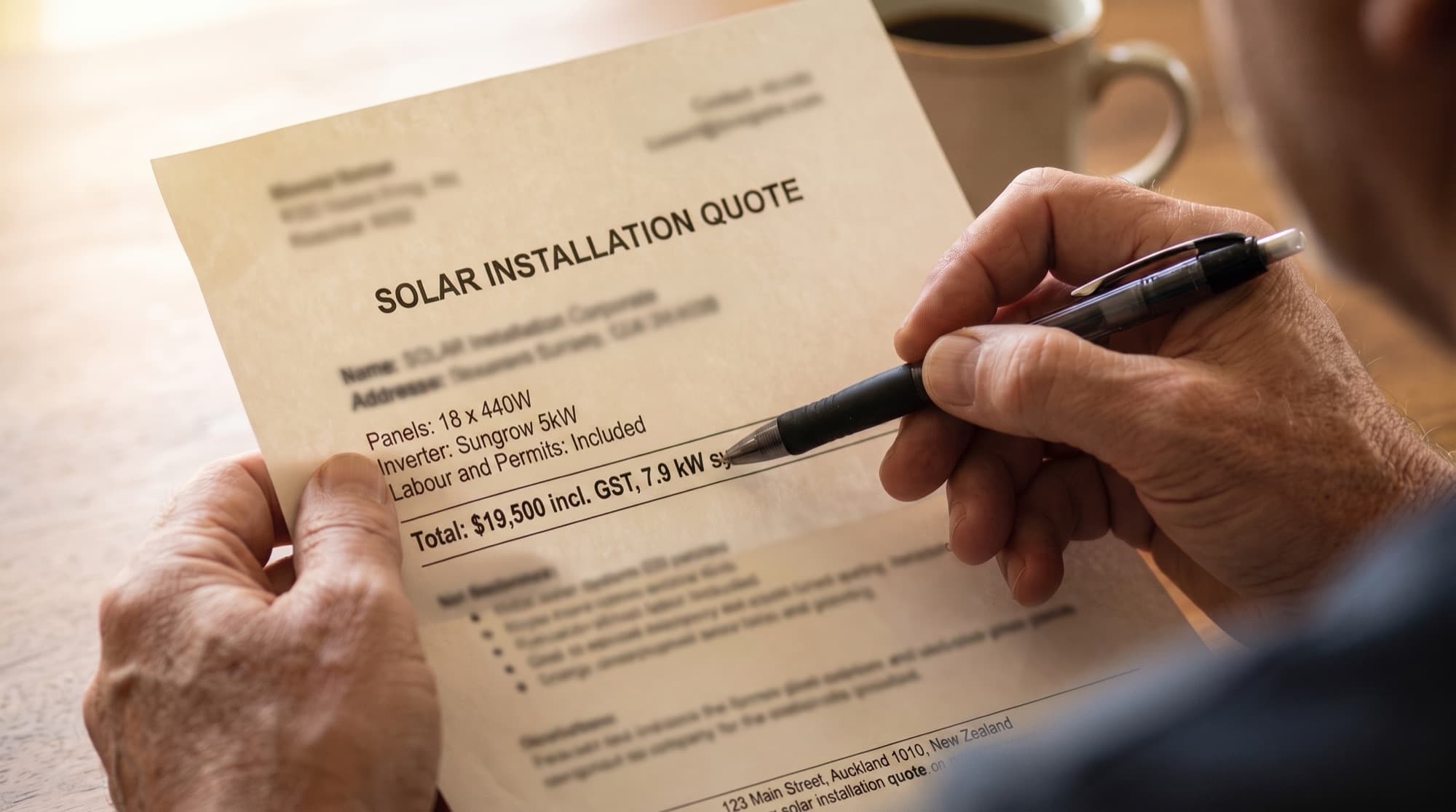

Three solar quotes land in your inbox. They cost different amounts. They look completely different. One is 14 pages, one is a single A4. The brand names mean nothing to you. You’ve got no idea whether the price is fair or what’s missing from the cheap one.
This is the guide that fixes that. We’ll walk through every line item on a typical NZ solar quote, what each one should look like, what’s quietly missing, and how to spot the red flags before you sign. Still collecting them? Our guide on how to get solar quotes in NZ covers how many to get and where from.
No fluff. By the end you’ll be able to read a quote like an electrician.
What's Actually on a Solar Quote
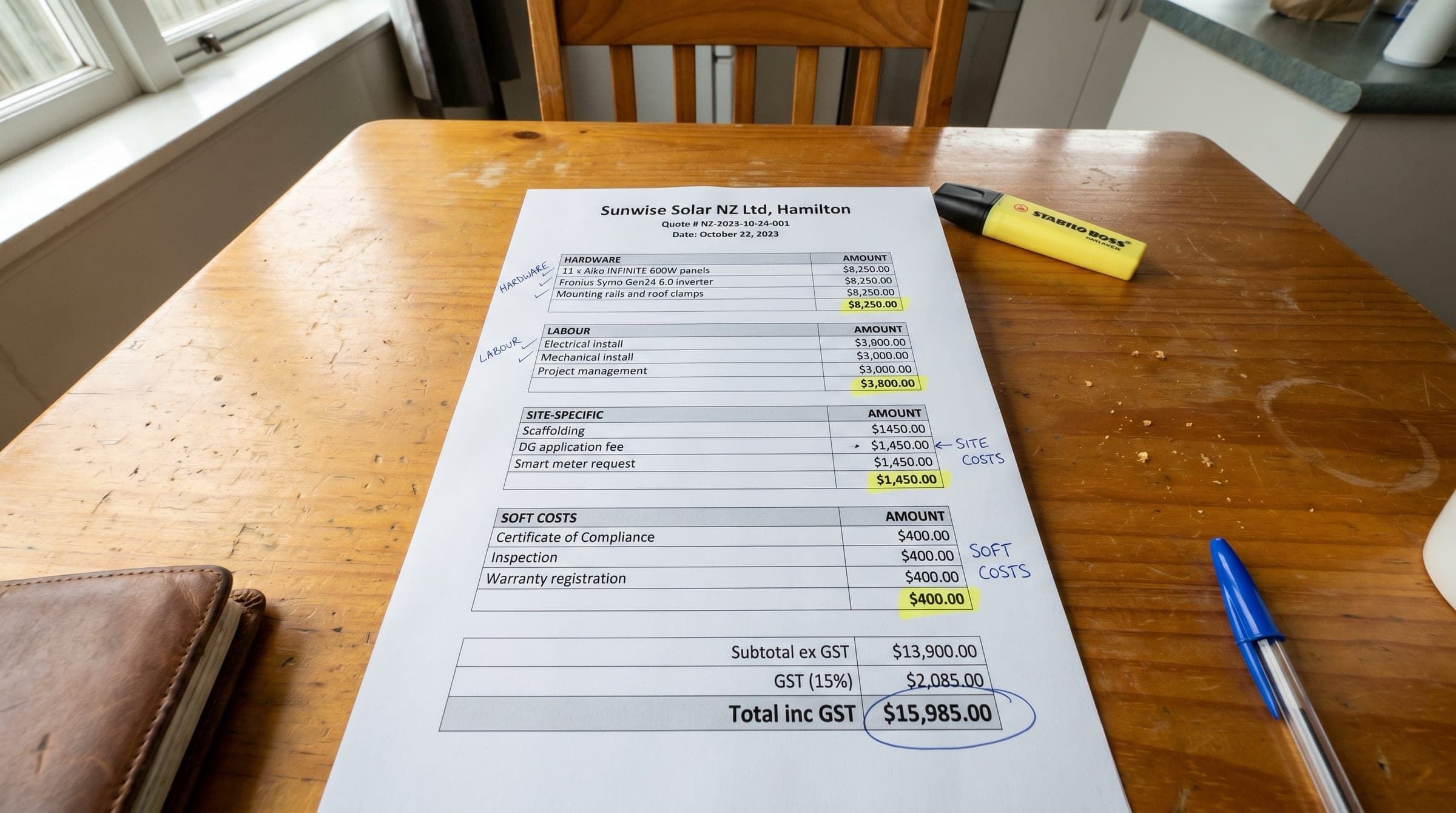
To read a NZ solar quote, check four blocks: hardware (panel and inverter brand, model, wattage, warranty), labour (registered electrician with Mains Parallel Generation endorsement), site-specific costs (scaffolding, switchboard, wind zone), and soft costs (consents, network fees, GST). Then divide the total by system size in watts to sanity-check the price.
A NZ residential solar quote breaks down into four blocks: hardware, labour, site-specific costs, and soft costs. Then there’s the after-the-line stuff: GST, deposit, payment terms. Here’s what each line should look like.
Hardware
Solar panels. Brand, exact model number, wattage, count, cell technology, warranty. A specific quote looks like this: “16 × Jinko Tiger Neo JKM580N-72HL4-BDV, 580W bifacial N-type TOPCon, 12-year product warranty, 30-year performance warranty.” A vague quote says “16 × premium 580W panels.” You can’t Google “premium 580W panels.” You can Google the first one in 5 seconds.
Inverter. Brand, model, AC kW rating, MPPT count, warranty (standard plus extended). Example: “Fronius Primo GEN24 6.0 Plus, 6.0kW AC single-phase, 2 MPPT, 5+5 year warranty (extended via Solar.web registration).” For more on whether you want string or microinverters in the first place, see our string inverter vs microinverter guide.
Mounting and racking. Manufacturer (Clenergy, SunLock, IronRidge), wind zone certification per AS/NZS 1170.2:2021. NZ has four wind regions plus alpine modifiers. The quote should name the wind zone for your address.
DC isolators / disconnection point.AS/NZS 5033:2021 actually abolished rooftop DC isolators in favour of a “disconnection point.” If a 2026 quote still itemises rooftop DC isolators, the install practice is outdated.
Smart meter.Usually NOT in the installer’s scope. Your retailer (or their metering provider) installs the import/export smart meter. The quote should say “meter change to be arranged with retailer.” Critical: solar can be physically installed but cannot legally export until the meter is changed.
Battery (if quoted).kWh nameplate AND usable kWh (different numbers), brand, chemistry (LFP vs NMC), warranty in years AND throughput cycles. Red flag: a quote that just says “10kWh battery” with no brand. For the full battery breakdown, see solar battery storage NZ.
Labour
Electrical labour. Must be done by a registered electrician with the Mains Parallel Generation Systems endorsement (mandatory in NZ from 1 September 2026). The inspector who signs off must hold the same endorsement. The quote should name the certifying electrician. You can verify the registration on ewrb.govt.nz.
Roofing labour.A separate roofer is sometimes needed for tile, slate, or membrane (Butynol/TPO) roofs. Profiled steel and Coloursteel are usually handled by the solar crew. If your roof is membrane and there’s no roofer line, ask why.
Site-specific costs (the variation magnets)
These are the line items most likely to come back as a surprise bill if they’re missing.
- Scaffolding, typical 2026: $500-$2,500 for single-storey, $2,500-$5,000+ for two-storey or complex access.
- Switchboard upgrade: $1,500-$5,000 if needed. Many older NZ homes do.
- Meter change: coordinated by the retailer. $0-$500. Takes 2-6 weeks.
- DG (Distributed Generation) connection fee: paid to your lines company. Vector is $350; other EDBs $50-$300. Approval usually 0-30 business days.
- Tree trimming, roof reinforcement, earthing/bonding upgrades, three-phase work, crane hire: usually fine print “may be required, subject to inspection.”
Soft costs and after-the-line
Engineering drawings, DG paperwork, commissioning, monitoring app setup, warranty registration. Should be either bundled or itemised. Never both, never absent.
GST is included in NZ residential pricing. Deposit norm is 10 to 20%. Balance is due on commissioning. Payment method matters: credit card gives chargeback rights under the Fair Trading Act. Bank transfer doesn’t.
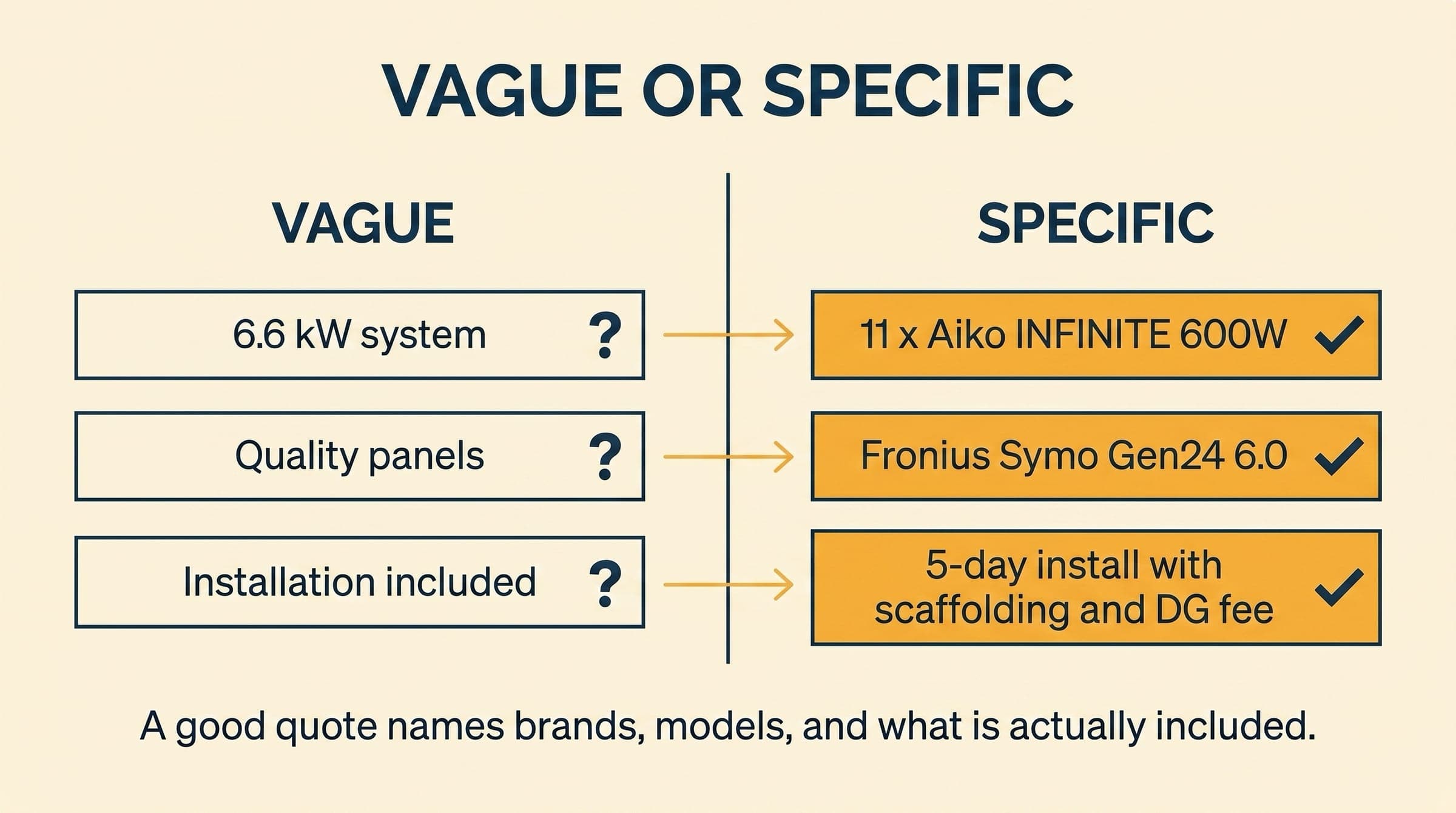
A specific quote names brands and model numbers. A vague quote says “premium,” “quality,” “professional.” If you can’t Google it, you can’t verify it.
The Per-Watt Sanity Check
A fair price per watt for solar in NZ is $1.70 to $2.00 inc GST for a quality 6.6 kW Tier 1 system. To calculate it, divide the total quote by system size in watts (a $13,500 quote for 6,600W equals $2.05/W). Anything under $1.40/W in 2026 means something is missing from the scope.
The fastest way to test a quote is dollars per watt. Take the total inc GST, divide by the system size in watts. (A 6.6kW system has 6,600 watts.) Compare to this benchmark.
The benchmark to use: $1.60-$2.40 per watt for a typical NZ residential install in 2026. Premium panels (Aiko, REC Alpha, microinverter-level) can push to $2.80/W.
Below $1.40/W in 2026, something is missing. That’s usually one of:
- Off-brand panels (not Tier 1, so a shakier bet on the warranty being honoured)
- Labour undercosted (cheap labour means the installer needs volume to survive, phoenix risk)
- Scaffolding or switchboard work outside scope (will come back as a “variation”)
- A leasing or PPA structure dressed up as ownership
For the full 2026 pricing breakdown by system size, see our NZ solar panel cost guide.
Vague vs Specific: Real Language to Look For
This is the eye test. Once you can spot vague language, the quote starts to read itself.
Why specifics matter:
- You can Google the actual product
- A reviewer can check the panels are Tier 1
- The installer is locked to that spec at install time. They can’t quietly swap to a cheaper panel that “is also 580W.”
- Warranty terms align with the panel
What's NOT in the Quote That Should Be
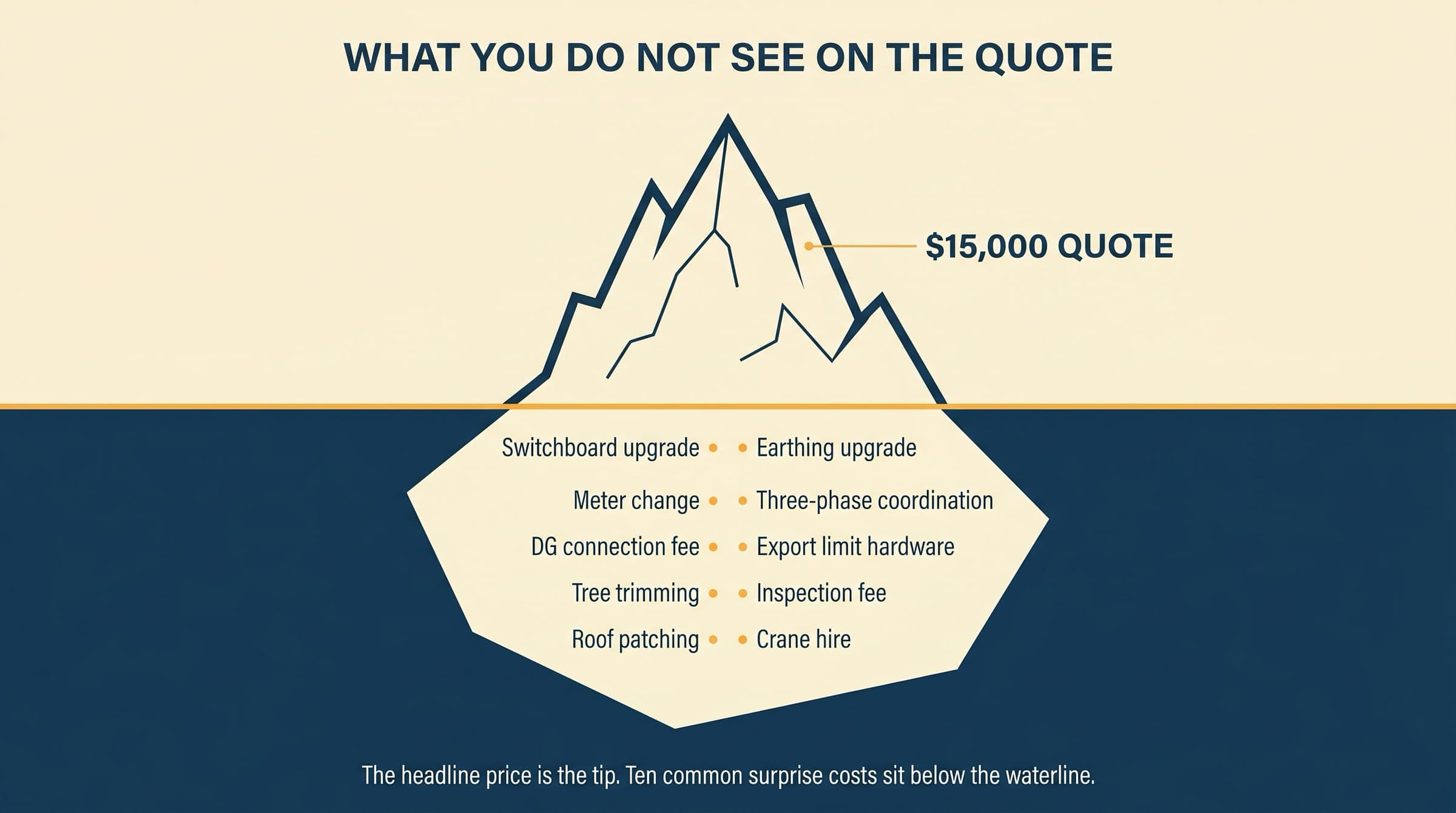
The bit nobody mentions: a solar quote isn’t a fixed-price contract. It’s the price for what the installer thinks the job is. The variation invoice arrives later, after the deposit. Here’s where surprise bills come from, in rough frequency order.
1. Switchboard upgrade
The single biggest variation. $1,500-$5,000. Many pre-1990s NZ homes need one. Triggers: ceramic fuses, no RCD protection, board over 25 years old, asbestos-backed panels (1960s-80s, and these need a proper handling procedure). A specific quote says “switchboard inspected and confirmed compatible” OR includes an itemised allowance.
2. Meter change
Coordinated by the retailer, not the installer. 2-6 weeks. Some retailers free, others charge $0-$500. The most frustrating part: solar can sit physically installed and idle while you wait for the meter to be swapped. Your installer should flag this in the quote.
3. DG connection fee + approval
Paid to your lines company. Vector is $350; other EDBs $50 to $300. Approval typically takes 0-30 business days. Longer for systems over 10kW or constrained networks. A “DG application included” line should still name the EDB and the fee.
4. Tree trimming or removal
Common fine print. If your roof has a tree shading it, that tree may need work. Usually an “if required” clause. Get it priced before signing if it’s a real possibility.
5. Roof structural work
Older or compromised roofs (rust on coloursteel, soft battens, tile damage) can require reinforcement before the panels go on. Usually surfaces during the site visit, but only if the installer actually does one.
6. Earthing or bonding upgrades
Older electrical systems sometimes need earthing improvements before solar can be safely connected. Usually a few hundred dollars, but it’s rarely on the quote.
7. Three-phase coordination
If the home is single-phase but the quoted inverter is three-phase (or vice versa), there’s a real cost to sort that out. The quote should make the phase configuration explicit.
8. Network export limit hardware
NZ distributors have had to offer a 10kW default residential export limit since 11 May 2026, though some were still working towards it at mid-2026 and Wellington Electricity uses flexible export pricing instead of a fixed limit. Larger inverter sizes need export-limiting hardware configured. Ask which limit applies to your address.
9. "Subject to inspection"
The magic phrase. It means “this is a guess; the real price comes later.” Flag any quote that uses it without an itemised allowance.
10. Crane hire
Difficult-access roofs, cliff sites, awkward urban infill properties. If access is hard, ask explicitly whether a crane is in the price.
If the installer hasn’t physically been on your roof (or had a detailed photo session of it) before quoting, expect at least one of these as a variation. That’s not cynicism. That’s the maths of guessing.
Want to compare
quotes?
Get matched with vetted local installers and see real quotes for your home. It’s free, with no obligation.
Compare up to 3 quotesWarranty: The Three Layers (and the One That Matters Most)
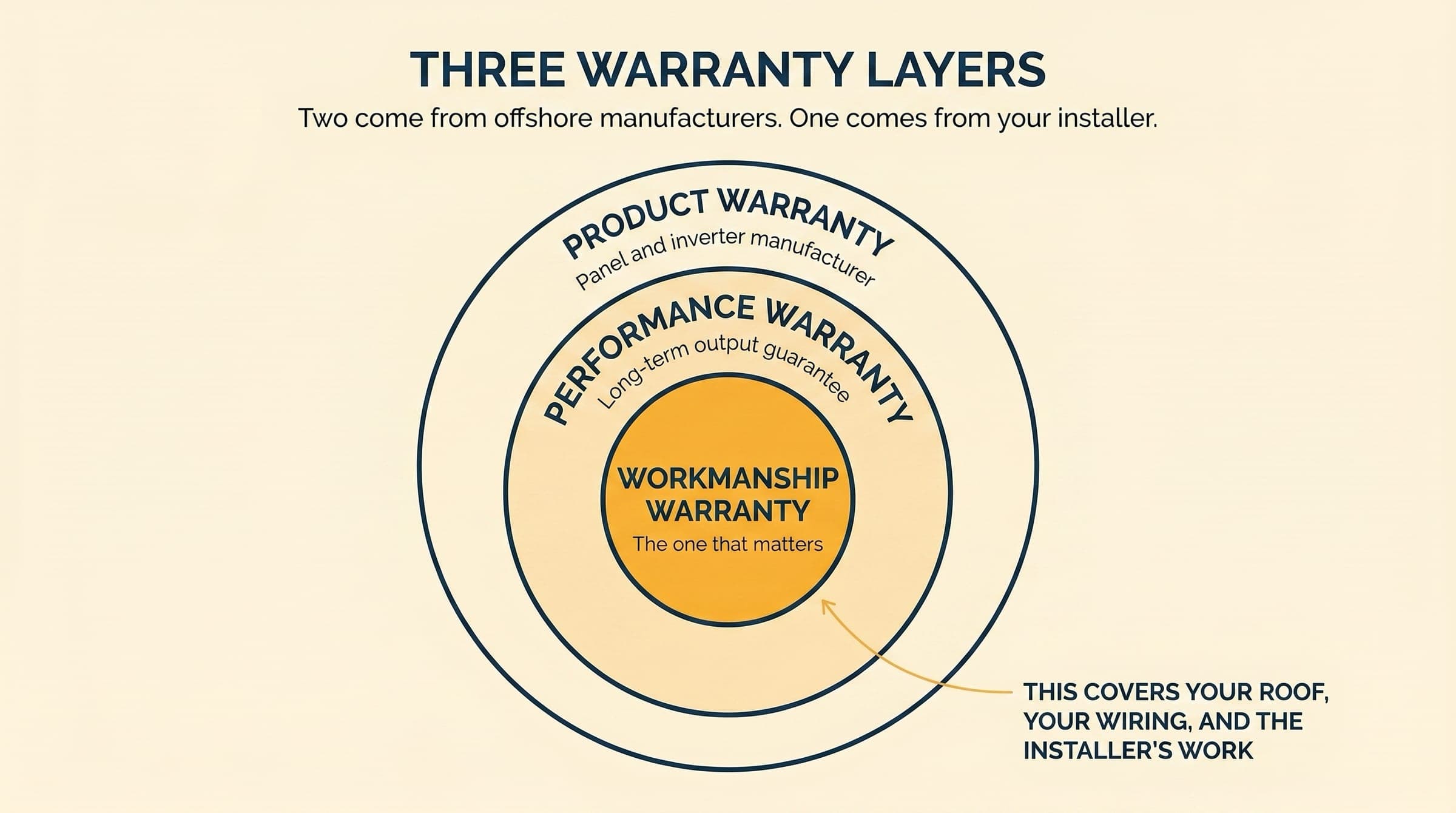
Solar systems carry three different warranties from three different parties. They’re not interchangeable. A “25-year warranty” on a quote is meaningless until you know which one.
1. Product warranty (manufacturer)
Covers manufacturing defects. Panel: typically 12 to 25 years (Jinko Tiger Neo product warranty is 25 years; REC Alpha is 25; Aiko is 25). Inverter: 5 to 10 years standard, often extendable. Conditional on registration. Fronius’s free 10-year extension is only valid in NZ if the inverter was sold through Taspac (the NZ partner) and registered on Solar.web.
2. Performance warranty (manufacturer)
Panels only. Typically 25 to 30 years guaranteeing output stays above 85-92% of nameplate. A different document from the product warranty. Hard to claim in practice: requires panel-level monitoring data and often third-party flash testing.
3. Workmanship / installer warranty (the one that matters)
The local one. The one that pays for “the system was integrated wrong, now leaks.” Industry range: 5 to 10 years is good, 2 to 3 is cheap, “lifetime” is usually company-lifetime (suspicious). This is the warranty that disappears if the installer goes bust. More on that below.
Master Electricians Workmanship Guarantee
A useful backstop if your installer is ME-accredited. Covers 12 months from CoC date, up to $20,000in labour and replacement materials. Worth having, but not a substitute for a long installer warranty. Note: it’s 12 months, not 6 years, despite what some marketing implies.
Roof warranty pass-through
Some installers preserve manufacturer roof warranties via approved penetration kits; others void them. Newer Coloursteel roofs come with 10 to 30-year warranties. Losing that quietly by drilling without an approved kit is a real risk. Ask explicitly: “Will my roof warranty still apply after the install?”
A 25-year solar panel paired with a 2-year workmanship warranty is like buying a new car with a 12-month warranty on the engine. Read the fine print before you sign.
Red Flags and Pressure Tactics
Build the “if you see this, walk away” instinct. None of these are fatal on their own. Two or more = different installer. For the full pattern of dodgy operators in the NZ market, see our guide to solar scams and pressure tactics in NZ.
1. Deposit over 20%
Industry norm is 10-20%. Some installers offer 0% via finance. Anything over 50% upfront is a working capital play. If they go bust, you lose it.
2. "Today only" or "this week only" pricing
Solar prices move quarterly, not daily. Any time-pressure language is a sales tactic, not pricing reality.
3. Reluctance to name brands
“We use the best panels available” with no model number means walk. Specifics build trust. Vagueness hides substitution.
4. No written workmanship warranty
Must be in the quote, not just verbal. If it isn’t in writing, it doesn’t exist.
5. Full payment upfront
Never. Industry norm: deposit on signing, balance on commissioning. Anything else means you’re carrying the installer’s working capital.
6. No site visit before quoting
A satellite-only quote on a 50-year-old NZ villa is a guess. Site visits are usually free. Consumer NZ explicitly flags this as a red flag.
7. "Council consent fees included"
Most rooftop solar in NZ does NOT need a building consent. The Building (Exempt Roof-mounted Solar Panel Arrays and Building Work) Order 2025 came into force on 23 October 2025. Roof-mounted arrays under 40m² in wind zones up to “High” are exempt. If a quote charges for consent fees, ask why.
8. Door-knocking or cold-calling
Most reputable NZ installers don’t. If they found you instead of you finding them, ask harder questions.
9. "Free solar" or "$0 down"
Frequently a 20-year PPA where you don’t actually own the system, and the PPA company keeps most of the savings. Consumer NZ has explicitly warned about this structure. Read the contract carefully.
10. No NZBN, no SEANZ, no named electrician
Verify the company on companies.govt.nz. Verify the named electrician on ewrb.govt.nz. Check SEANZ membership at seanz.org.nz. Five minutes of homework can save five-figure regret.
11. Cheap inverter on premium panels
Mismatched warranty horizons. A 25-year panel paired with a 5-year inverter means you’ll be replacing the inverter well before the panels.
12. Inflated self-consumption in payback math
If a quote claims a 4-year payback, check the self-consumption assumption. Real NZ residential self-consumption sits around 30-50% without a battery. Anything quoting payback based on 70%+ self-consumption is massaging the numbers. Consumer NZ flags this as the most common payback inflation trick.
13. Big drop between estimate and quote
If the price drops 50% between an initial estimate and a final quote (or jumps that much the other way), one of the two numbers wasn’t real.
How to Compare 3 Quotes Side-by-Side
Print this off. Fill it in for each quote. The one with the most “yes / specific” answers is usually the right one, even if it’s not the cheapest.
EECA publishes its own purchasing checklist (August 2025). It’s good. Ours is more granular because we’ve seen what shows up on real Kiwi quotes that EECA’s doesn’t ask about.
After the Deposit: What Happens If Your Installer Goes Bust
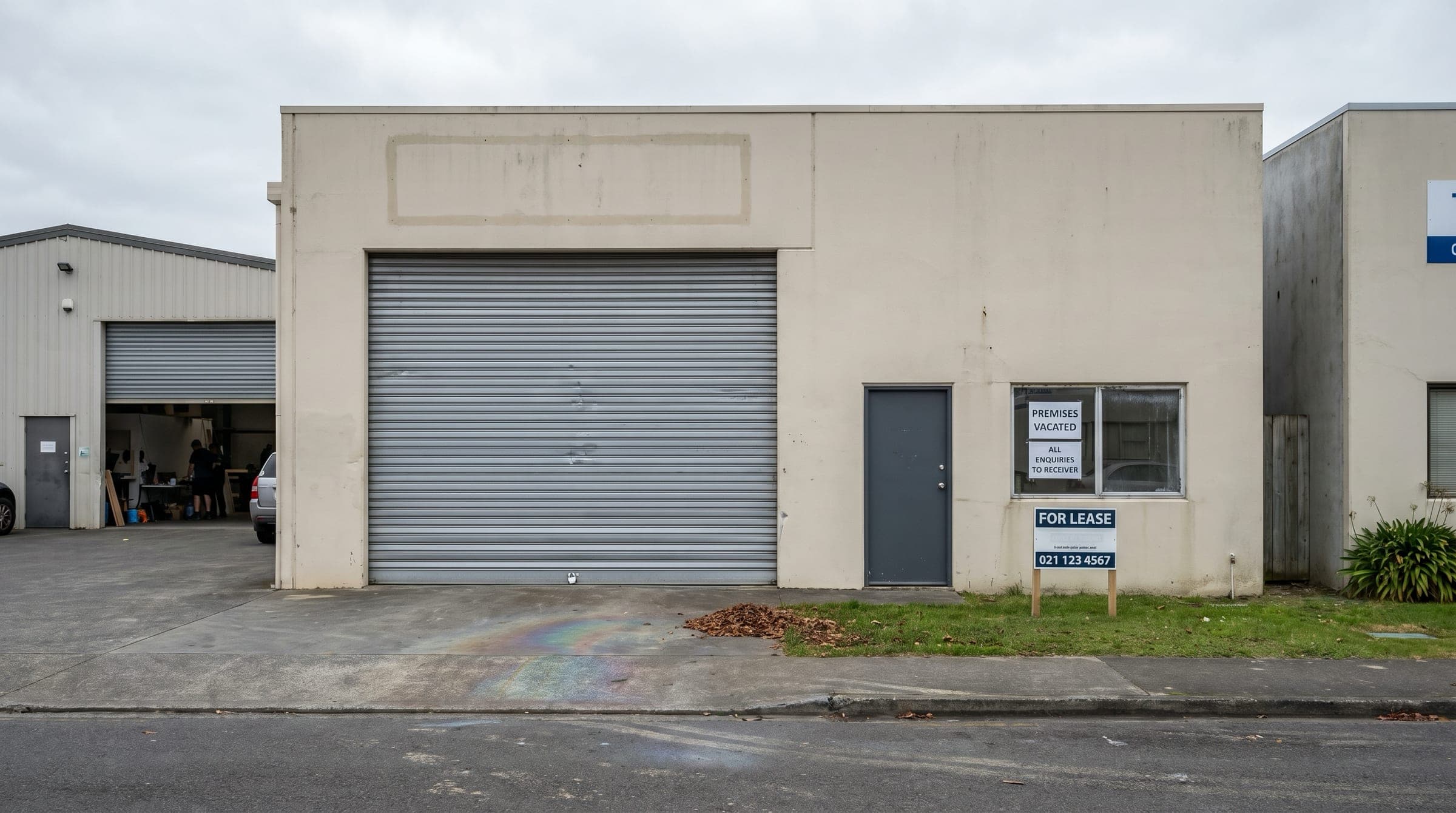
This isn’t theoretical. Three NZ solar companies have gone into liquidation in the last 18 months. SolarZero (BlackRock-backed, roughly one-in-three NZ residential installs) entered liquidation in November 2024. Solar Group Limited and Guru NZ followed in 2025. It’s worth knowing what happens if you’ve already paid a deposit.
What actually happens
- Your deposit is usually lost.You become an unsecured creditor. Most homeowners don’t see a cent back.
- Workmanship warranty is gone. The company that owed you the warranty no longer exists.
- Manufacturer product warranties typically survive. They’re registered to the system, not the installer. You’ll need a new installer to actually submit a claim.
- Mid-install jobs become a problem.A new installer is needed to commission the system, issue the CoC and ESC, and finish the work. That’s a separate quote. Not cheap.
How to reduce your exposure
- Check NZBN and Companies Office for current registration and director history. Phoenix companies (same directors, new entity) are real.
- Pay by credit card if possible. Chargeback rights under the NZ Fair Trading Act apply if the work isn’t delivered.
- Use a SEANZ-member installer. Continuity arrangements and green loan eligibility on the same membership.
- Cap deposit at 10-20%. Anything more is a working-capital problem you don’t need.
- Ask whether the installer holds a bank-issued installation guarantee.
If reading three quotes line-by-line sounds like a lot of work, that’s because it is. We pre-vet NZ solar installers on every item in this guide so you don’t have to spot it all yourself. Compare up to 3 vetted-installer quotes (free, takes about 2 minutes).
For the full vetting checklist we apply, see how Solar Scout vets solar installers. And our broader guide to choosing a solar installer in NZ covers SEANZ membership, what good and bad operators look like, and the questions to ask in the meeting.
Want to compare
quotes?
Get matched with vetted local installers and see real quotes for your home. It’s free, with no obligation.
Compare up to 3 quotesNZ Rules Every Quote Should Reference
The credibility section. Here’s what the standards mean and where you can verify them.
Common Questions
What should be included in a NZ solar quote?
Hardware (panels, inverter, mounting, isolators, monitoring) with specific brands and model numbers. Labour by a registered electrician with the Mains Parallel Generation endorsement. Site-specific costs (scaffolding, switchboard upgrade if needed, DG fee, meter change coordination). Warranty terms (product, performance, workmanship). Deposit and payment terms. GST inclusive.
What's a fair price for solar in NZ in 2026?
$1.60 to $2.40 per watt DC for a typical residential install. Premium panels (Aiko, REC Alpha, microinverter-level) can push to $2.80/W. Below $1.40/W means something is missing or off-brand.
What deposit should I pay for solar?
10-20% is the industry norm. Some installers offer 0% via finance. Anything over 50% upfront is a working-capital play. If they go bust, you lose it.
Do I need a building consent for solar in NZ?
Most roof-mounted residential installs don’t. The Building (Exempt Roof-mounted Solar Panel Arrays and Building Work) Order 2025 came into force on 23 October 2025. Roof-mounted arrays under 40m² in wind zones up to “High” are exempt. Quotes that charge for council consent fees should be questioned.
What's the difference between product, performance, and workmanship warranties?
Product covers manufacturing defects (panels typically 12-25 yrs, inverter 5-10 yrs). Performance guarantees output stays above a threshold for 25-30 years on panels. Workmanship covers the installer’s labour and integration (5-10 years if good, 2 if cheap). The workmanship one is the most likely to actually be claimed.
What happens if my solar installer goes bust?
Deposit is usually lost (unsecured creditor). Workmanship warranty disappears. Manufacturer product warranties typically survive. A new installer is needed to commission or claim. SolarZero, Solar Group, and Guru NZ have all gone into liquidation in the last 18 months, so the risk is real.
What's the meter change for, and who does it?
Going from import-only to import/export means your meter has to be capable of measuring power flowing both ways. Your retailer (or their metering provider) does it, not the installer. Cost varies $0-$500. Process takes 2-6 weeks. The system can be physically installed but cannot legally export until it’s done.
Do I need a site visit before getting a solar quote?
In most cases yes. A quote based purely on satellite imagery is a guess, especially on older NZ homes. Site visits are usually free. A no-site-visit quote is more likely to come back with variations after the deposit.
What does Tier 1 mean for solar panels in NZ?
Tier 1 is Bloomberg NEF’s bankability rating, not a quality rating. No NZ bank requires it for a green loan, but it’s a sensible filter for warranty risk: a manufacturer that banks trust is more likely to be around to honour a 25-year warranty. Check the panel model is on the current Tier 1 list.
How do I check if a solar installer is legit?
Look up the company on companies.govt.nz (NZBN, current registration, director history). Check the named electrician on ewrb.govt.nz. Verify SEANZ membership at seanz.org.nz. Check Google reviews and ask for two recent local installs you can drive past.
Next steps for your solar journey
Related guides
View all
How to Get Solar Quotes in NZ (and Compare Them Properly)
How to get solar quotes in NZ: EECA's 2-3 quote rule, where to get them, what to have ready, comparing $/W like-for-like, and the red flags in the quoting process.
Read
Buying Solar Panels in NZ: What You Need to Know
Everything NZ homeowners need to know before buying solar. The buying process, common mistakes, installer insolvency risks, and the gotchas nobody mentions.
Read
Best Solar Panel Installers NZ (2026)
How to find a quality solar installer in NZ. What to look for, red flags to avoid, and when SEANZ membership matters for your bank loan.
Read
Solar Scams in NZ: Real Cases and What They Look Like
Three NZ solar companies entered liquidation in 8 months. Real cases, the 'free solar' / PPA trap, the inflated-payback trick, and the 9-step checklist before you sign.
Read
Solar Panel Costs NZ: What You'll Actually Pay in 2026
Real pricing data for NZ solar in 2026. System costs by size, what affects price, and how to tell if a quote is fair.
Read
How Many Solar Panels Do I Need?
Work out how many solar panels your NZ home needs. Based on your power usage, roof space, and whether you're adding a battery or EV charger.
Read
Join the conversation
The best comments are honest ones: Real experience. Share yours, please stay civil and on topic. No self-promo links.
Your email is never shown or shared. To change or remove a comment later, .
No comments yet. What is your experience with this? Be the first to weigh in.