
String Inverter vs Microinverter NZ: Which Is Right for Your Roof?
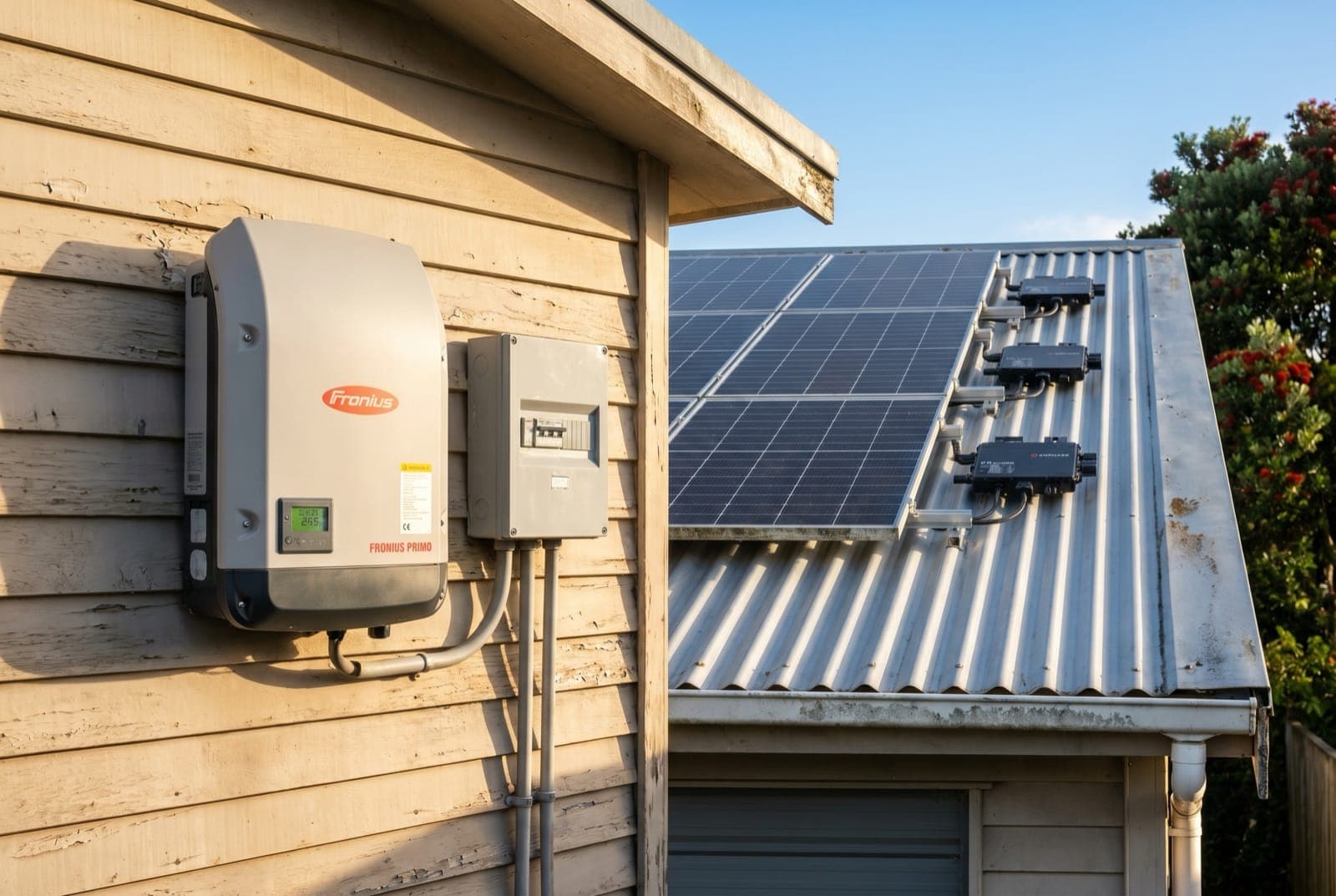

A string inverter is one box on the wall handling all your panels in series; a microinverter is a small box mounted behind every panel. In NZ, a quality string inverter (Fronius, Sungrow, GoodWe) adds $1,400 to $3,200 to your install. Going microinverter (Enphase) adds another $1,800 to $3,500 on top of that, depending on system size.
The short rule: clean north-facing roof with no shade, go string. Shaded roof, three or more orientations, or plans to add panels later, go microinverters. Inverter choice usually moves total system cost by 10 to 20%, so getting it right matters. Most NZ homeowners default to whatever the installer quotes, but the box behind that decision is the difference between a Kiwi solar system that pays back in 6 years and one that limps along for 10 because shade kills a whole string at once.
Want to skip the homework and compare quotes from vetted installers who’ll price both options on the same roof? Answer a few quick questions and we’ll connect you with vetted local companies.
The 30-Second Answer
Clean north-facing roof, no shade? String inverter. Pohutukawa next door, three roof faces, plans to add panels later? Microinverters. The middle ground is where it gets interesting.
String inverter winsif your roof is one orientation, has no significant shade, you’re cost-sensitive, and you’re not planning to expand the system.
Microinverters winif you’ve got shade from trees, chimneys, or dormers. Or if your roof has three or more orientations. Or if you might add panels in five years when the kids’ bedrooms turn into a hot water heat pump and an EV charger.
Optimisers (SolarEdge or Tigo) sit between them. Middle cost, panel-level optimisation, but still one central inverter that can fail.
For most NZ roofs, a quality string inverter (Fronius, Sungrow, or GoodWe) is the right call. We’ll walk through why.
How They Actually Work
Solar panels make DC power. Your house runs on AC. The inverter converts one to the other. Without it, your panels do nothing useful.
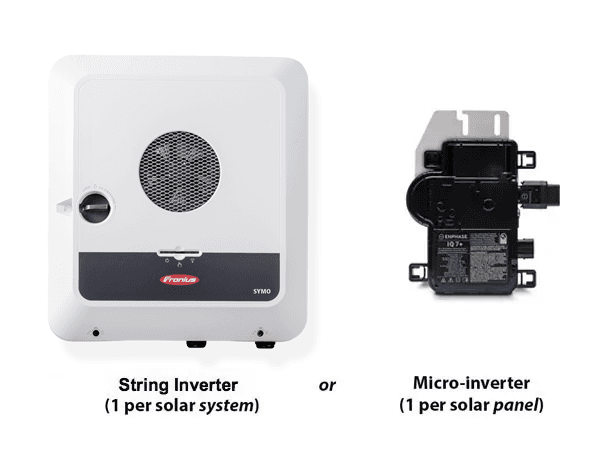
String inverter (one big box)
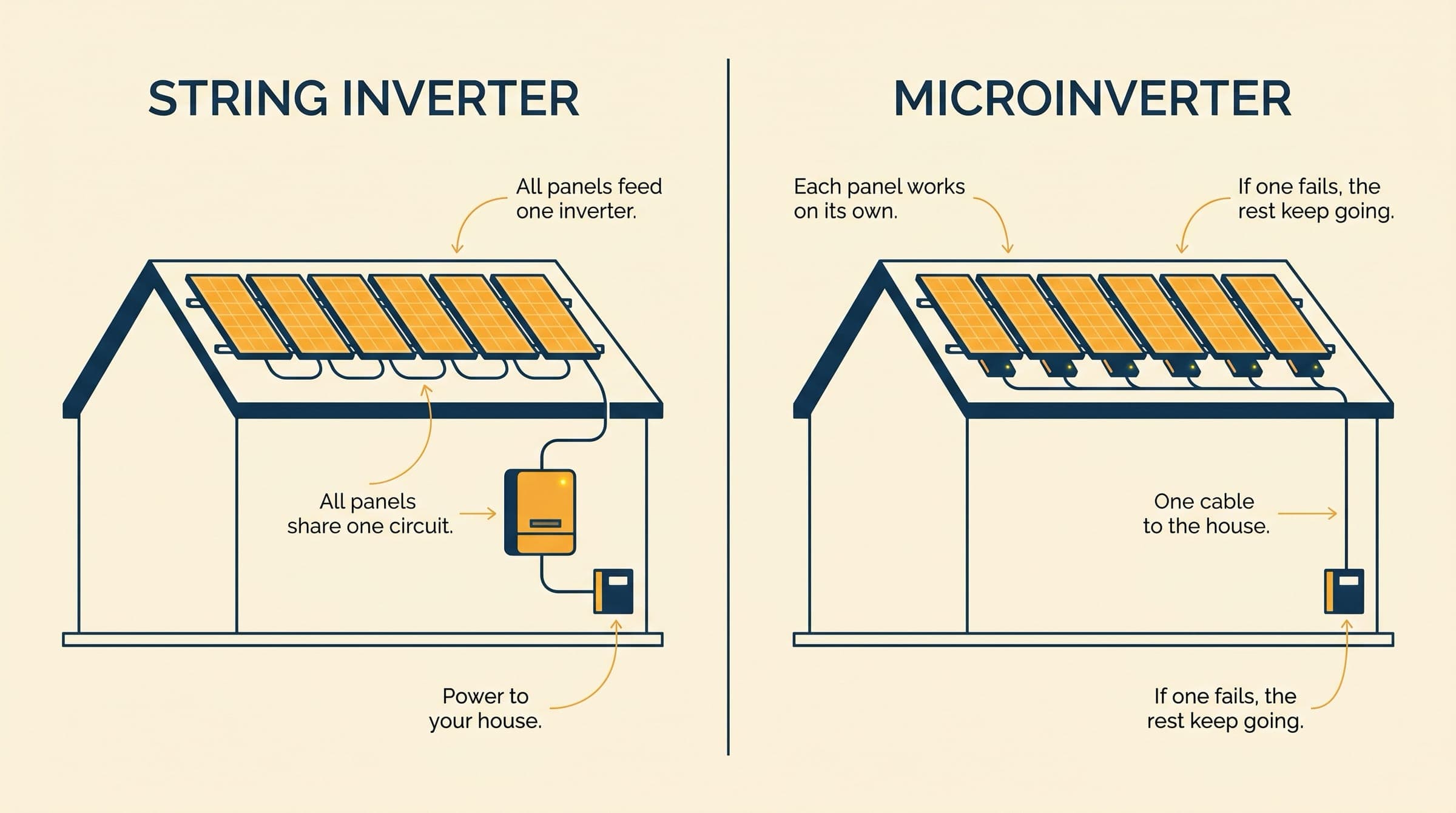
All your panels are wired in series. That’s the “string.” A single central inverter, usually wall-mounted in the garage, takes that DC and converts it to AC. Most modern residential string inverters have one or two MPPTs (Maximum Power Point Trackers). High-end units like the GoodWe MS G3 have three.
The MPPT figures out the best operating point for the string as a unit. One MPPT serves one orientation; two MPPTs let you split your panels across two roof faces.
Microinverter (one box per panel)
A small inverter mounted under each panel, converting DC to AC right at the source. AC cables run down to your switchboard. Each panel has its own MPPT, so each panel runs at its own optimum, independent of the rest.
In NZ, that effectively means Enphase. The IQ8 generation has two AU/NZ-specific models: the IQ8AC (suits panels up to 480W) and the IQ8HC (up to 505W).
DC optimiser (the middle path)
A small electronic widget at each panel does panel-level DC tuning, then sends DC down to a central inverter that handles the actual DC-to-AC conversion. SolarEdge does this as a full system. Tigo TS4-A-O works as an add-on, often selectively, on the panels that need it most.
Why MPPT matters, in plain English
Think of MPPT like cruise control for each panel. With a string inverter, one cruise control sets the speed for the whole convoy. If one panel slows down (shade), the whole convoy slows down with it. With microinverters or optimisers, every panel has its own cruise control, so a slow panel doesn’t drag the rest down.
The Shading Question
This is the section the internet gets wrong most often. The legacy line is “one shaded panel kills the whole array.” That was true 15 years ago. It’s overstated now.
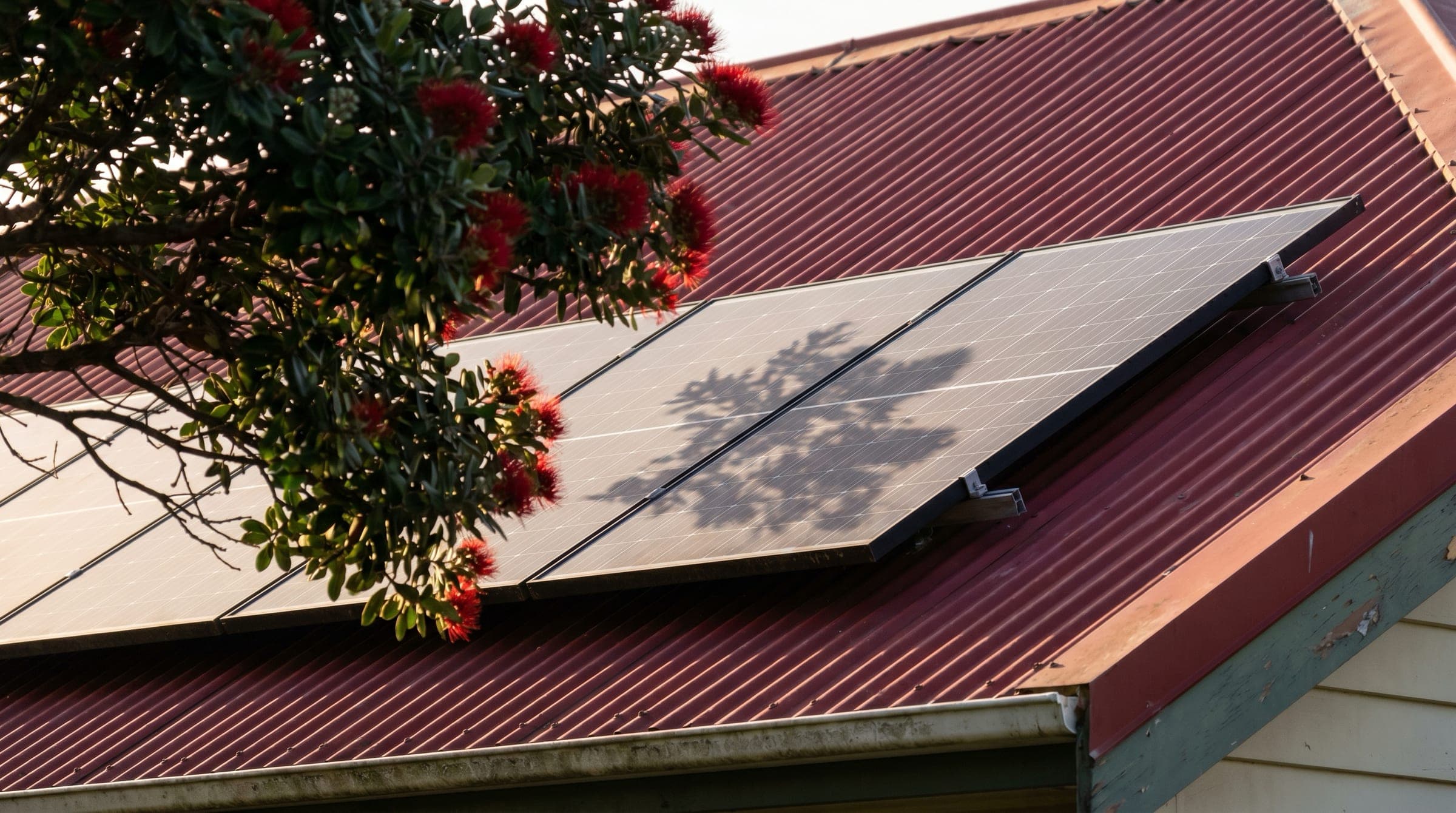
The shade myth (and the kernel of truth)
Modern panels have three bypass diodes per panel. Those diodes route current around shaded sub-strings, so a partially shaded panel typically loses 30 to 70% of its output, not 100%. Modern dual-MPPT string inverters track faster than they used to and isolate the affected string. The real impact in typical partial shade is closer to a 10 to 30% loss on the affected string, not the whole array going dark.
That’s the kernel of truth: shade still hurts a string inverter. It just doesn’t kill it.
Where microinverters genuinely earn their cost
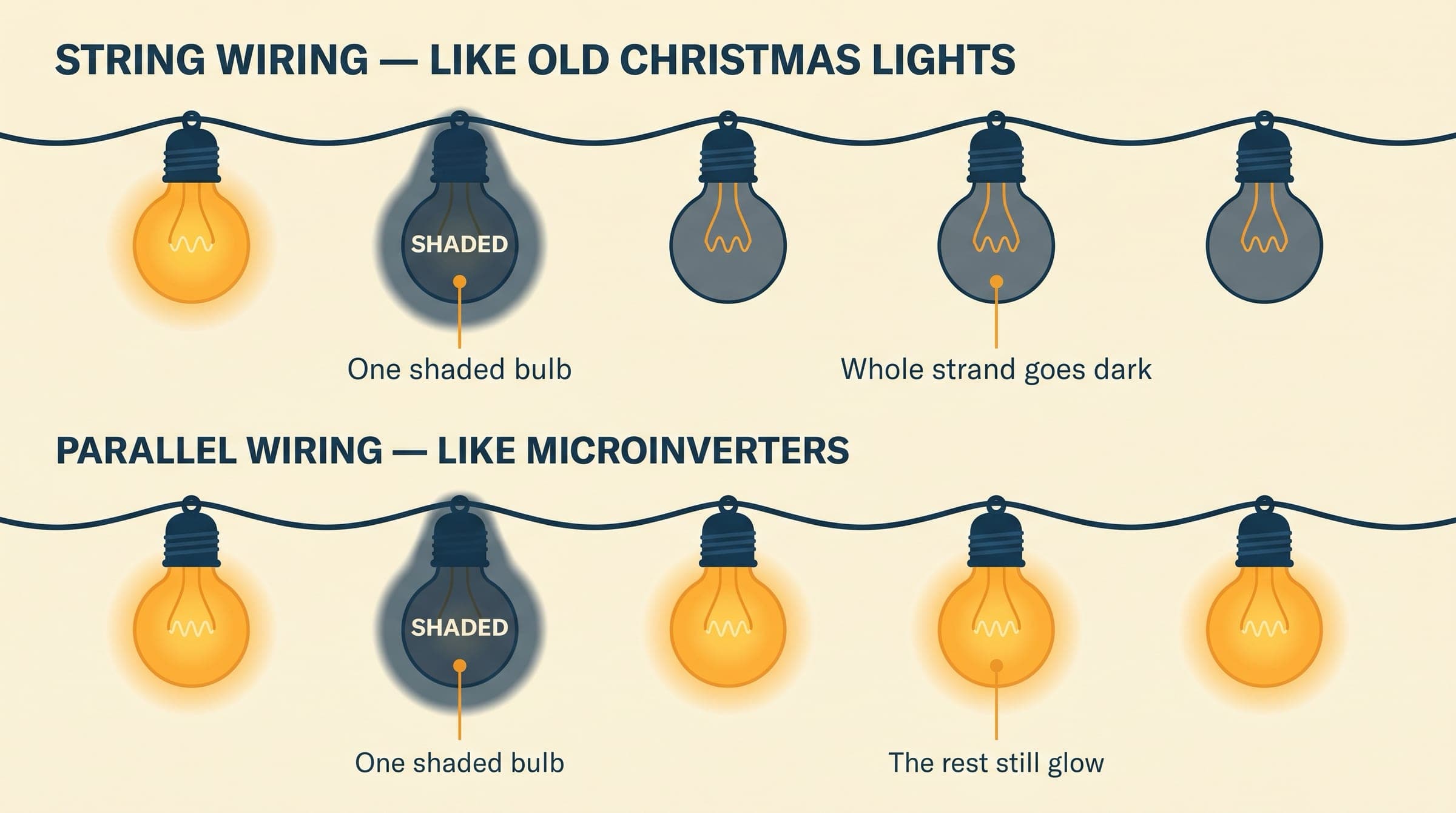
Microinverters and optimisers pull ahead when shade is deep, irregular, and panel-level. Real NZ examples:
- A pohutukawa next door that hits two specific panels for two hours every afternoon
- A chimney or vent stack that throws a moving shadow across different panels through the day
- A roof with three or more orientations (one MPPT can’t optimise three different angles at once)
- Dormers and hip-and-valley villa roofs (common in Mt Eden, Karori, Hataitai, Fendalton)
In those scenarios, microinverters or optimisers can deliver 5 to 25% better yields than a string equivalent. On a clean unshaded install, the gap drops to 2 to 4%.
Dual-MPPT string handles East/West splits cleanly
A two-orientation roof (East/West, or North plus West) is solved by any modern dual-MPPT string inverter: Fronius Primo, Sungrow SH-RS, GoodWe MS. You don’t need microinverters for an East/West split. That’s overpaying for a problem you don’t have.
What You'll Actually Pay
Pricing below is indicative ranges from NZ retailer listings as at April 2026. Most NZ inverter pricing is gated behind installer quotes. Get at least three quotes to compare like for like, and check our line-by-line quote-reading guide so you can sanity-check what each one is really including.
String inverter pricing (component, incl GST)
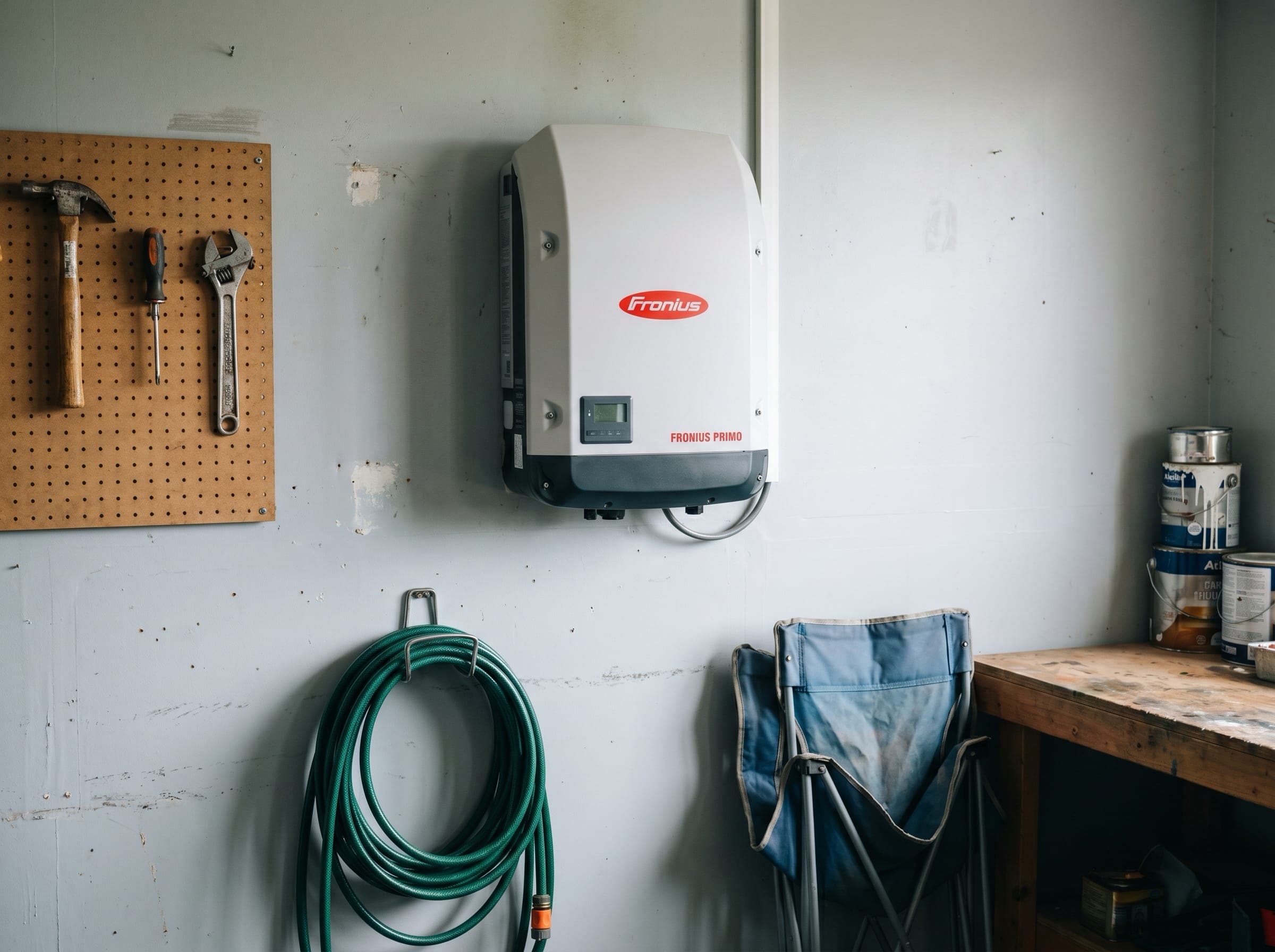
Prices are component only, incl GST. Installation labour adds roughly $400 to $800 depending on location and complexity.
Microinverter cost (Enphase IQ8AC / IQ8HC)
Replacement cost (string inverter, year 10-15)
Out of warranty, expect $1,500 to $3,500 installed for a like-for- like replacement. Within warranty, parts are usually free, though some brands charge a labour fee. Microinverter replacement is per-unit (one or two at a time over 25 years) and requires roof access, which adds a one-off scaffold or access fee.
Inverter choice typically moves total system cost by 10 to 20%. For the wider picture, see our NZ solar panel cost guide.
Want to compare
quotes?
Get matched with vetted local installers and see real quotes for your home. It’s free, with no obligation.
Compare up to 3 quotesWarranty Terms (and Why the Gap Matters)
Solar panels in NZ ship with 25 to 30-year performance warranties. String inverters historically don’t. That’s the gap worth understanding before you sign.
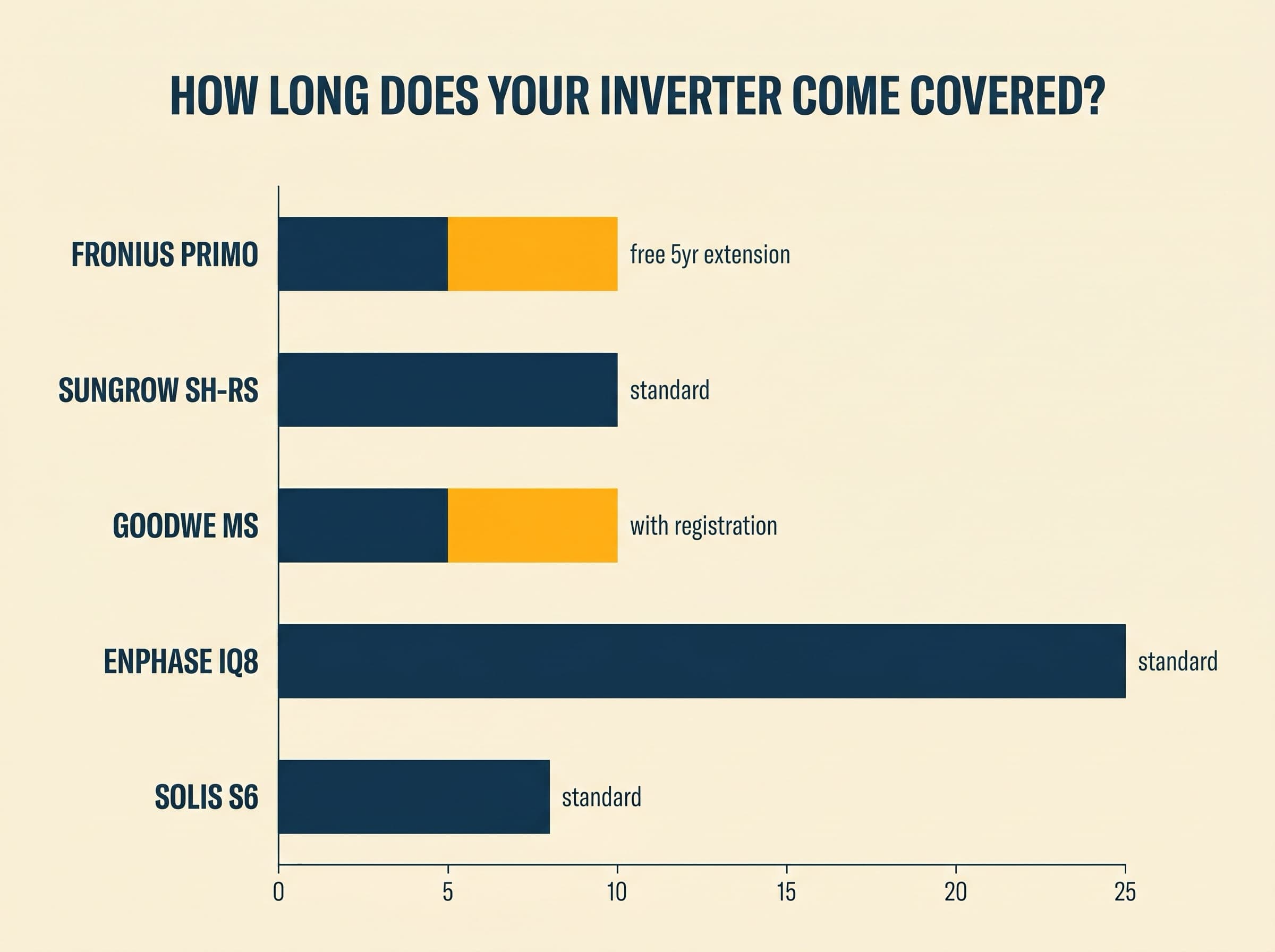
A 25-year solar panel paired with a 10-year inverter is like buying a 25-year car warranty that excludes the engine. Not always a deal-breaker, but worth knowing what you’re signing.
Microinverters and optimisers ship with terms that match the panel (25 years). String inverters historically don’t, even with the free extension. That doesn’t make string inverters wrong. It just means you should budget for one inverter replacement around year 10 to 15. A $2,500 replacement on a $13,000 system is real money, but it’s not catastrophic.
One thing to flag on Enphase warranties specifically: continuous internet connectivity through the IQ Gateway is a documented warranty condition. If you take the system offline for an extended period, you can compromise the warranty. Worth knowing if your broadband drops out a lot or if the property is a holiday home.
What NZ Installers Actually Use
The inverter brand on your quote usually follows the installer’s standard kit. Most NZ companies standardise on one or two inverters and stick with them. Here’s how the market patterns run.
Fronius-led string installs
Fronius Primo is the classic residential string default for several of NZ’s larger installers, often paired with Tesla Powerwall on battery installs.
String first, micro by exception
The biggest volume operators default to GoodWe MS string inverters and Sigenergy hybrids, switching to Enphase IQ7A only on shade-heavy or complex roofs. Telling: even at the top of the market, microinverters are treated as the exception, not the default.
Multi-brand stockists
Some installers quote across Fronius, Sungrow, GoodWe, Solis, and SolarEdge. Useful if you have specific preferences or want to compare options across price tiers.
How Enphase arrives
Enphase reaches NZ through a master AU/NZ distributor that also stocks Tigo TS4 and Sungrow, so installers fitting microinverters largely share the same supply chain.
Regional patterns
Hyundai-heavy line-ups cluster in the southern South Island, where string inverters are the default and the brand has a strong following among Otago and Southland installers.
The inverter brand often follows the installer, not the other way around. Pick the installer first, ask them what they fit, and decide whether the answer matches your roof.
For our shortlist of installers we’ve vetted, see our best NZ solar installers guide.
What Happens When One Fails
String inverter: one box, single point of failure
One unit fails, your whole array stops generating. NZ MTBF is anecdotally 10 to 15 years. Fronius cites a field failure rate under 0.5%. Replacement out of warranty runs $1,500 to $3,500 installed. Within warranty, parts are usually free, though some brands charge a labour fee.
The bonus is access. String inverters are wall-mounted, indoors, and easy to swap. Most replacements are a half-day job.
Microinverter: many small boxes, isolated failures
A typical residential install has 16 to 20 microinverters. One fails, that one panel’s output is gone. The other 15 to 19 keep generating. You won’t notice until you check the monitoring app.
Per-unit failure rate sits around 0.27 to 0.33% over seven years based on Solaray AU’s field data (roughly 100 failures across 35,000 units). That’s lower per-unit than a string inverter, but with 16 to 20 units installed, the household-level failure rate over 25 years isn’t zero. You should expect one or two replacements over the system’s lifetime.
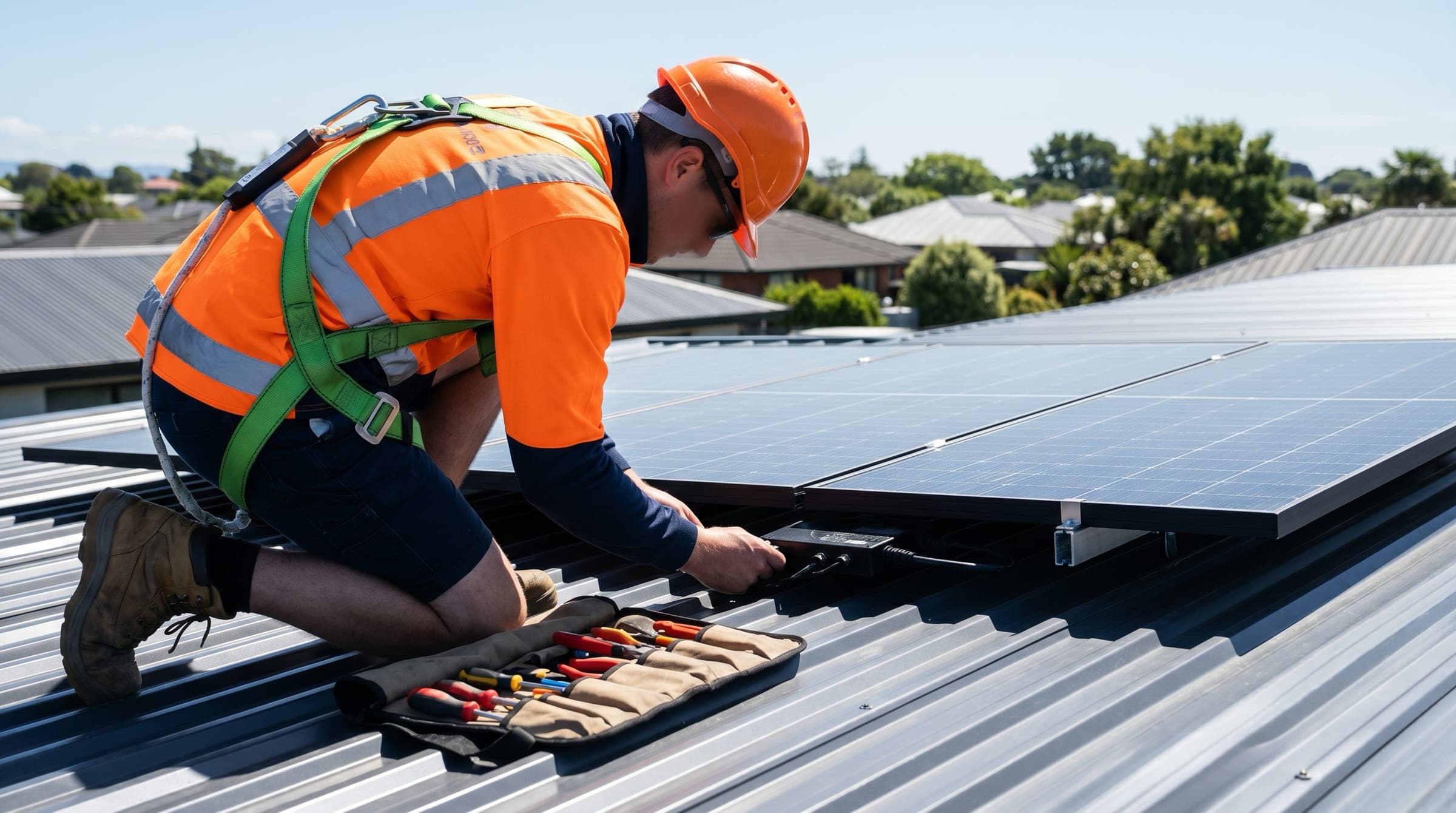
Replacement requires roof access. The part itself is cheap, but the access fee (scaffold or harness) is the real cost. Plan on a few hundred dollars per call-out.
Heat exposure (a real consideration, not yet a deal-breaker)
Rooftop microinverters operate at higher ambient temperatures than wall-mounted string inverters. Enphase rates the IQ8 to 65°C ambient. Real-world 25-year field data doesn’t exist yet (the IQ8 generation isn’t 25 years old yet). Watch this space, but the engineering is sound.
Monitoring Panel-Level vs String-Level
String inverters give you monitoring at the inverter level. You see total system output, daily generation, and sometimes per-string. You don’t see “panel 14 is underperforming.”
Microinverters and SolarEdge give you monitoring per panel. You can see if a single panel is dirty, shaded, or failing. Useful for diagnostics, but mostly a nice-to-have rather than a payback driver. For most homeowners, the inverter app shows you what actually matters either way: are we generating, and how much.
Expanding Later and Battery Readiness
Adding panels later
String: any added panels must match the existing string voltage. You may need a free MPPT input or an entirely new inverter. Often impractical without significant rework.
Microinverter: plug-and-play. Add an IQ8, add a panel, recommission via the Envoy gateway. This is the strongest practical argument for microinverters if your usage is going to grow (EV, hot-water heat pump, kids moving home from flatting).
Battery readiness
Hybrid string inverters(Fronius GEN24 Plus, Sungrow SH-RS, GoodWe ET, Solis EH) have battery DC coupling built in. Round-trip efficiency sits around 95 to 98% DC-DC, which is the best you’ll get.
Enphase IQ Battery 5P is AC-coupled and modular. Stack as many 5kWh units as you want. The trade-off is roughly 4 to 8% extra conversion loss compared with a DC-coupled equivalent, because the energy is converted DC to AC to DC to AC by the time it reaches your house.
SolarEdge Home Batteryis DC-coupled with their inverter. Tight integration if you’ve already gone SolarEdge.
For a retrofit (panels first, battery later), AC-coupled wins. It bolts onto any existing solar system with minimal rework. Enphase has the cleanest retrofit path.
If you’re planning a battery now or later, our solar battery storage guide covers DC vs AC coupling in more detail.
The Hybrid Option: DC Optimisers
There’s a third path most quotes don’t mention. DC-DC optimisers do panel-level tuning without microinverters, paired with a single central inverter for the actual DC-to-AC conversion.
SolarEdge (full system)
An optimiser sits behind every panel, paired with a SolarEdge central inverter. You get panel-level optimisation and monitoring, but you still have one central inverter that can fail. SolarEdge’s 12-year inverter warranty plus 25-year optimiser warranty reflects this trade-off.
Tigo TS4-A-O (selective add-on)
The clever middle ground. Tigo optimisers are an optional add-on that work with most string inverters (typically Fronius). You fit them only on the panels that need them: the shaded ones. The rest of the array runs as a normal string. About $60 to $90 per optimiser, only on the affected panels.
For a NZ roof with three or four shaded panels, selective Tigo on those panels paired with a quality string inverter is often cheaper, simpler, and more reliable than going full Enphase. Ask your installer if they fit Tigo before paying for full microinverter coverage you may not need.
The Honest Recommendation
Here’s the decision rule. We’re not going to nudge you toward whichever option costs more.
Microinverters are not always the right answer. They’re the right answer when your roof gives them work to do. On a clean unshaded north-facing roof, you’re paying $2,000 to $3,500 extra for a problem you don’t have.
For most NZ homeowners, the right path is a quality dual-MPPT string inverter (Fronius for the warranty story and NZ service, Sungrow or GoodWe for value), paired with Tier 1 panels and an installer who’ll quote both options if your roof is on the line.
Getting quotes? We’ll get you quotes from up to 3 vetted NZ installers who can price both string and microinverter on the same roof, so you can compare like for like. Start a free check.
Want to compare
quotes?
Get matched with vetted local installers and see real quotes for your home. It’s free, with no obligation.
Compare up to 3 quotesCommon Questions
What's the difference between a string inverter and a microinverter?
A string inverter is one large box, usually wall-mounted in your garage, that converts DC from all your panels (wired in series) into AC for your house. A microinverter is a small box mounted under each individual panel, doing the conversion at the source. String is cheaper. Microinverters handle shade and complex roofs better.
Are microinverters worth the extra cost in NZ?
On a clean, unshaded, single-orientation roof, no. The performance gap closes to 2 to 4%, which doesn’t justify the $1,800 to $3,500 premium. On a shaded roof, a multi-orientation roof, or a complex villa roof with dormers, yes. The performance gap can be 5 to 25%, and the failure isolation and modular expansion become genuinely valuable.
Is Fronius better than Enphase?
They’re different jobs. Fronius is the NZ string-inverter workhorse: Austrian build, NZ-based service, 5 years standard warranty extending free to 10 with registration. Enphase is the NZ microinverter standard: 25-year warranty on the IQ8 since October 2024, panel-level monitoring, modular expansion. The best one depends on your roof, not the brand.
How long do microinverters last in NZ?
Enphase IQ8 carries a 25-year warranty in NZ for systems activated from 1 October 2024. Real-world per-unit failure rates sit around 0.27 to 0.33% over seven years based on Solaray AU’s field data. Real-world 25-year field data doesn’t exist yet because the IQ8 hasn’t been in the field that long.
What happens if a microinverter fails?
That panel’s output stops. The other 15 to 19 panels keep generating. You’ll typically only notice via the Envoy monitoring app. Replacement requires roof access (one-off scaffold or harness fee), then a per-unit swap. The part itself is cheap; the access cost is the real bill.
Can I mix string inverters and microinverters?
Not on the same roof in any practical way. But you can use selective Tigo TS4-A-O optimisers on a shaded subset of panels, paired with a string inverter for the rest of the array. That’s the genuine middle ground: panel-level mitigation only where needed, with the simplicity and lower cost of a string inverter for the unshaded panels.
Do I need rapid shutdown in NZ?
AS/NZS 5033:2021 doesn’t mandate “rapid shutdown” the way the US NEC does. It does require DC isolators, disconnection devices, labelling, and a documented shutdown procedure. Microinverters and DC optimisers naturally satisfy isolation requirements without an external shutdown device, but a properly installed string system meets the code with standard isolators. Your installer handles this. Not something you need to specify yourself.
What's the best inverter brand in NZ?
For string inverters, Fronius is the most-recommended residential brand across NZ installers. Sungrow and GoodWe are strong value alternatives, both with 10-year standard or registration-extended warranties. For microinverters, Enphase is effectively the only volume option in NZ.
Will my green loan cover either option?
Yes. Green loan eligibility hinges on your bank and installer paperwork (ANZ and Kiwibank want a SEANZ member, the rest a qualified installer), not on the inverter topology. All major NZ bank green loans (Westpac at 0%, ANZ, ASB and BNZ at 1%, Kiwibank with cashback) work the same way whether you choose string or microinverter.
Will the inverter be replaced before the panels?
For a string inverter, probably yes, around year 10 to 15. Budget $1,500 to $3,500 for one out-of-warranty replacement. For microinverters with the IQ8’s 25-year warranty, you’ll likely need one or two unit replacements over the system’s life, but the warranty covers most of that. For solar panels themselves, expect 25 to 30+ years before replacement becomes a real conversation.
Next steps for your solar journey
Related guides
View all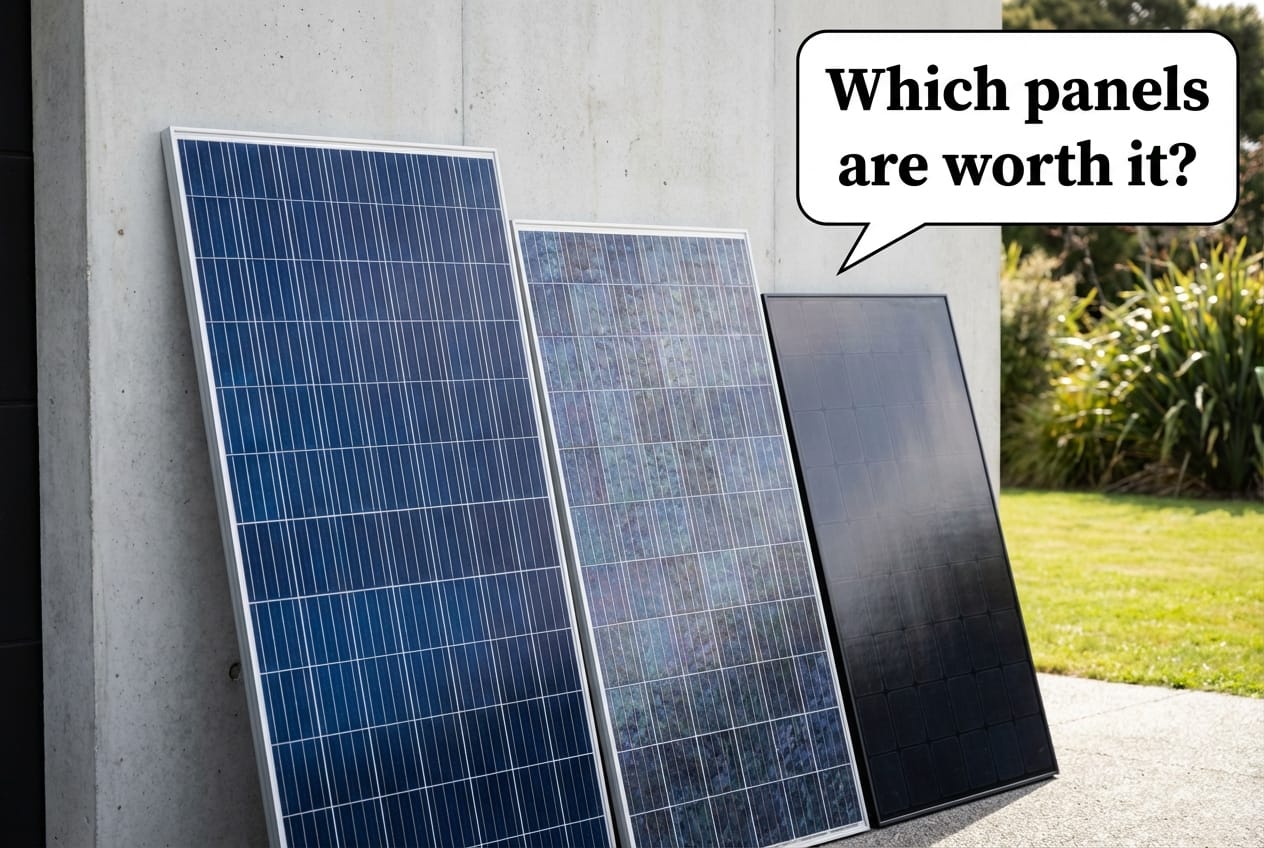
Best Solar Panels NZ: Brands, Tiers and What to Look For (2026)
Compare the best solar panels available in NZ. Tier 1 brands, specs, warranties, NZ pricing, and what installers actually use. TOPCon vs PERC vs HJT explained.
Read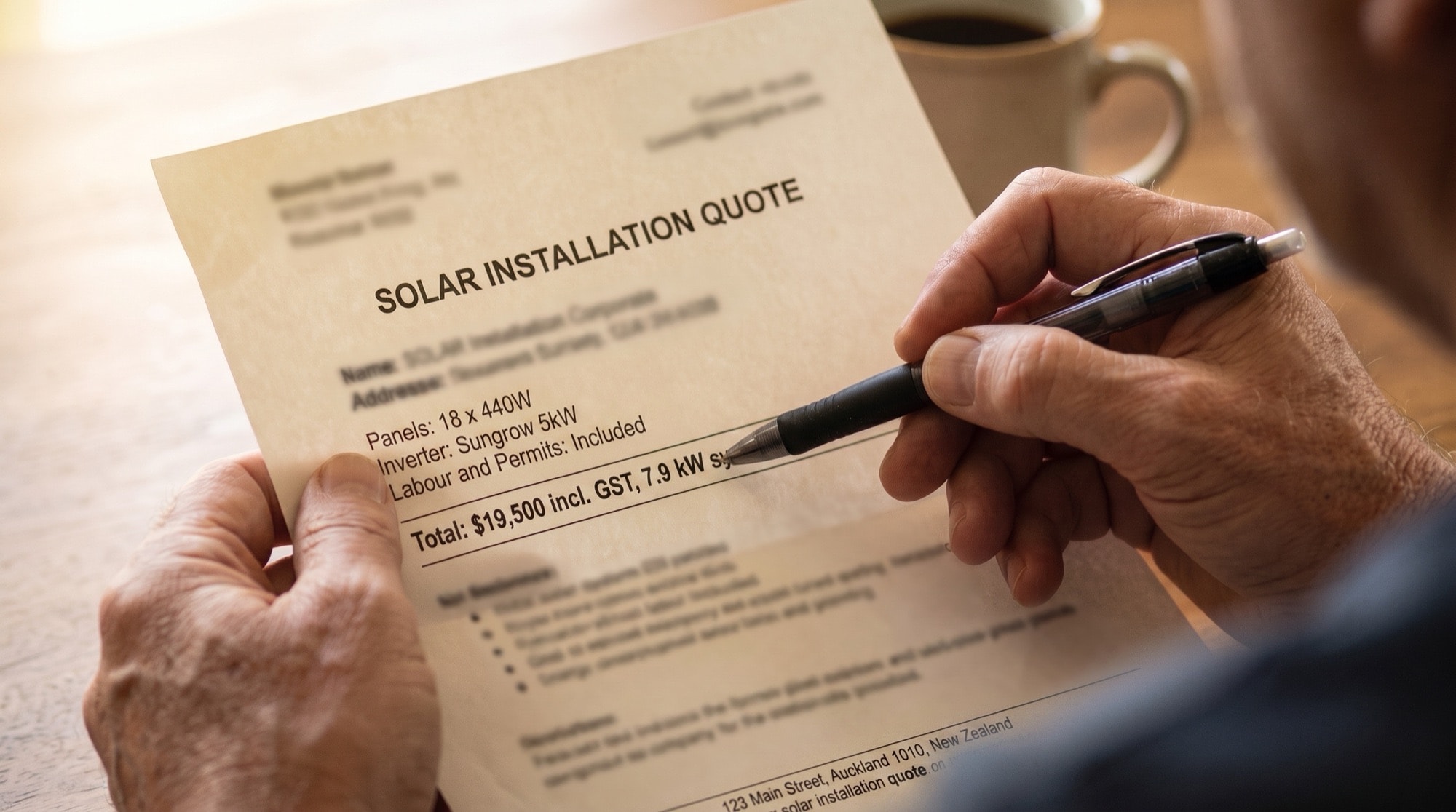
How to Read a Solar Quote: The Kiwi Buyer's Guide
Real Kiwi solar quotes have hidden gotchas. Line-by-line anatomy, the per-watt sanity check, what's missing, red flags, and a 26-row comparison rubric for 2026.
Read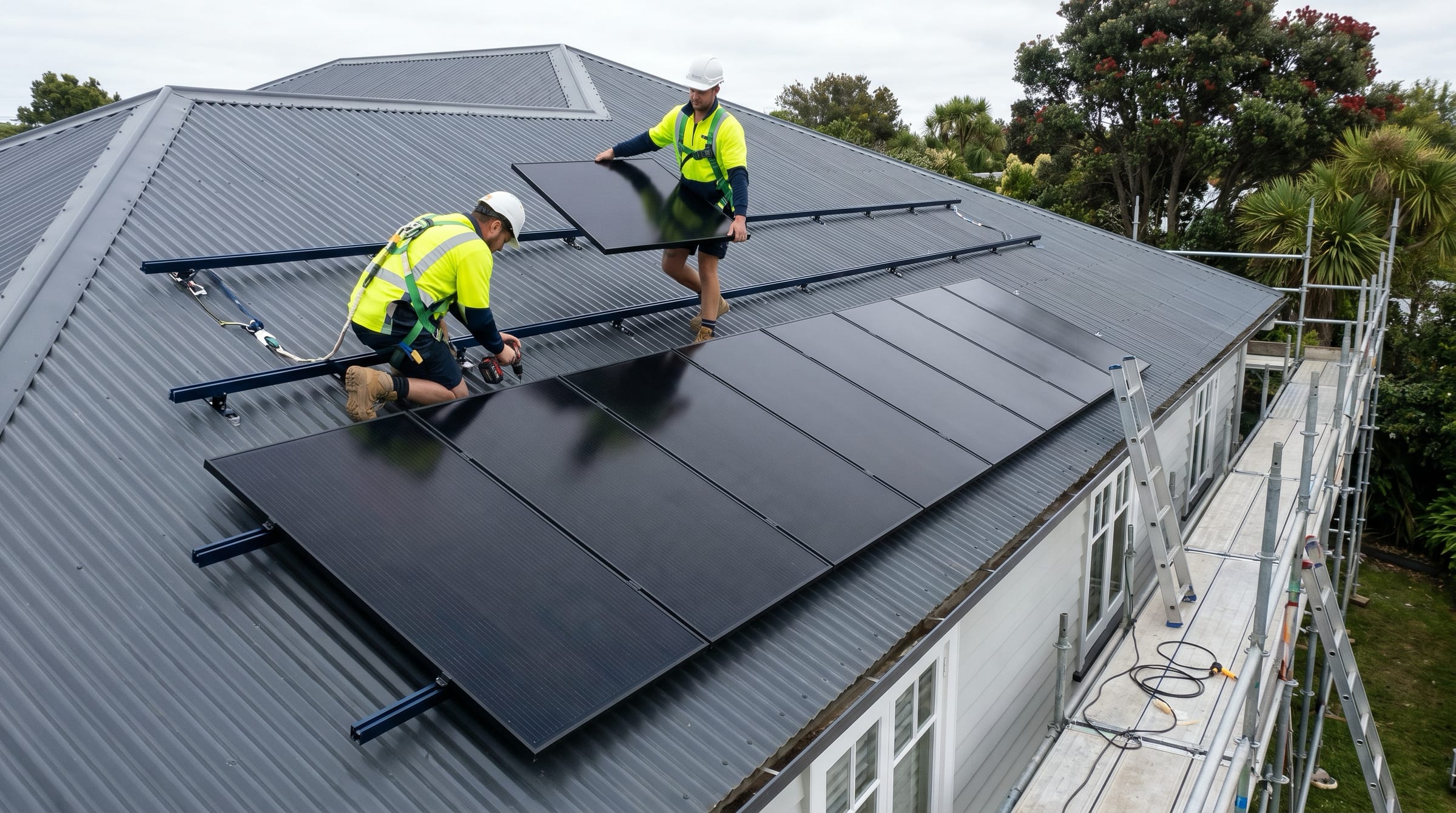
Solar Panel Installation in NZ: What Happens, Step by Step
The complete NZ solar installation timeline: 4-8 weeks from quote to live system. DG approvals, install day, meter upgrades, and the delays nobody warns you about.
Read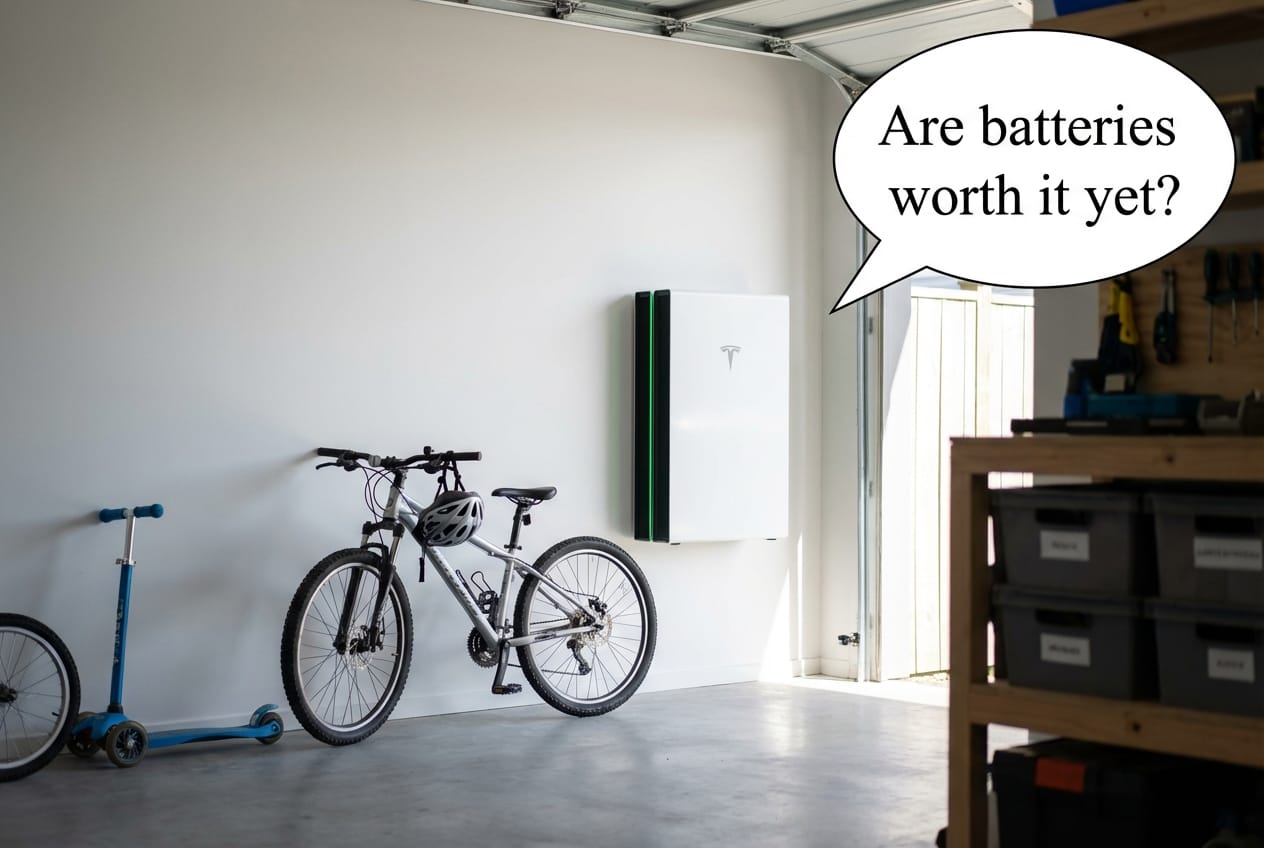
Solar Battery Storage NZ: Costs, Brands, and Is It Worth It?
Solar battery prices in NZ: Tesla Powerwall, BYD, Enphase compared. When batteries make sense and when you're better off without one.
Read
How Many Solar Panels Do I Need?
Work out how many solar panels your NZ home needs. Based on your power usage, roof space, and whether you're adding a battery or EV charger.
Read
Is My House Suitable for Solar Panels?
Check if your NZ home is right for solar. Roof direction, pitch, shade, and structural factors explained for Kiwi houses.
Read
Join the conversation
The best comments are honest ones: Real experience. Share yours, please stay civil and on topic. No self-promo links.
Your email is never shown or shared. To change or remove a comment later, .
No comments yet. What is your experience with this? Be the first to weigh in.