
Solar Panels in Wellington: Installers, Costs and Rates
Fewer peak sun hours than Auckland, yet Wellington panels produce more. The yield data, Wellington Electricity's new 10kW export rule, and why the wind zone means getting your mounting right.
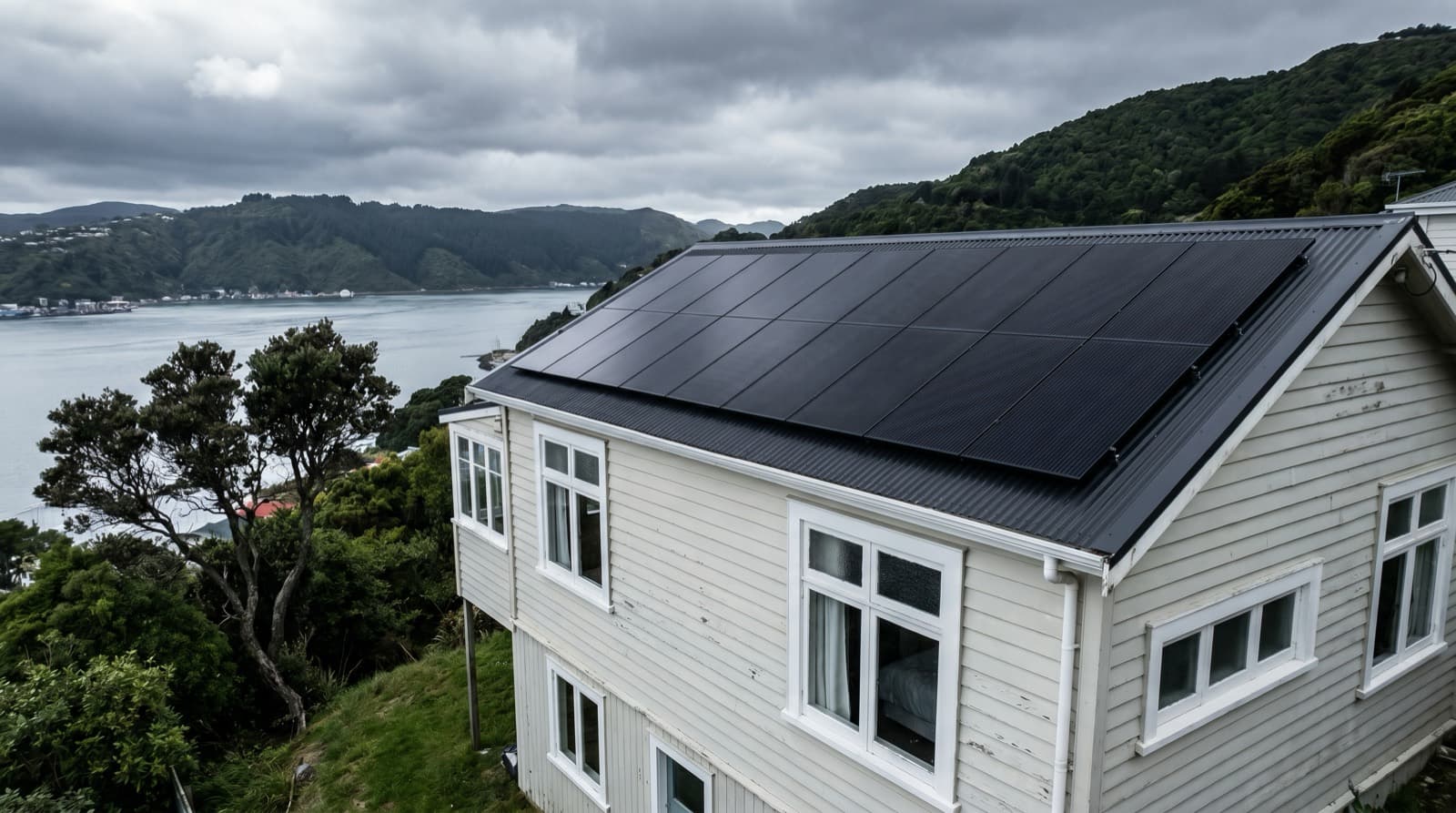

Wellington solar: key takeaways
- Wellington gets fewer peak sun hours than Auckland, yet a 6.6kW system here generates more: around 9,444 kWh a year.
- Wellington panels return about 1,431 kWh for every kilowatt installed, because cooler panel temperatures and long summer days beat raw sunshine hours.
- At 23.9c per kWh, a typical 6.6kW Wellington system saves roughly $1,650 to $1,750 a year and pays back in about 7.7 to 8.2 years.
- Wellington Electricity moved to a 10kW default export limit in May 2026, flexibly signalling systems down to 5kW only when the local network is congested.
- Wellington's wind changes the mounting, not the output: in Very High and Extra High wind zones a 6.6kW install, around $13,500, needs engineered fixings.
Is solar worth it in Wellington?
Wellington has a reputation for wind and grey skies, but it is quietly one of the best places in New Zealand to put solar on your roof. A typical 6.6kW system here generates around 9,444 kWh a year, about 1,431 kWh for every kilowatt installed, which is more than the same system produces in Auckland, despite Wellington getting fewer peak sun hours. Cooler panel temperatures and long summer days do the work that peak sun hours usually get the credit for. Wellington's power prices sit mid-pack among the main centres, around 23.9c per kWh. Even so, the strong output means a typical system saves roughly $1,650 to $1,750 a year and pays back in around 7.7 to 8.2 years (EECA's more conservative national estimate is 7 to 10 years).
New to solar altogether? Our guide to solar panels for NZ homes covers how a system works, what it costs and whether it pays, before the Wellington detail below.
The real Wellington catch isn't the weather, it's the wind. Much of the city sits in a Very High or Extra High wind zone, which means a lot of rooftop installs here need the mounting and fixings designed or reviewed by a chartered professional engineer rather than qualifying for the standard consent exemption. It's not a reason to avoid solar, it's a reason to use an installer who does the structural side properly. On the grid side, Wellington Electricity moved to a 10kW default export limit in May 2026, flexibly curtailed to 5kW only when the local network is congested. For how Wellington's strong output compares with the rest of the country, see our full NZ payback breakdown and weigh it against your own roof and power bill.
Want a personalised estimate for your Wellington home? Answer a few quick questions and compare quotes from up to 3 Solar Scout-vetted installers.
Every region has a page like this one. The NZ solar by region hub lines them all up, with sun hours, export limits and retailer buy-back rates side by side.
How much solar will you generate in Wellington?
With 3.9 peak sun hours per day and a production factor of 1.08 relative to the national baseline, here's what a typical roof-mounted system generates in Wellington per year.
Assumes you use 40 to 50% of what you generate and export the rest at 13c/kWh. The daily fixed charge on your bill does not go away with solar, so it is not counted as a saving. The daytime rate used here is 23.9c/kWh. Your actual savings depend on roof orientation, shading, and your daily usage pattern.
For the national picture, see how Wellington stacks up against the rest of the country on annual generation per kW installed.
Electricity and buy-back rates
The daytime variable rate in Wellington averages 23.9c per kWh across the retail plans available on the local network. Every kilowatt-hour you self-consume from your panels saves you that variable rate. It does not remove the daily fixed charge, which you keep paying whatever your panels produce, so we never count it as a saving. Excess generation flows back to the grid, and your retailer pays you a buy-back rate. Retailers set those rates nationally rather than by region, so the figures below apply in Wellington the same as anywhere else. Each card shows the headline rate and the rate you earn outside the peak windows, because for a household without a battery the second number is the one that does most of the work. The conditions behind each rate are in the guide linked below.












Self-consumption is the bigger saving: every kWh you use yourself is worth 2 to 3 times more than every kWh you export. For the full national retailer comparison, see our buy-back rates guide.
Wellington Electricity export rules
Wellington Electricity moved to a 10kW default export limit on 11 May 2026, in line with the new national rule for small-scale solar. Rather than a hard cap, it uses a flexible limit that signals systems down to 5kW only when part of the local network is congested. Systems of 10kW or less use the streamlined connection path: a $100 application fee, a $60 inspection fee, and an inverter that is either on the approved list or carries an AS/NZS 4777.2:2020 declaration of conformity. Systems above 10kW are assessed individually. Wellington Electricity does not publish a standard residential approval timeline, so ask your installer to confirm the current turnaround before you commit.
For the full step-by-step from accepting a quote to switch-on, see our NZ solar installation process guide.
Typical system economics
Below is what a typical 6.6kW system looks like in Wellington from a financial perspective. Real numbers will vary with installer, brand, and roof complexity. For the full national pricing context, our NZ solar installed-cost guide shows what 6.6kW jobs typically include and how to spot a fair quote.
What you can expect in Wellington
System size
6.6kW
Installed cost
$13,500
Annual generation
9,444 kWh
Annual savings
$1,650-$1,750
Payback period
7.7-8.2 yrs
After this point, the power is yours.
Assumes you use 40 to 50% of what you generate and export the rest at 13c/kWh. The daily fixed charge on your bill does not go away with solar, so it is not counted as a saving. Estimates also use the regional production factor and the local daytime variable rate. Your actual savings will vary with your roof, usage pattern, and retailer.
Sunshine by month in Wellington
Solar generation tracks closely with sunshine hours. Here's how Wellington's monthly sunshine hours look across the year (NIWA data).
How Wellington compares month-to-month
How Wellington compares with nearby regions
Here's how Wellington's solar numbers stack up against its neighbouring regions, on annual sunshine, typical output from a 6.6kW system, local power price, and payback period.
Choosing a solar installer in Wellington and the Hutt Valley
Wellington, the Hutt Valley, Porirua and the Kapiti Coast have fewer installers than Auckland but several quality operators focus on the region, and the national companies quote here too. The standard filters apply: SEANZ membership, EWRB-registered electricians, a written workmanship warranty of five years or more, and local references.
The Wellington-specific check is wind engineering. Ask what wind zone your quote assumes and whether the mounting specification matches it, because a Wellington hilltop is a different loading environment from a sheltered Hutt Valley street. Your installer also files the Wellington Electricity distributed generation application that sits behind the 10kW export limit.
Our guide to choosing a solar power installer covers SEANZ membership, the questions to ask, and the red flags to avoid, wherever in the country you are.
Solar Scout-vetted solar installers serving Wellington
Every installer in the Solar Scout network is independently vetted. We connect you with up to 3 operating in your area so you can compare quotes on price and fit, never an open auction.
- EWRB registration: Licensed to do electrical work in New Zealand
- Positive customer experiences and real references: Read and checked before they can quote you
- SEANZ or Master Electricians: Backed by an industry body
- 12 months in solar: Solar-specific experience, not just general sparky work
Wellington solar FAQs
Is Wellington too windy and cloudy for solar?
No, and the numbers surprise people. Wellington gets fewer peak sun hours than Auckland, but a 6.6kW system here actually generates more power: around 9,444 kWh a year versus about 9,180 in Auckland. Cooler air keeps the panels running efficiently and Wellington's long summer days add up. The wind is real, but it affects how your panels are mounted, not how much electricity they produce.
How much will a 6.6kW solar system generate in Wellington?
Around 9,444 kWh a year, based on roughly 1,431 kWh for every kilowatt installed, which is a conservative real-world figure. That covers a large share of a typical Wellington family's power use. Output peaks over summer (December to February) and dips through the shorter winter days, but the panels still generate on grey, overcast days, just at a lower rate.
How much does solar cost in Wellington?
A 6.6kW system in Wellington typically costs around $13,000 to $15,000 fully installed, including panels, inverter, mounting, wiring and the connection paperwork. Larger systems cost less per kW. Since October 2025 most residential installs no longer need building consent, though Wellington's wind zones often require engineered mounting, which your installer arranges. Always get three quotes.
How long until solar pays for itself in Wellington?
A typical 6.6kW system (around $13,500 installed) saves roughly $1,650 to $1,750 a year through a mix of self-consumption and export, paying back in about 7.7 to 8.2 years. EECA's more conservative national estimate is 7 to 10 years, which assumes lower self-consumption. Wellington's power prices sit mid-pack among the main centres, and the strong output keeps the payback competitive. The more of your own solar you use during the day, the faster it pays back.
What is Wellington Electricity's solar export limit?
Since 11 May 2026, Wellington Electricity defaults to a 10kW export limit, in line with the new national rule. It is a flexible limit rather than a hard cap: your system may be signalled down to 5kW only when part of the local network is congested. Systems of 10kW or less use the streamlined connection path, with a $100 application fee and a $60 inspection fee, and your inverter needs to be approved or carry an AS/NZS 4777.2 declaration. Bigger systems are assessed individually.
Does Wellington's wind affect my solar install?
It affects the mounting, not the panels' output. Much of Wellington sits in a Very High or Extra High wind zone, and under the building rules a rooftop array in those zones generally needs its fixings designed or reviewed by a chartered professional engineer rather than qualifying for the standard consent exemption. In practice that means more fixing points and properly engineered roof penetrations. It is a strong reason to choose an installer who handles the structural side correctly, which every Solar Scout-vetted installer does.
Do I need building consent for solar in Wellington?
Since October 2025, most residential rooftop solar installs no longer need building consent. The important Wellington exception is the wind zone: if your roof is in a Very High or Extra High wind zone (much of the city is), the mounting generally needs engineering sign-off, which your installer arranges. Your installer will confirm your property's wind zone and what is required.
Who has the best solar buy-back rate in Wellington?
There is no single best rate, and a league table is the wrong way to pick. Retailers set buy-back rates nationally rather than by region, so a Wellington address is quoted the same figures as anywhere else in New Zealand. Most plans now pay a higher rate inside narrow peak windows and a much lower rate the rest of the day, which is exactly when a roof without a battery does most of its exporting, so the off-peak number usually matters more than the headline. Your import rate matters more again: a generous buy-back paired with expensive power normally loses to the reverse. Our buy-back rates guide compares every retailer's peak and off-peak pair, with the date each figure was last checked.
Do Wellington's hillside and south-facing homes work for solar?
Many do. Wellington's steep terrain means roof orientation varies a lot street to street, so the key is having a north, east or west-facing roof plane with reasonable sun. A pure south-facing roof loses a large chunk of its potential and usually isn't worth it on its own, but plenty of Wellington homes have a mix of roof planes. Shading from the hills and the town belt matters more here than in flatter cities, so a proper site assessment is worth it.
I rent in Wellington. Can I still benefit from solar?
Solar on a rental is the property owner's decision, but Wellington is a rental-heavy city and more landlords are adding it for the property-value uplift and tenant appeal. If you own a Wellington rental, our guide on solar for rental properties covers the depreciation and buy-back details. If you rent, it is worth raising with your landlord.
How do I apply to connect solar to Wellington Electricity?
Your installer lodges the application; you do not deal with Wellington Electricity directly. Systems of 10kW or less use the streamlined connection path, with a $100 application fee and a $60 inspection fee, and the inverter must either be on the approved list or carry an AS/NZS 4777.2:2020 declaration of conformity. Systems larger than that are assessed individually. The application itself needs your address and ICP number (printed on your power bill), the system size and the inverter model, all of which your installer already holds. Wellington Electricity does not publish a standard residential approval timeline, so ask your installer to confirm the current turnaround before you commit. If your roof is in a Very High or Extra High wind zone, the engineering sign-off on the mounting runs alongside that approval rather than after it.
Is solar worth it in Wellington?
Yes, and by more than Wellington's weather reputation suggests. A 6.6kW system generates around 9,444 kWh a year here, more than the same system in Hamilton, because cool temperatures actually help panel efficiency and the region's clear southerly-washed days are productive. Savings run about $1,650 to $1,750 a year with payback at 7.7 to 8.2 years. The honest caveat is Wellington's relatively cheap power at 23.9c per kWh, which makes self-consumption the main lever: use your solar during the day and the numbers work.
Who installs solar panels in Wellington?
Several quality operators focus on Wellington, the Hutt Valley and Kapiti, alongside the national companies, so aim for three comparable quotes. Use the standard filters: SEANZ membership, EWRB-registered electricians, and a written workmanship warranty of five years or more. The Wellington-specific question to ask every installer: what wind zone does the mounting specification assume for my address? Exposed sites need it answered in writing. The installer files your Wellington Electricity distributed generation application as part of the job, which is what enables exporting at the 10kW limit.
How long does a solar install take in Wellington?
Plan on 4 to 8 weeks from a signed quote to switch-on. Your installer lodges the connection application with Wellington Electricity first, the on-roof work itself is one to two days, and the meter change follows once the system is signed off.
Want to compare
quotes?
Get matched with vetted local installers and see real quotes for your home. It’s free, with no obligation.
Compare up to 3 quotesNearby regions
View all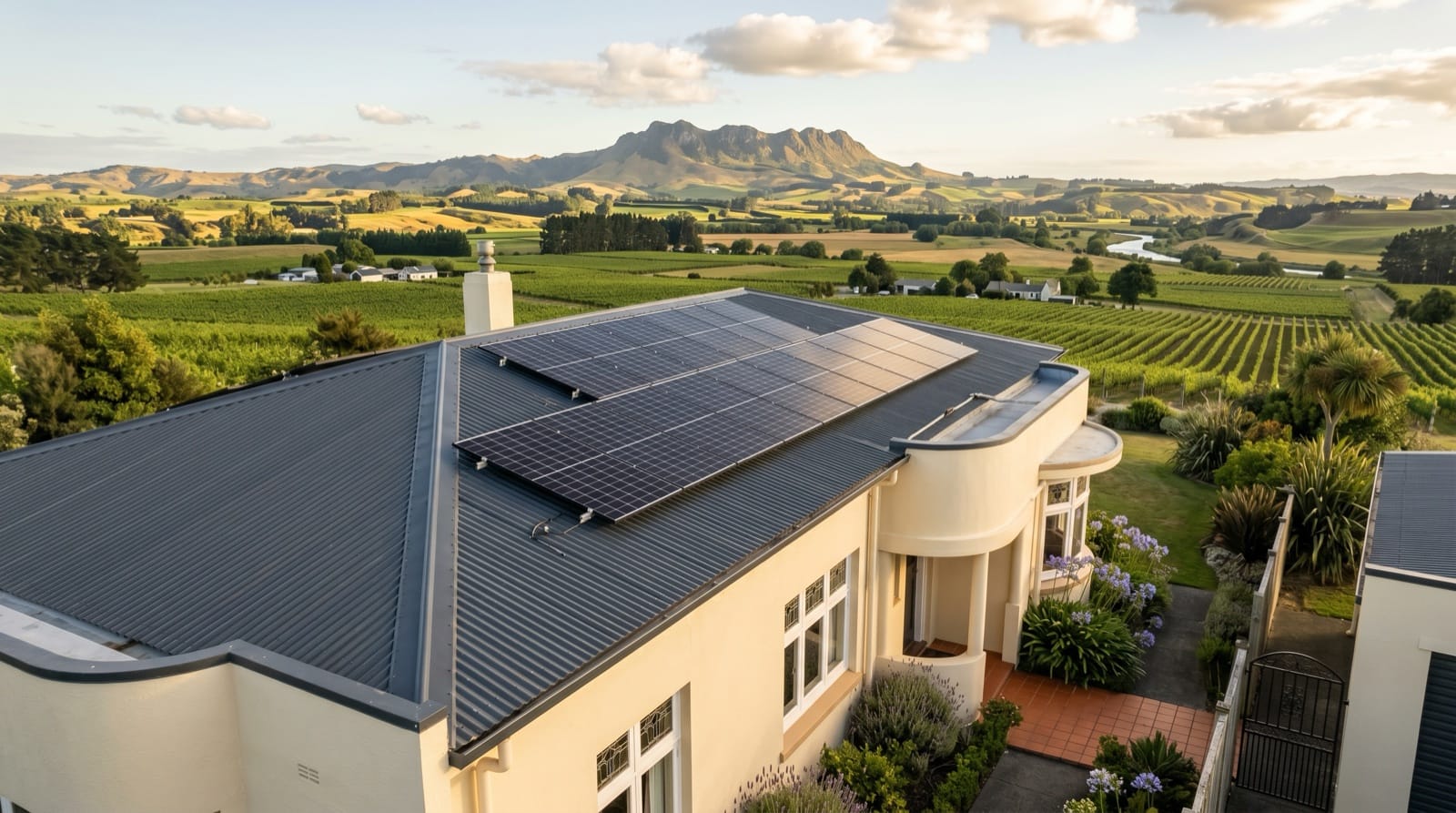
Solar in Hawke's Bay
Unison's 10kW export limit, 28.6c/kWh power rates, and 7.0 to 7.6 year typical payback. Among NZ's strongest solar economics, from central Napier to the Hastings plains.
Read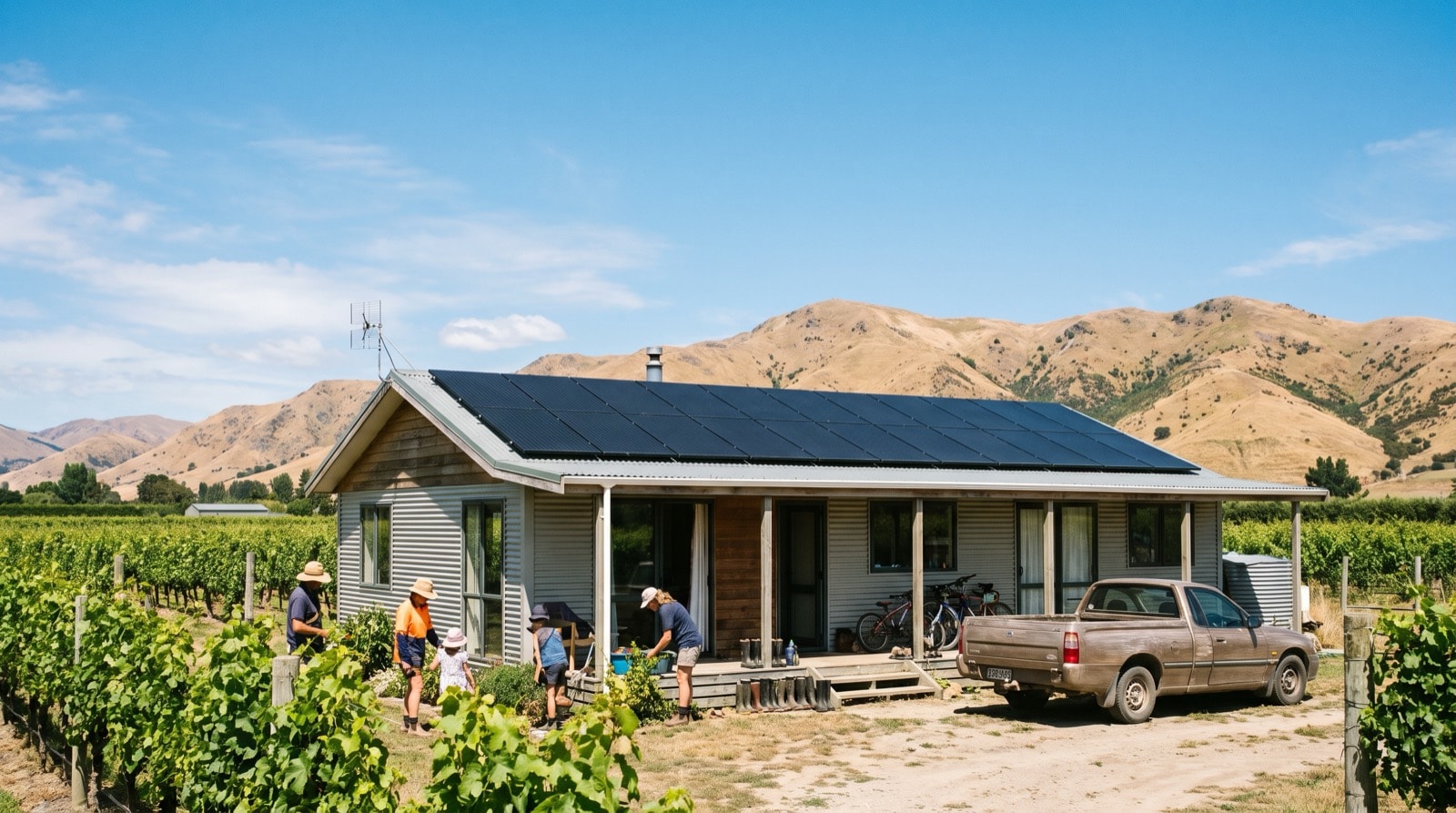
Solar in Marlborough
Blenheim is the sunniest town in New Zealand. With Marlborough Lines' 10kW export limit and roughly 9,600 kWh a year from a typical system, the solar case here is one of the country's strongest.
Read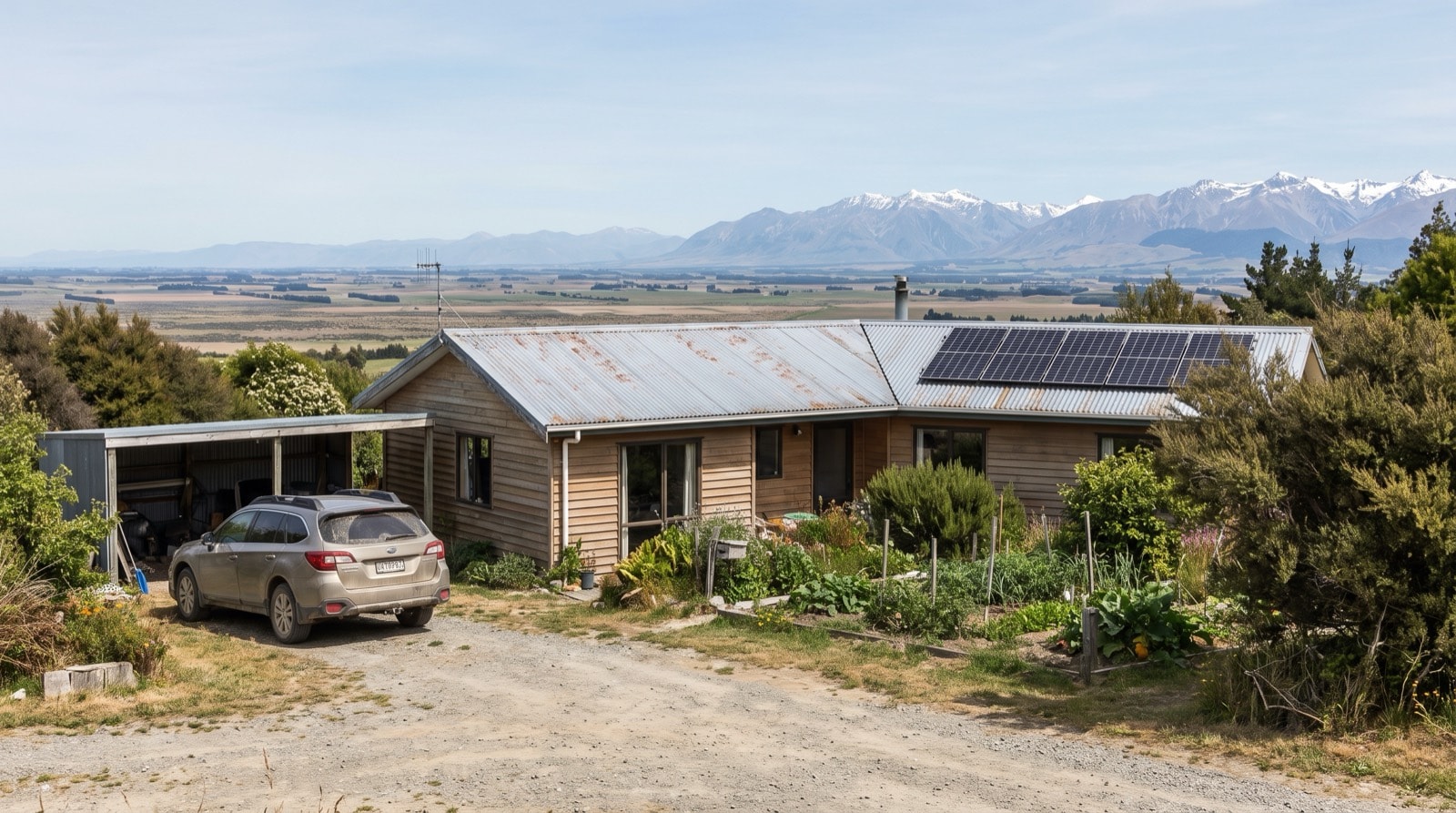
Solar in Canterbury
Orion's 10kW export limit, NZ's most advanced smart meter rollout, and clear Canterbury skies. What homeowners in Christchurch, Rangiora and Ashburton need to know.
Read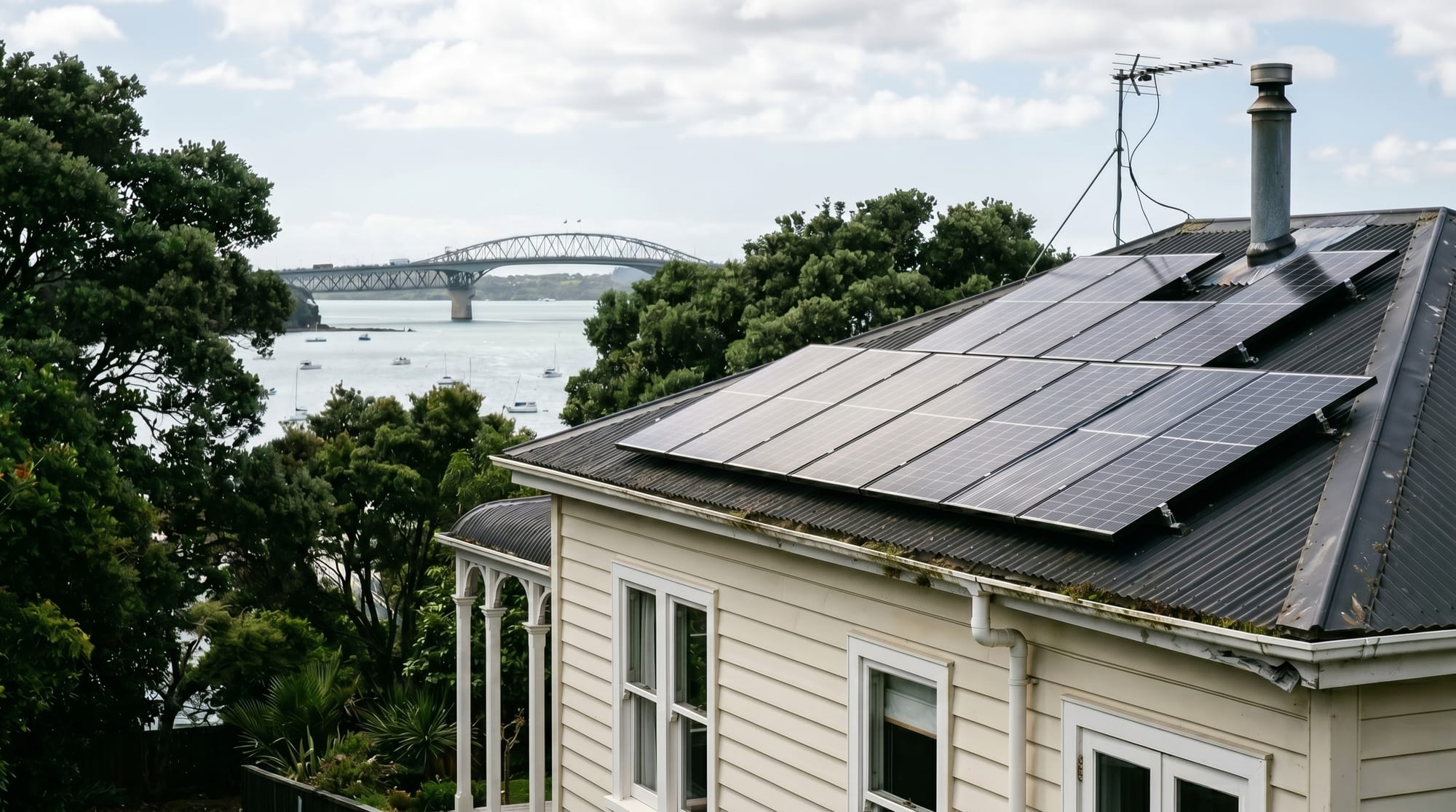
Solar in Auckland
Vector's 10kW dynamic export limit, 26.4c/kWh power prices, and 4.2 peak sun hours. What Auckland homeowners need to know about going solar.
Read
Join the conversation
The best comments are honest ones: Real experience. Share yours, please stay civil and on topic. No self-promo links.
Your email is never shown or shared. To change or remove a comment later, .
No comments yet. What is your experience with this? Be the first to weigh in.