
Best Tesla Powerwall Alternatives NZ: BYD and Enphase Compared (2026)
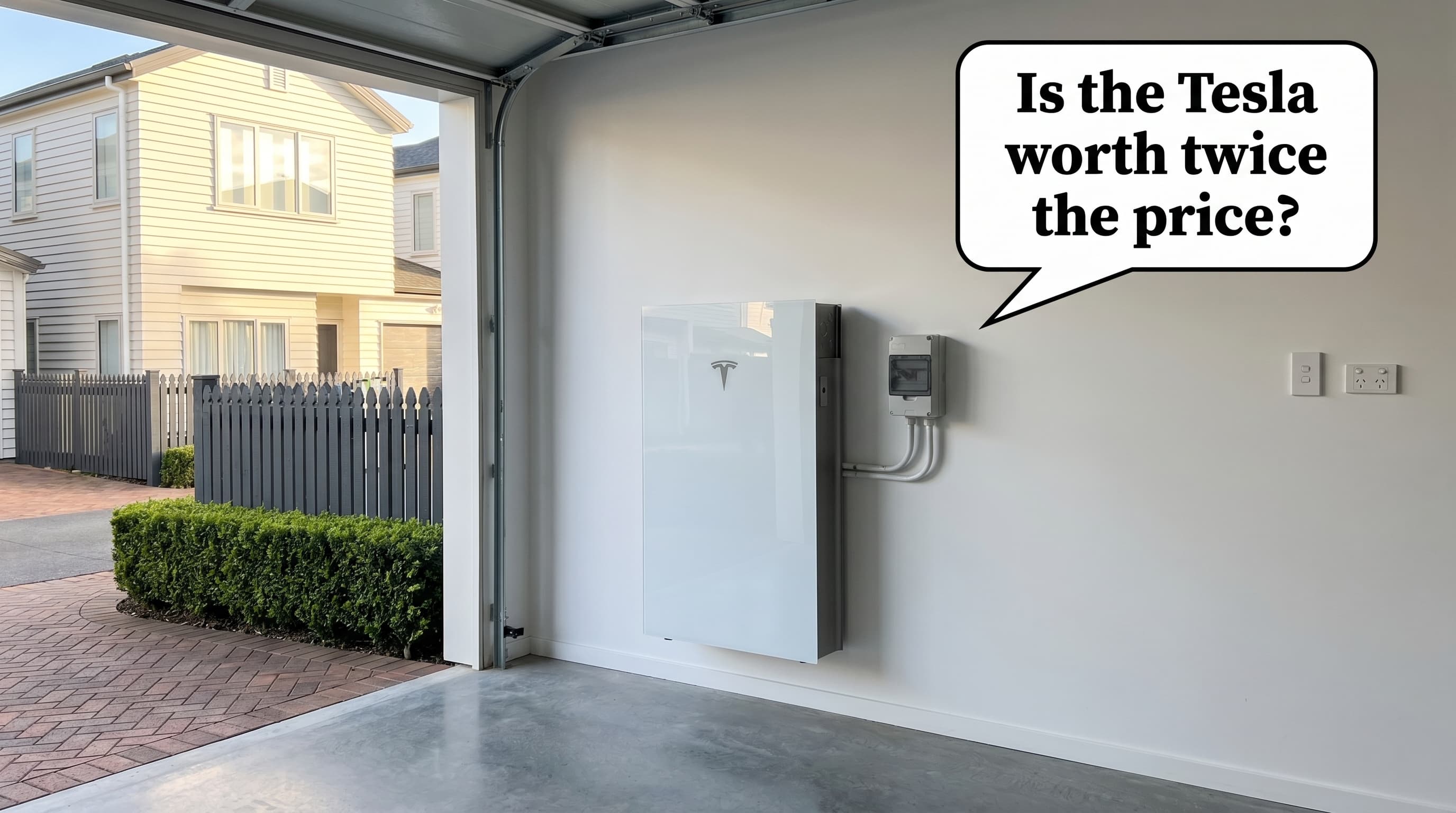

A Tesla Powerwall 3 costs $19,000 to $24,000 installed in New Zealand, not including solar panels. A BYD Battery-Box starts around $8,000 for half the capacity. Sungrow lands somewhere in between, at around $1,250 per kWh. The Powerwall isn't the only home battery sold in NZ. It isn't even close to the cheapest.
That's not a knock on Tesla. The Powerwall 3 is a genuinely well-designed product, the app is the best one on the NZ market, and it's the only home battery a Kiwi house listing actually mentions by name (our full Tesla Powerwall 3 NZ review covers it on its own terms). If you can stomach the entry price and the occasional eight-week wait, it's a strong choice. But for a lot of Kiwi homes, especially the ones starting smaller or retrofitting onto existing solar, the right answer is something else.
This guide is the honest comparison. The three or four batteries NZ installers actually fit, what they cost installed, where the Powerwall still wins, and where it doesn't. Pricing here matches our solar battery costs in NZ guide so the two pages agree on every dollar figure.
Want a personalised battery recommendation for your home? Take the free Solar Scout quiz and get quotes that include both Powerwall and alternatives.
Key takeaways
- Powerwall 3 ranges $19,000 to $24,000 installed. BYD starts at $8,000. Sungrow lands at around $1,250 per kWh on a single-brand stack.
- Powerwall Expansion at roughly $440/kWh is the cheapest installed storage on the NZ market, but only if you already own a Powerwall 3.
- BYD is the cheapest entry point and the most modular. Start at 5 kWh, expand later.
- Sungrow costs less per kWh than a Powerwall, on a single-brand inverter and battery stack.
- Enphase IQ Battery only makes sense if you already have Enphase microinverters.
- Your existing solar inverter brand decides more about your battery choice than the battery brands themselves do.
Want to compare
quotes?
Get matched with vetted local installers and see real quotes for your home. It’s free, with no obligation.
Compare up to 3 quotesWhy Look Beyond the Powerwall
People arrive at "Powerwall alternatives" for one of five specific reasons. None of them are unreasonable, and most of them point at a genuinely better option for the household in question.
1. Sticker shock
The Powerwall is $19,000 to $24,000 installed. On a solar-plus-battery system that's often $27,000 to $39,000 total, that's a big chunk of the bill. Households comparing quotes often find the maths works better with a cheaper battery and more panels.
2. Supply delays
Tesla NZ wait times have ranged from 2 weeks to 3 months depending on stock. If you've set an install window (winter prep, EV arrival, end-of-financial-year), brands like BYD and Sungrow with more consistent stock can be the deciding factor.
3. Modular sizing
The Powerwall 3 is a fixed 13.5 kWh slab. Some households want to start at 5 kWh and grow into it over time. That's a BYD answer, not a Tesla one.
4. Retrofit onto existing solar
If you've already got a Fronius or SMA inverter and your solar is humming along nicely, ripping that out for a Powerwall is wasteful. AC-coupled BYD or Sungrow setups slot in alongside your existing inverter without replacing anything.
5. Best-value shopping
Some buyers just want the cheapest $/kWh from a brand a Kiwi installer will actually warrant. That's a fair brief, and the answer is rarely Tesla on the first unit. If money is the issue, our guide to paying for solar in NZ covers the green-loan options that cover battery purchases too.
Still working out whether you need a battery at all? Start with our guide on whether a home battery is worth it in NZ instead. It walks through whether storage makes sense for your situation before you start brand-shopping, and our news desk has a 2026 update on whether a home battery pays for itself yet.
The NZ Battery Lineup in 2026
Four batteries make up the realistic shortlist for a NZ home in 2026: Tesla Powerwall 3, BYD Battery-Box, Sungrow, and Enphase IQ. Everything else in the market is either off-grid-only, commercial-scale, or has servicing footprint too thin to recommend yet. Here's what each one costs installed and where the value sits. If you want to leave the grid altogether, our guide to off-grid solar systems in NZ covers the much bigger battery bank you would need.
BYD and Sungrow need a hybrid inverter. Check your quote includes one.
The standout figure in that table is the Powerwall 3 Expansion at $437 to $444 per kWh. That's the cheapest installed storage on the NZ market, but the catch is real: you have to already own a Powerwall 3 to use it. BYD's wide price range reflects different module configurations from 5 kWh up to 20+ kWh, not pricing chaos.
That table covers five brands. Compare all 24 solar batteries side by side to filter by capacity, backup power and value per kWh.
BYD Battery-Box (The Cheapest Entry)
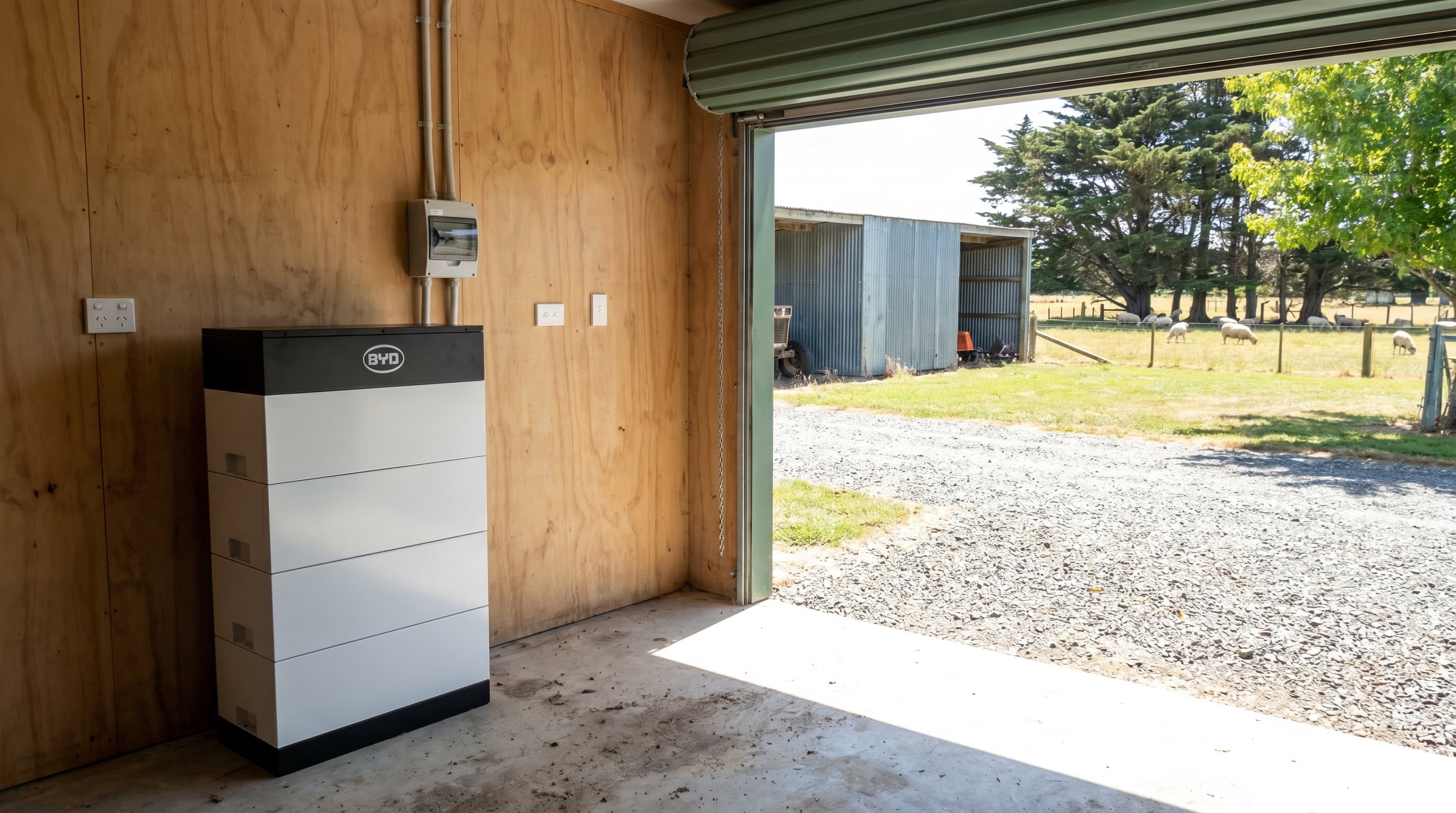
BYD is the world's largest battery manufacturer (they also make EVs), and the Battery-Box is their home-storage range. Lithium-iron-phosphate (LFP) chemistry, modular stack design, and broad inverter compatibility. For the models sold here, prices and the NZ warranty fine print, read our BYD Battery-Box NZ guide.
Why Kiwis pick it
- Cheapest entry point. Around $8,000 installed for a small unit. Half the entry cost of a Powerwall 3.
- Modular.Start at 5 kWh, add later. Tesla doesn't really do small.
- Inverter flexibility. Pairs natively with Fronius, SMA, GoodWe, and Sungrow hybrid inverters. Works in almost any existing solar setup.
The 2025 Blade upgrade
Newer BYD modules use the Blade Battery technology that ships in their EVs, around 49.9% more energy density than the previous HVM range. Smaller physical unit for the same kWh, with improved thermal safety.
The catch
"BYD" is the brand, but the importer servicing the unit varies by who fitted it. Get the servicing chain in writing before you sign. Some installers do their own warranty work, some pass through to the importer. Both are fine if it's documented.
If you want to start at 5 kWh and grow into it, BYD is the obvious pick. Tesla doesn't really do small.
Sungrow (The Best-Value Single-Brand Stack)
Sungrow is one of the world's largest inverter manufacturers, and the brand is gaining real traction with NZ installers. Their hybrid inverter plus battery stack pairs natively, so the single-brand path is clean and well-supported.
Why Kiwis pick it
At around $1,250 per kWh installed, it costs less per kWh than a Powerwall ($1,400 to $1,800). It needs a Sungrow hybrid inverter, so check your quote includes one.
The brand-recognition trade-off
Most homeowners haven't heard of Sungrow. Installers rate them highly for reliability. Your neighbour won't be impressed when they see the unit, but the maths is the maths.
App and monitoring
Solid but not best in class. The Sungrow app does the job. If you're someone who actually opens battery apps daily, Tesla's is still the one to beat.
Best for:new-install homeowners who care about $/kWh and don't need brand kudos.
Enphase IQ Battery (For Enphase Homes)
Enphase makes microinverters that sit behind each individual panel, plus their IQ Battery to round out the ecosystem. The pitch is single-brand simplicity: one app, one warranty channel, one company to call.
The ecosystem rule
If your existing solar uses Enphase microinverters, the IQ Battery is the obvious add. Same app, same monitoring, same servicing. For more on microinverters generally, see our string inverter vs microinverter guide.
Why we don't recommend it for new installs
$1,200+ per kWh is premium pricing. You're paying for the ecosystem fit, which only pays off if you're already in it. Starting from scratch, BYD or Sungrow give you better $/kWh and equivalent reliability.
Best for: households with existing Enphase microinverter solar adding storage. Almost nobody else.
Want to compare
quotes?
Get matched with vetted local installers and see real quotes for your home. It’s free, with no obligation.
Compare up to 3 quotesWhere the Powerwall Still Wins
We're not anti-Tesla. The Powerwall 3 set the benchmark for a reason, and there are several axes where it still beats every alternative on the NZ market. If any of these matter most to you, stop reading and go buy a Powerwall.
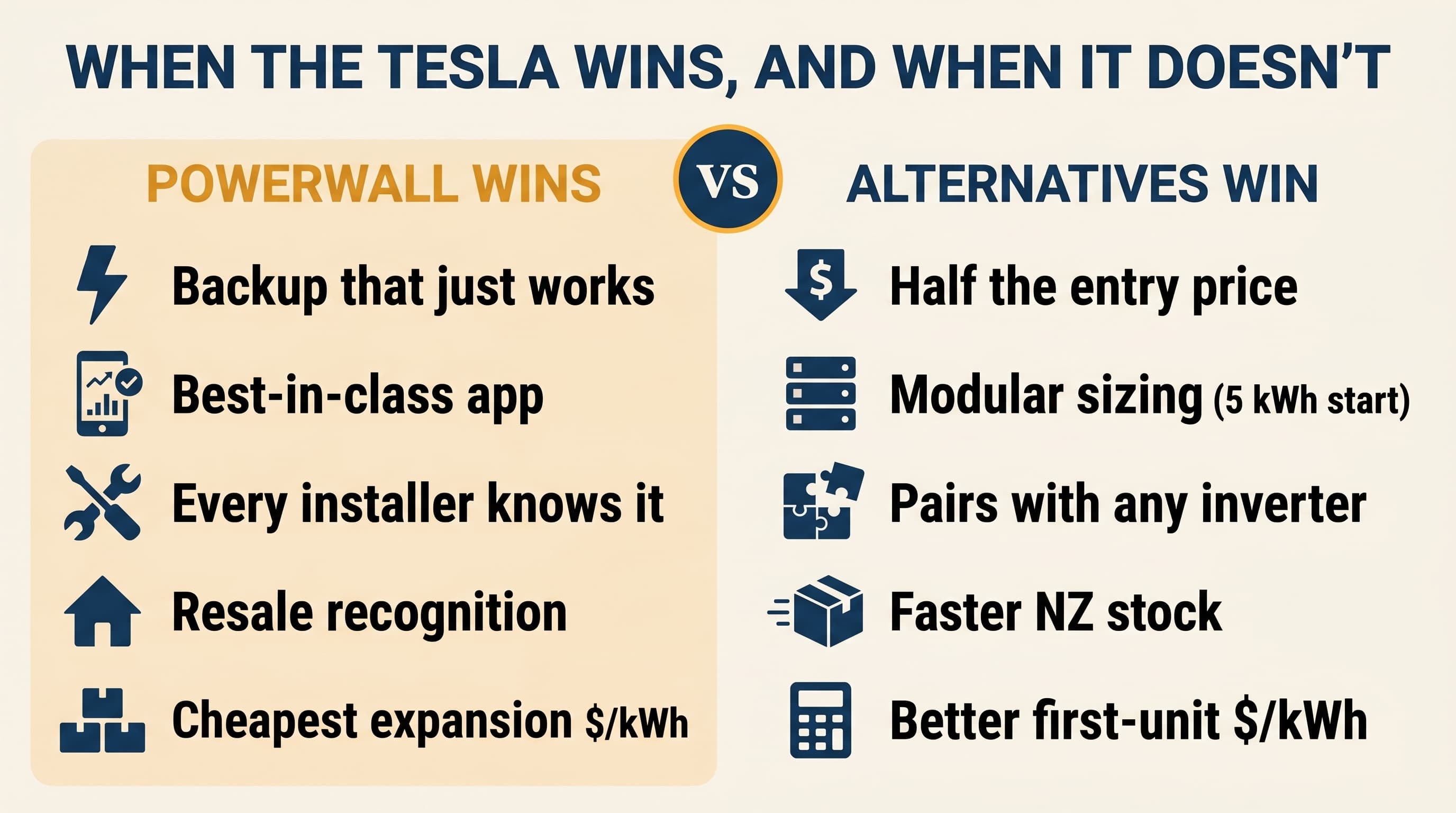
- Backup integration. Powerwall 3 has built-in islanding with sub-second cutover. Most competitors need a separate backup gateway or transfer switch. If reliable blackout backup is your headline reason for a battery, the Powerwall just works out of the box.
- The app and monitoring.Tesla's app is the highest-rated battery app on the NZ market. BYD, Sungrow, and Enphase apps are competent. Tesla's is genuinely best in class.
- Installer familiarity. Every solar installer in NZ has fitted a Powerwall. Some have never touched a Sungrow. Familiarity reduces the chance of install errors and warranty hassles down the line.
- Resale recognition."House has a Tesla Powerwall" is a recognisable line in a property listing. "House has a BYD HVM" is not. The real-world impact on sale price is small but not zero.
- Expansion pack $/kWh. Once you own a Powerwall 3, the Expansion module at roughly $440 per kWh is the cheapest installed storage on the NZ market. No other brand has that pricing on capacity-only add-ons.
If you can wear the entry price and the wait, the Powerwall 3 is still a genuinely strong product. It set the benchmark for a reason. The question is whether it's the right product for your specific situation, not whether it's a good product.
Where the Powerwall Loses
The honest counter. The Powerwall isn't the right answer for every household, and on a handful of axes the alternatives win decisively.
- Entry price.$19,000 to $24,000 installed versus BYD's $8,000 entry point. That gap matters when households are stretching a green loan to fit a solar-plus-battery system.
- No modular sizing.Powerwall 3 is a fixed 13.5 kWh unit. You can't start at 5 kWh and grow into it. BYD can.
- Inverter inflexibility on retrofits. If you already own a Fronius, SMA, or GoodWe inverter and your solar is working fine, the Powerwall 3 forces you into an AC-coupled setup. A BYD or Sungrow battery slots in with less friction.
- NZ supply. Tesla NZ wait times have ranged 2 weeks to 3 months. BYD and Sungrow stock is generally faster.
- First-unit $/kWh. $1,400 to $1,780 per kWh on the first Powerwall. Sungrow and BYD undercut this on capacity-only comparisons. Powerwall only wins the $/kWh war on the Expansion module.
The Powerwall 3 wins on integration. It loses on price, modularity, and stock. Whether that's the right trade-off comes down to what your household values most.
Which Battery Is Right for You
If you skipped to here, fair enough. Here's the short version.
This matrix is intentionally use-case-led, not a "best overall" ranking. The right battery for your house is the one that fits your existing inverter, your evening usage, and your budget. For a personalised match, take the free quiz and we'll line up installers who fit all of these brands.
Check Your Existing Inverter First
Before you take a single battery quote, find out what brand your existing solar inverter is (or what brand the installer is proposing for a new system). That decision narrows your battery options more than your budget does.
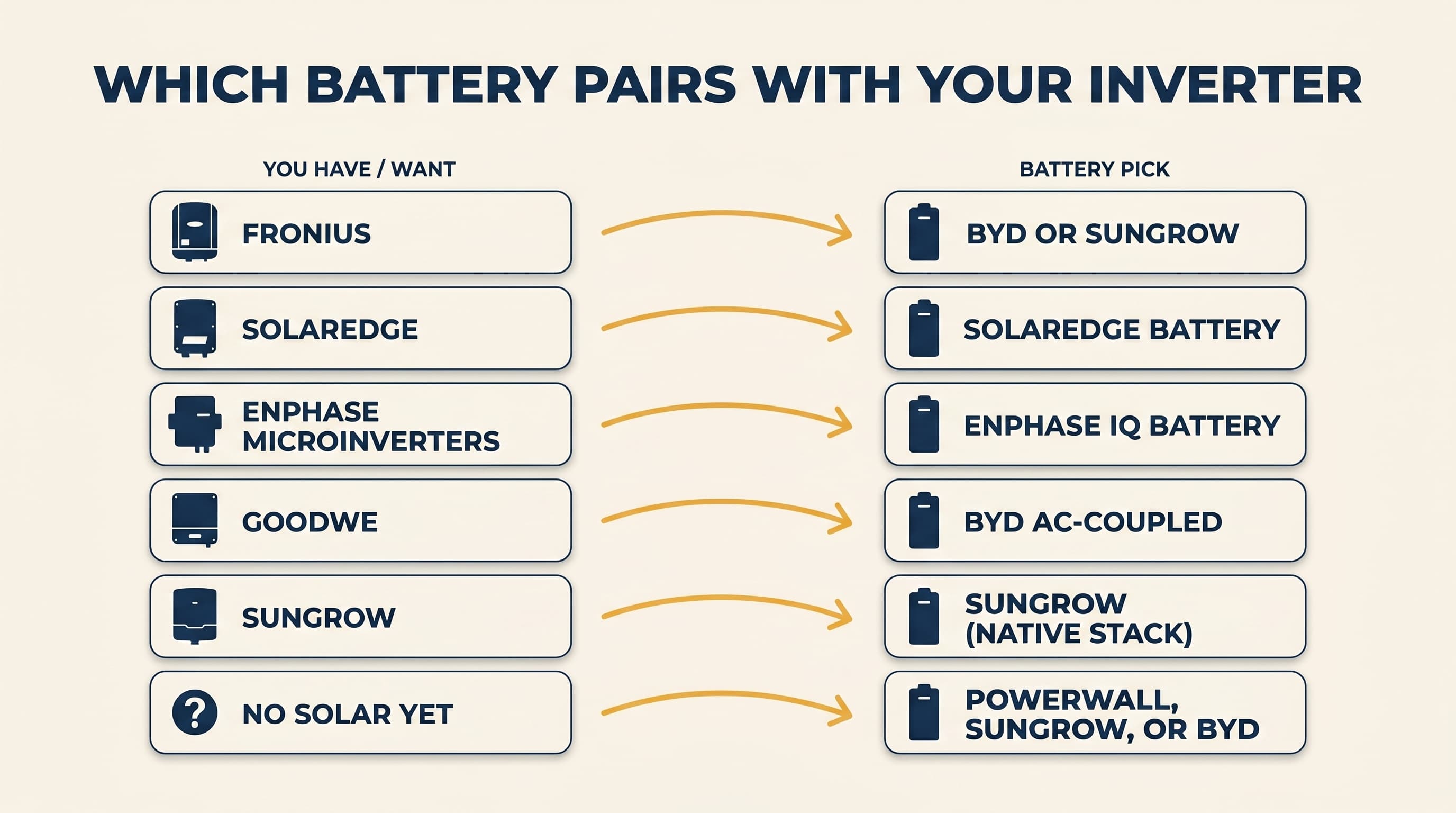
- Existing Fronius: BYD or Sungrow AC-coupled. Both pair cleanly.
- Existing SolarEdge: look at the SolarEdge battery first. AC-couple anything else.
- Existing Enphase microinverters: Enphase IQ Battery is the natural pair.
- Existing GoodWe: GoodWe Lynx Home F (if you can source it in NZ), or BYD AC-coupled.
- Existing Sungrow: Sungrow battery as the native stack.
- No existing solar (new install): choose battery and inverter as a bundle. Powerwall 3, Sungrow, GoodWe, and BYD-with-Fronius are all clean bundles.
For more on inverter choice in general, see our string inverter vs microinverter guide.
NZ-Specific Gotchas: EDB, Hybrid vs AC, Warranty
EDB and DG approval
Every home battery above the export-capable threshold needs distributed-generation (DG) approval from your local lines company (EDB) before commissioning. Brand doesn't matter; the installer handles the paperwork. Expect 2 to 8 weeks depending on your EDB. The solar installation process guide walks through regional timelines.
Hybrid vs AC-coupled
For a new install, go hybrid. Powerwall 3 (integrated), Sungrow hybrid, and GoodWe hybrid are all clean bundles. For retrofitting onto existing solar, go AC-coupled. BYD and Sungrow both have strong AC-coupled options. Don't rip out a working inverter just to go hybrid.
Warranty servicing in NZ: the honest version
- Tesla: direct NZ support, well-established.
- BYD: distribution varies by importer. Get the servicing chain in writing.
- Sungrow: well-supported and growing.
- Enphase: solid NZ support, especially within the Enphase ecosystem.
Coastal salt and humidity
All these batteries are wall-mountable indoor units. Don't fit them in open carports near the coast unless the IP rating suits. Garage interior is fine; outdoor side-of-house is brand-dependent and installer should confirm.
What About Huawei, GoodWe and Sigenergy?
Some installers will quote you batteries that aren't in the main four. The short version on each:
Huawei LUNA2000
Strong $/kWh on paper. Modular 5 to 30 kWh. But Huawei's NZ servicing footprint is thinner than Tesla, BYD, or Sungrow, and post-sanctions warranty channels have been inconsistent. If you're offered one, ask the installer to spell out exactly who services it for the full warranty period.
GoodWe Lynx Home F
Decent mid-tier value with AC and DC coupled options. Used by some NZ installers but stock and pricing less consistent than BYD or Sungrow. Worth a quote if your installer proposes it. Not worth seeking out.
Sigenergy SigenStor
The fastest riser on NZ quotes. The integrated inverter + battery + EV charger appeal is real, distribution now runs through national wholesalers, and installers rate it highly, with some reported installation-quality issues worth reading about first. It has earned a full review of its own: our Sigenergy SigenStor review covers the specs, NZ pricing and the honest watch-outs.
Alpha ESS SMILE
Australian-backed value tier with some NZ servicing presence. Solid if your installer recommends it. The brand recognition and resale story is weaker than BYD or Tesla.
If your installer's quoting one of these, ask the right questions: who services the warranty, how long parts take, and whether they've fitted more than five of these units in your region. The answer should be specific.
What to Do Next
The right next step depends on whether you already have solar. New install: ask for quotes both with and without battery, and request Powerwall, BYD, and Sungrow options on the with-battery quote. Existing solar: check your inverter brand first, then get an AC-coupled battery quote. AlphaESS is the other name to put on the list; we cover it in our AlphaESS battery guide.
Solar Scout's free quiz takes about 3 minutes and matches you with vetted installers in your area who fit all of the alternatives covered here. You'll get personalised quotes that include both solar-only and solar-plus-battery options so you can compare apples to apples.
Next steps for your solar journey
Want to compare
quotes?
Get matched with vetted local installers and see real quotes for your home. It’s free, with no obligation.
Compare up to 3 quotesFrequently Asked Questions
Is the Tesla Powerwall 3 worth the extra money?
Yes if backup integration, app quality, and resale recognition matter to you. No if you're optimising for $/kWh. Powerwall 3 sits at $1,400 to $1,780 per kWh on the first unit. BYD and Sungrow undercut that by 30 to 45% on equivalent capacity.
What is the cheapest home battery in NZ?
A small BYD Battery-Box, starting around $8,000 installed for roughly 5 kWh. The cheapest $/kWh installed is actually the Tesla Powerwall 3 Expansion module at about $440/kWh, but it requires you to already own a Powerwall 3.
Can I use a non-Tesla battery with my existing solar?
Yes. BYD Battery-Box and Sungrow both have AC-coupled options that work with any existing solar inverter. Enphase IQ Battery only makes sense if your existing solar uses Enphase microinverters.
How long do BYD and Sungrow batteries last compared to a Powerwall?
All three use lithium iron phosphate (LFP) chemistry rated for 6,000 to 10,000 charge cycles, typically warranted for 10 years. Real-world useful life is 10 to 15 years for any of them. There's no meaningful longevity difference between the major brands.
Do I need a special inverter for a BYD battery?
BYD pairs natively with Fronius, SMA, GoodWe, and Sungrow hybrid inverters. If your existing inverter is one of these, BYD slots in cleanly. If you're starting a new install, your installer will spec a compatible hybrid inverter.
Why is the Tesla Powerwall so expensive in NZ?
A mix of freight, Tesla NZ margins, smaller market scale, and the cost of the integrated inverter inside every first unit. The Expansion module (no inverter) drops to roughly $440/kWh, which shows what the battery hardware alone really costs.
Can a BYD or Sungrow battery do blackout backup?
Yes, but it usually requires additional hardware: a backup gateway or transfer switch. The Powerwall 3 includes islanding capability natively. If blackout backup is your main reason for a battery, factor the extra hardware into the comparison.
What's the wait time for a Tesla Powerwall in NZ right now?
Tesla NZ wait times have ranged from 2 weeks to 3 months in 2025 to 2026 depending on stock. BYD and Sungrow stock is generally more consistent. If you need the install completed within a specific window, ask all installers for confirmed delivery dates before signing.
Are Huawei LUNA2000 batteries safe to buy in NZ?
The hardware is competitive. The concern is warranty servicing depth. Huawei's NZ support footprint is thinner than Tesla, BYD, or Sungrow, and post-sanctions warranty channels have been inconsistent. If you're offered one, get the servicing chain in writing for the full warranty period.
Should I just wait for battery prices to drop further?
Probably not, because the falls you read about overseas are not reaching NZ quotes. Packs for stationary storage dropped 45% in 2025 to around $120 per kWh, but that is the battery hardware alone. What you buy is that pack plus an inverter, an electrician, certification, freight and GST, which lands near $1,220 per kWh installed and has barely moved since 2024. If you have frequent power cuts, time-of-use pricing, or you're installing solar now and can bundle the battery for shared install costs, buying now is the stronger play.
Related guides
View all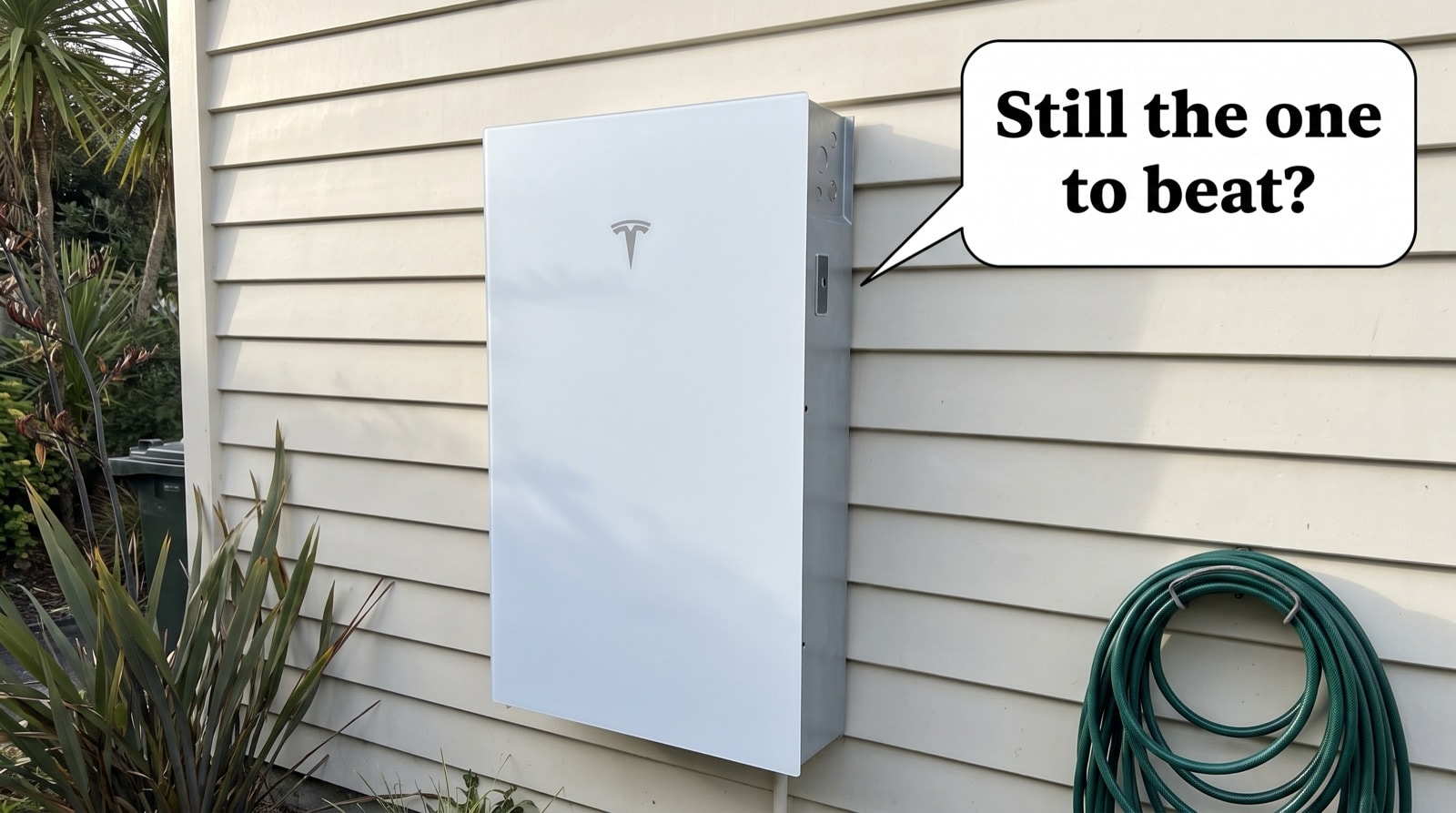
Tesla Powerwall 3 NZ: Price, Specs and Honest Review (2026)
Independent Tesla Powerwall 3 review for NZ: ~$15,600 supply-only and $19,000-24,000 installed, 13.5kWh storage, 11.5kW output, the single-phase catch, and when an alternative fits better.
Read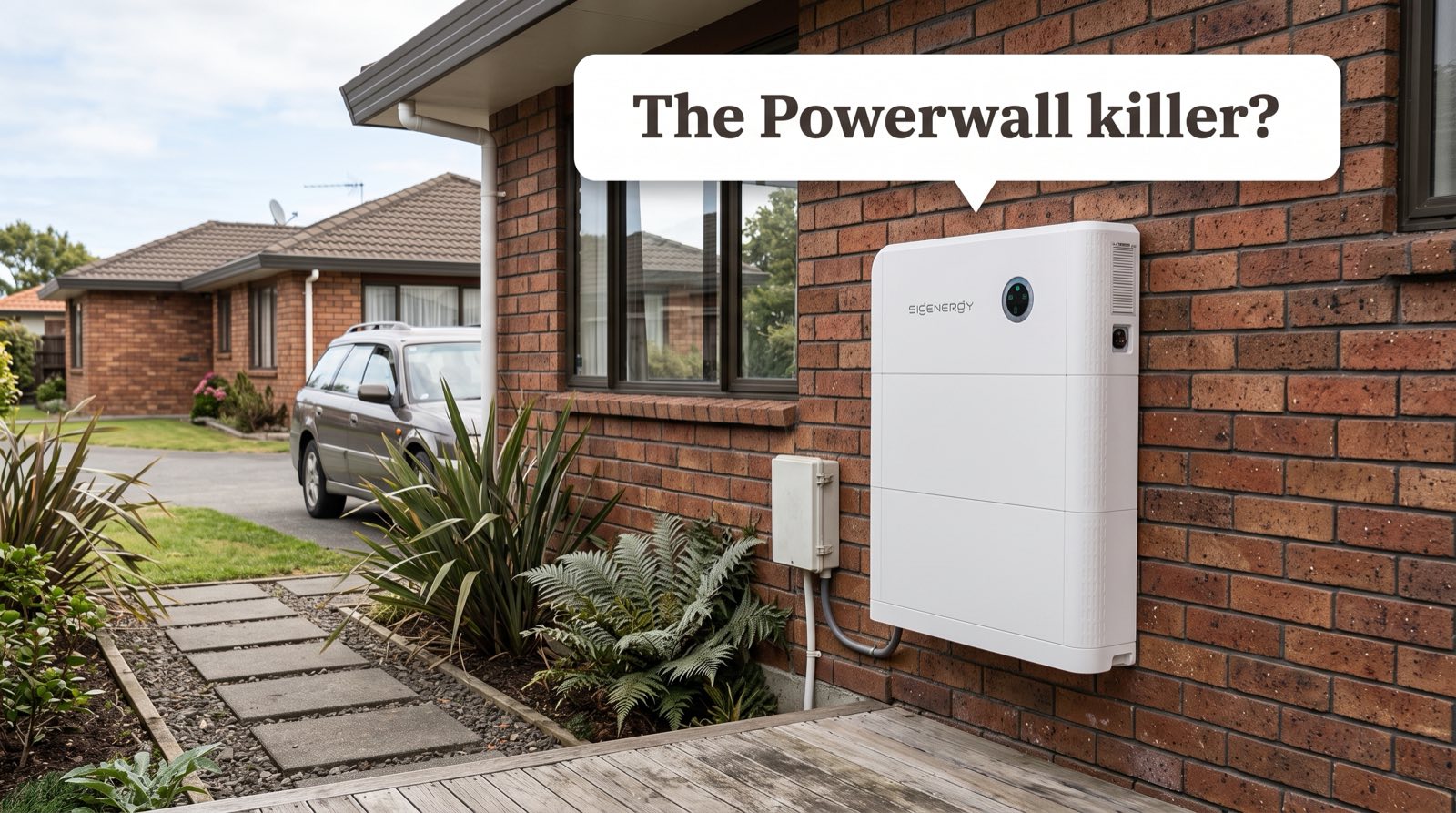
Sigenergy SigenStor Review NZ: Price vs Powerwall 3 (2026)
Sigenergy SigenStor review for NZ: stackable 5 to 9 kWh modules, 98.3% efficiency, ~$9,124 supply-only pricing, the Powerwall 3 comparison, and the 2025 safety recall.
Read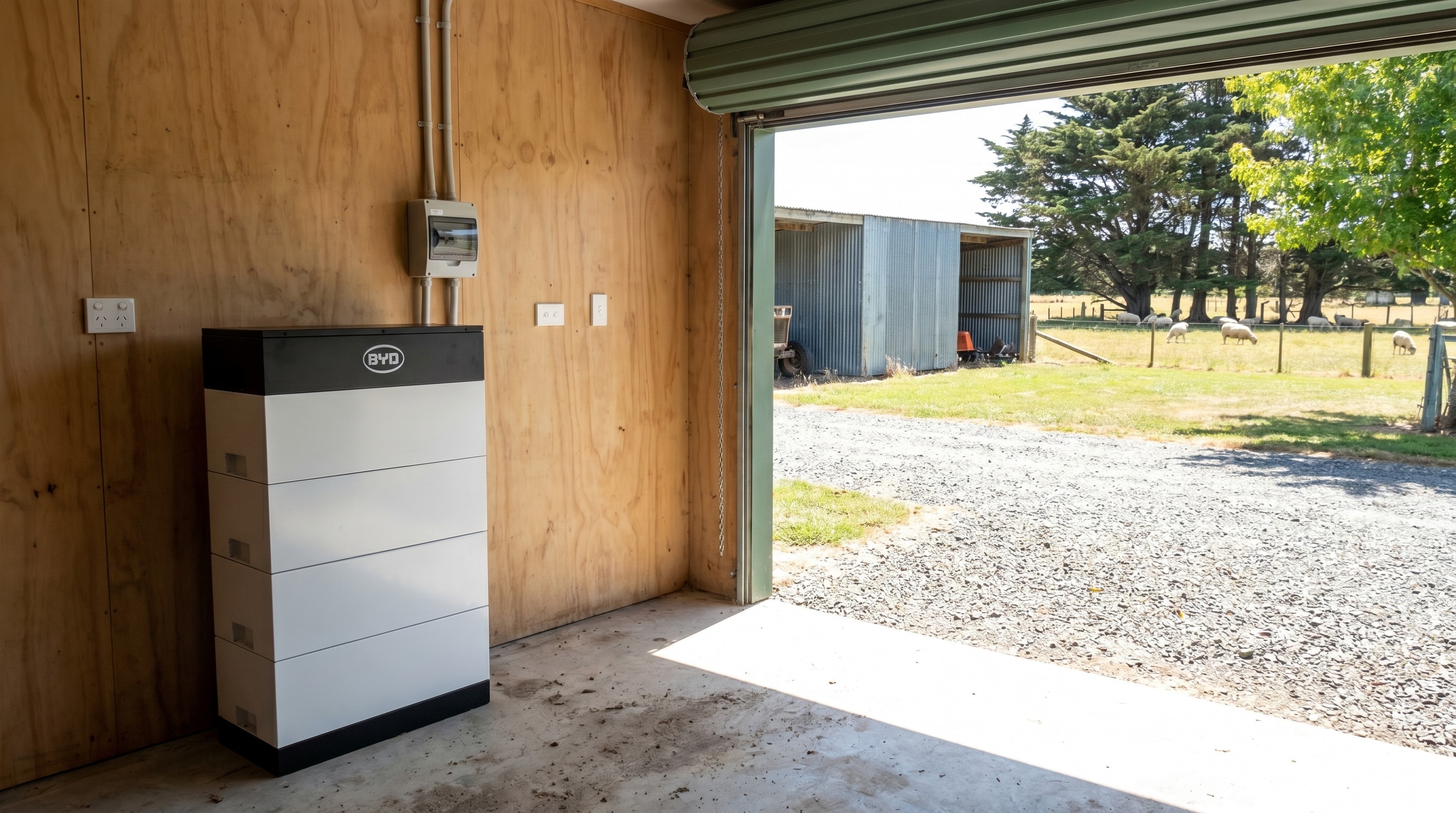
BYD Battery-Box NZ: Price, Models and Is It Worth It? (2026)
BYD Battery-Box review for NZ: the HVS and HVM towers sold here, what they cost installed, the compatible inverters, how backup works, and the NZ warranty fine print.
Read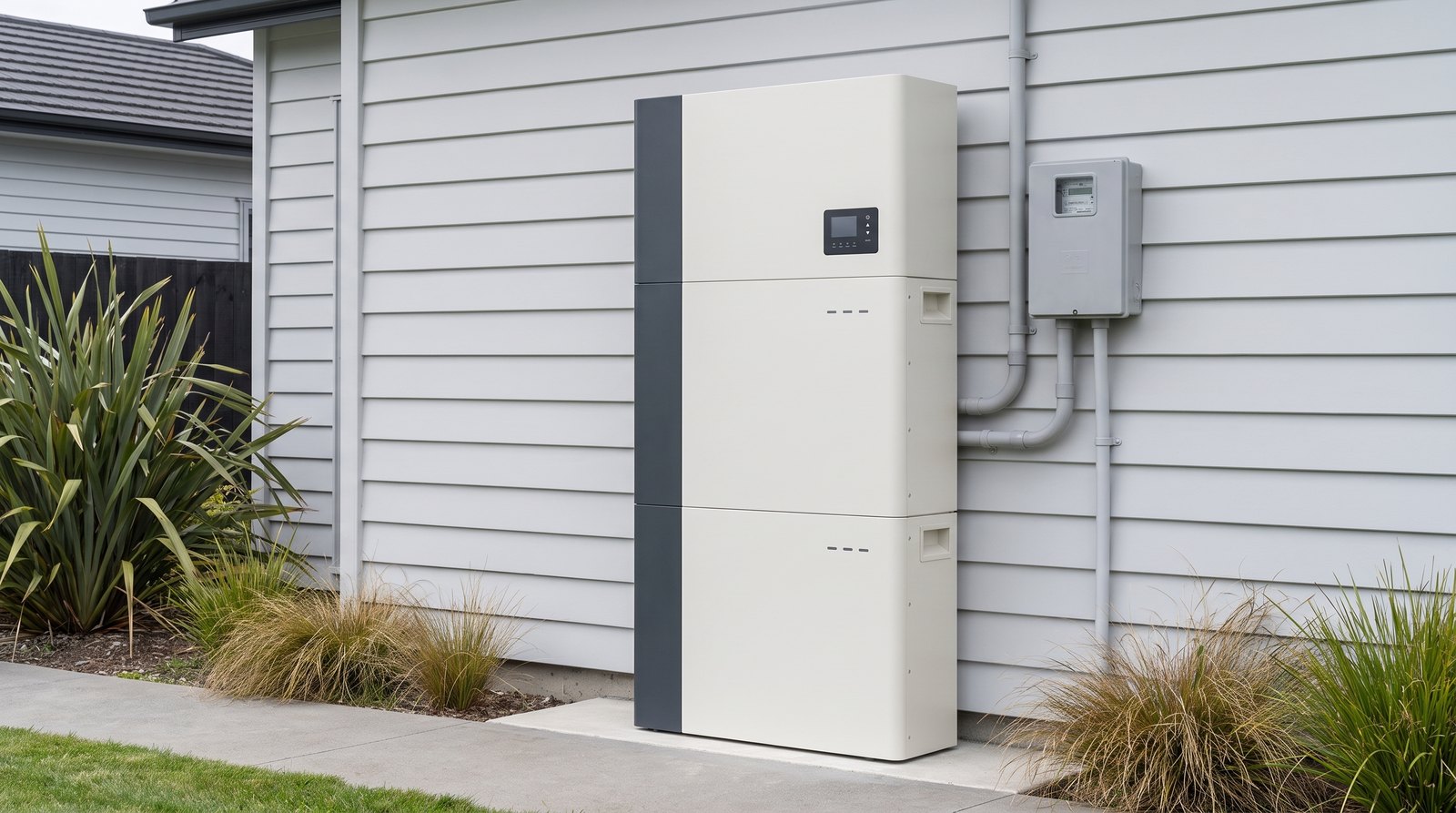
AlphaESS NZ Review: SMILE S8 and T20 Specs, Warranty and Backup
AlphaESS review for NZ: the 8 kW S8 and 20 kW T20 hybrid systems, 9.3 kWh usable modules, backup that actually works, and what to check before you sign.
Read
Solar Battery Storage NZ: Powerwall 3 Price and Is It Worth It?
Solar battery prices in NZ: Tesla Powerwall, BYD, Enphase compared. When batteries make sense and when you're better off without one.
Read
Off-Grid Solar NZ: Costs, Sizing and Can You Really Do It?
Off-grid solar in NZ: $40-70k vs $13-18k for grid-tied. Battery sizing, winter challenges, EDB export limits, hybrid alternatives, and who it actually makes sense for.
Read
Join the conversation
The best comments are honest ones: Real experience. Share yours, please stay civil and on topic. No self-promo links.
Your email is never shown or shared. To change or remove a comment later, .
No comments yet. What is your experience with this? Be the first to weigh in.