

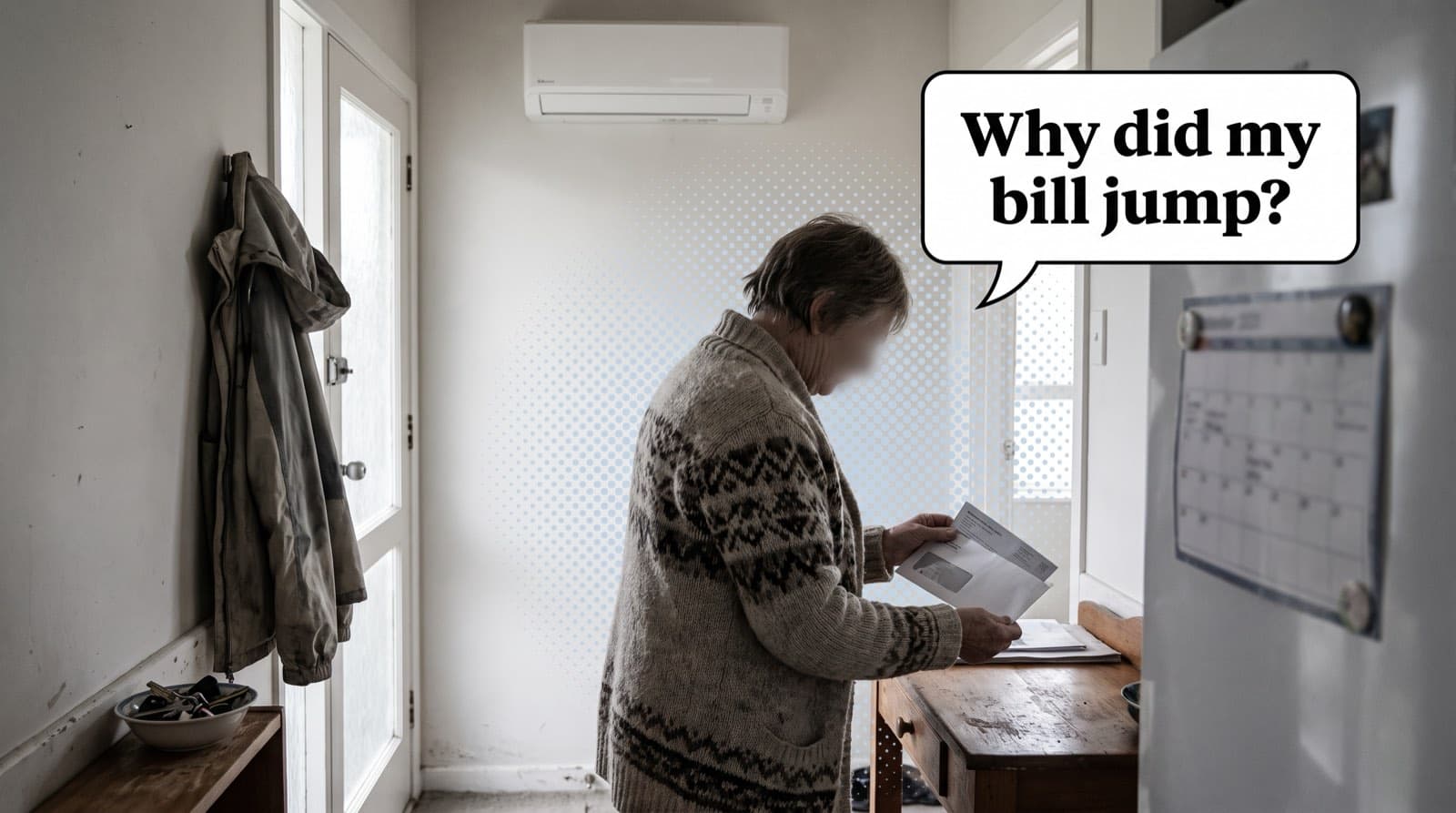
Here is a date worth sticking on your fridge: 1 April 2027. That morning two separate things happen to your power bill, and only one of them has been in the news. Your lines charge goes up again, year three of a five-year path the Commerce Commission signed off. And the rule that has held down the daily charge on a low-user plan since 2004 is revoked. Not amended. Revoked. Roughly two-thirds of Kiwi households are on a low-user plan, and most have never heard of the cap that has been quietly working in their favour.
Key Points
- Two things land on the same morning, 1 April 2027: your lines charge rises again (year three of five), and the low-user daily-charge cap is scrapped after twenty-three years.
- About two-thirds of households are low users, and most have never heard of the cap.
- The smaller your household, the harder the cap change hits you.
- Solar knocks cents off the power you use, not off a fixed daily charge, so for a low user this change makes solar worth a bit less, not more.
- No retailer has published a post-cap low-user price, so every 2027 dollar figure here is a what-if. What is known: Contact has told some customers rates rise from 3 December 2026, Genesis says most of its customers will rise (most by under 10%), Meridian is not changing, and Mercury has not decided.
Two clocks run out on the same morning
Think of it as two clocks, both hitting zero at once.
The first is the Low Fixed Charge regulations. They stop existing on 1 April 2027, and the part that matters even more than the cap goes with them: the rule that a low-user plan can never cost you more over a year than the standard plan would. That single rule is the pin holding the whole two-tier tariff setup together, and it goes too.
The second clock is the Commerce Commission's five-year lines path. In its own words, you can expect monthly bills to rise by an average of $5 a month ($60 a year, before GST) in each of the four remaining years. Lines and transmission together are just over 30% of a power bill, they started rising in 2025 and are likely to keep rising until at least 2030, and Transpower reckons transmission alone is about 8%. 1 April 2027 is year three. One clock is just a price rise. The other is a price rise and a rebuild of how the bill is put together, and it is the rebuild that changes what solar is worth to you.
The cap you have never seen
You have almost certainly never gone looking for it, but there is a legal ceiling on the daily fixed charge a low user can be charged. Right now it sits at 180 cents a day before GST (about $2.07 once GST is on), with the lines-company slice of that capped at 90 cents. Mercury's own page lists the whole ladder.
And it has been a ladder. The cap climbed a rung every 1 April: 30 cents a day, then 60, 90, 120, 150, and 180 now, with the distributor half tracking at exactly half those figures, 15 up to 90. On 1 April 2027 it does not climb another rung. It just goes.
A cap is a ceiling, not a price, so it is not what you actually pay. Toast Electric's low-user charge, for instance, is $1.6675 a day including GST ($1.45 without), comfortably under the line. But a ceiling is also a magnet: Vector's 1 April 2026 schedule parks a low user's lines charge at 90.00 cents a day, the cap to the last cent.
Are you a low user? Probably, and you might not know it
The rules count you as a low user if you get through 8,000 units of power (kWh) a year, or 9,000 if you are in the Lower South (Arthur's Pass, Islington, Bromley and south, so Christchurch counts). Meridian's help page has the split.
Here is a myth worth clearing up: that 8,000 is not a gate you have to qualify for. Anyone can pick a low-user plan. It is just a benchmark the rules are built around. And most of us are under it: about two-thirds of households counted as low users in 2023, per Sense Partners' report for MBIE, though they use only about 55% of the country's household power, because low-user homes tend to be smaller.
The phase-out was signed off back in September 2021, and to be fair the case for it is solid: the low fixed charge rewarded low use, which tracks a small house, not a small income, so it was never really targeted at need. Our beef is not with the principle. It is with the timing, the silence, and the arithmetic.
This is already happening to your bill
You have felt four rungs of that ladder already. MBIE's quarterly price survey for 15 August 2026 puts the national average at 42.15 cents a unit including GST, up 0.3% on the quarter, with the lines slice flat at 16.8 cents and the energy-and-other slice at 25.3. The May report, the last with a year-on-year column, had the year's whole rise, and then some, in lines: up 1.62 cents (10.7%) while energy-and-other fell 0.20 cents. The part solar is best at cutting is the part going down; the part it cannot cut is the part driving your bill up.
What a unit of power costs today (GST included)
Source: MBIE QSDEP, report for 15 August 2026 (Balclutha fell 2.9% on the quarter and is still the dearest town in the survey). GST inclusive; it prices the cheapest low-user tariff available, so it is the floor.
The Electricity Authority's own data, published in August 2026, shows household bills rose 6.8% in the first half of 2026 (1 November 2025 to 30 June 2026), after 8.0% in 2025. Lines charges were 54% of the rise. About 22% of households saw no change at all; those who did averaged 8.7%. Lines charges themselves rose a weighted 7.8% in April 2026. The survey above tracks the cheapest plan, which moves slower, so if you have not switched in three years, the 8.7% is closer to your number. And the year is not done: 1News reported on 19 October that Contact has told some customers their rates rise from 3 December, Genesis says most of its customers will see an increase (most under 10%), Meridian is not changing prices, and Mercury has not decided on 2027.
What it could actually cost you, worked through
Nobody knows what a low-user daily charge will be on 2 April 2027, because no retailer has published one. So here is the honest way to guess: take today's published standard-user tariffs, and ask what happens if low-user charges drift up to meet them. Nothing in law will make them. With that no-worse-off rule gone, nothing in law will stop them either. What has changed since July is guidance, not law. On 17 September 2026 the Electricity Authority's chair wrote to every lines company: there is "no expectation of an immediate and full adjustment on 1 April 2027, but transparency is required", rebalancing need not happen "in a single step", managing price shocks "will not be treated as bad pricing practice", and each lines company must say when its legacy low-user tariff will finally go. A glide path is allowed; an indefinite deferral is not.
One rate card, so we are comparing like with like: Toast Electric, effective 1 April 2026, GST included. We use them for the boring reason that they publish a full public card and most retailers do not, not because we are saying they are cheap or dear. A standard-user plan charges a bigger daily fee but less per unit, so how much of that daily gap you claw back depends entirely on how much power you use. So we put the gross and the net in one table.
A Wellington home: low user today, standard user after the change (GST included)
Working, so you can check it yourself. Low user: $1.6675 × 365 + units × $0.3155. Standard user: $2.5300 × 365 + units × $0.2761. Lines rise: the Commission's $5 a month for year three of the lines path, which is $60 a year before GST and $69 with it. This is a what-if, not a forecast: no retailer has announced a post-2027 price.
And there it is: the smaller your household, the worse this hits. One person on 2,500 units a year is looking at roughly $5.48 a week; a family on 8,000 barely feels the cap change at all, just the lines rise.
Two official bounds arrived in October 2026, and the table above sits inside them. MBIE told RNZ it expects about 85% of households to see a change of no more than $9 a month, about $120 a year, either way, with some very low-use homes larger. Consumer NZ's Paul Fuge put the average standard daily charge at $2.70, said a low user on $1.80 might face about 90c a day more, around $335 a year, cited $4.70 a day as the worst case he had seen, and estimated that about 40% of households will pay more. Lines companies are setting their 1 April 2027 prices now; retailers will publish theirs early in the new year.
Run those sums on every rate card and the low-user and standard-user plans always cost you the same at almost exactly 8,000 units a year, 9,000 in the Lower South. That is not competition, it is the no-worse-off rule doing precisely what it says: pinning the low-user plan to the benchmark. On 1 April 2027 that pin gets pulled out, nothing forces a retailer to keep two tariffs at all, and not one of them has said what they will do.
The half that makes solar worse
Here is the half every solar company will skip. A solar panel knocks cents off the units of power you would otherwise buy, and that is the whole trick. A daily fixed charge is not units: it is rent on the connection, due in the rain, in July, at midnight, whether your panels made a thing that day or not. So if your retailer shaves a few cents off the unit rate and loads it onto the fixed charge, every unit your panels make is suddenly worth less. In a worked Wellington example, the same 5 kW system earns about 8% less a year after the change, and the entire loss lands on the power you use yourself. The export half does not move a cent: buy-back at Genesis Energy's rate of 12.5 cents a unit (before GST) is untouched by any of this.
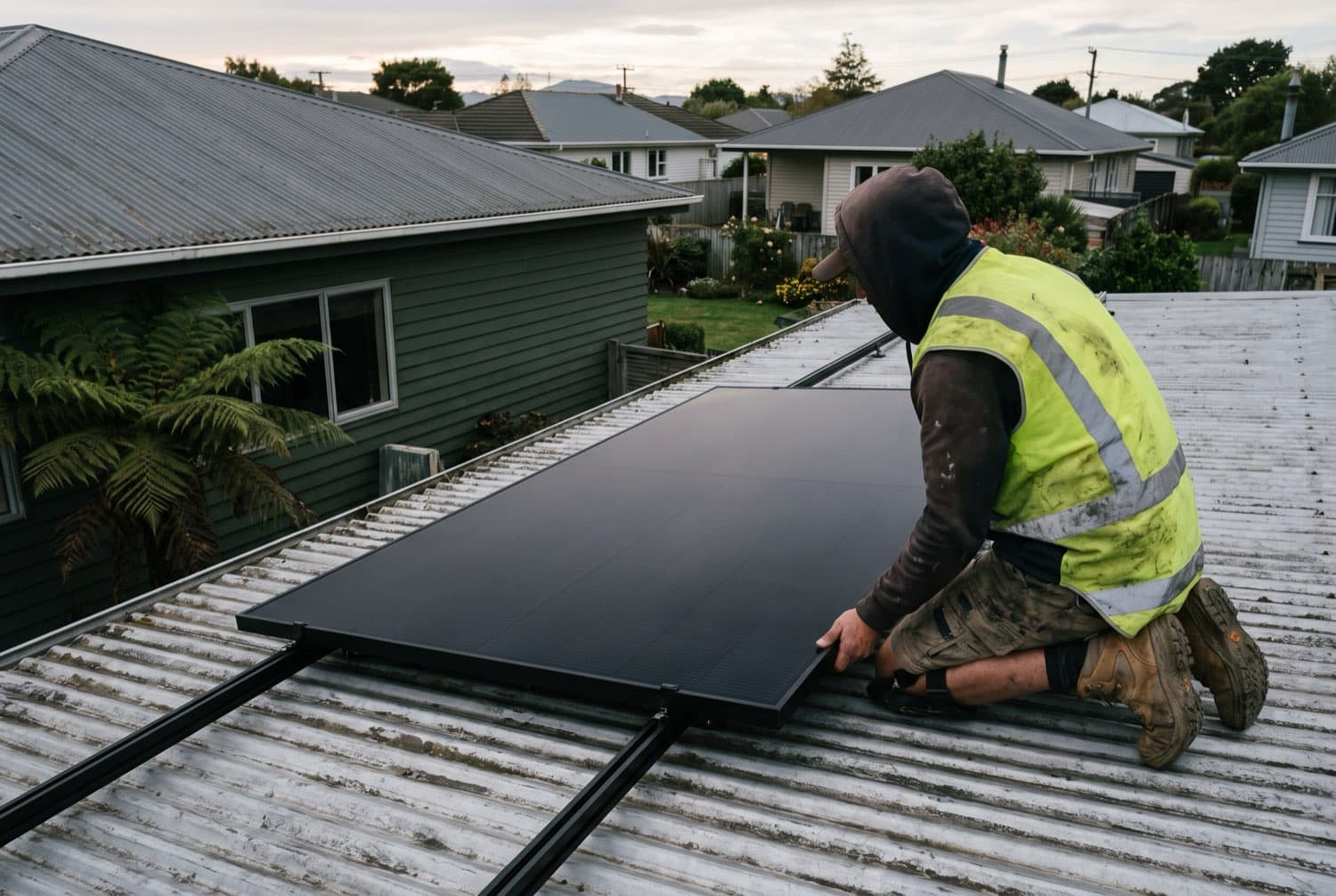
For a low user, under 8,000 units, 1 April 2027 makes the bill bigger and makes solar less attractive, both at once. Where it still stacks up: a heavier user above 8,000 units already pays the high daily charge, so the revocation does not touch them, and their case for solar firms up a little. And anyone who can shift power use into daylight, or store it, is fighting on the ground that still exists. A unit you use yourself is worth two to three times one you export, and after 2027 that gap is basically the whole case. Here is every retailer's buy-back rate.
Who actually cops it
You do not have to take our word for who gets hit, because the government's own contractor already measured it. Sense Partners, for MBIE, split low users into three groups and tracked the first three years of the phase-out.
The very lowest users, up to 4,000 units a year and 35% of all low users, were already paying about $125 more by 2024, an 11% jump. The middle band, 4,000 to 6,000 units and 36% of low users, were up $54, about 4%. Only the top slice, above 6,000 units and 20% of low users, came out ahead, roughly $37 better off. That is 91% of low users, and the pattern is unmistakable: the last rung of the ladder lands the same way as the first four, on the smallest households. Retirees, people living alone, and the folks who have already done everything right on efficiency.
The cushion on offer is a credit, not a cap. An industry-funded Power Credit Scheme, extended to 2032, pays $110 a year to a household that is struggling to pay and was on a low-user plan, plus another $110 a year if the household takes budgeting advice, by asking its retailer; Consumer NZ describes it as a $5 million scheme. It is targeted, and you have to ask.
What to actually do, and when
- Find out what you actually use. Your yearly units are on your bill or in your retailer's app. Everything here hangs on one question: are you above or below 8,000 units (9,000 south of Arthur's Pass)?
- Check which plan you are on. A daily charge near $1.67 including GST means you are a low user. Most people are, and do not realise it.
- Do not switch to a standard-user plan yet. Until the cap goes, the no-worse-off rule guarantees the low-user plan cannot cost you more at the benchmark, so under 8,000 units it is the right plan today.
- Put a note in your phone for March 2027. When your retailer publishes its new rates, work out where a low-user plan and a standard one would break even for your usage. If you are under that, take the low-fixed option, if one still exists.
- Make any installer show you their assumption for how much power you use yourself. After 2027, using your own power is where nearly all the value sits, so a payback built on "60% used at home" with no working behind it is built on sand. Here is how to read the rest of the quote.
- If you use under 8,000 units, be a bit sceptical of anyone selling you solar off the back of this story. Us included.
The short version: above about 8,000 units a year, the case for solar gets a touch stronger on 1 April 2027, and it is worth getting numbers. Below that, it gets weaker, and we would rather tell you now than after you have signed. Either way, every installer we match you with is EWRB registered and a member of Master Electricians. Get matched with vetted installers: free, about two minutes.
Common questions
What actually happens to low-user power plans on 1 April 2027? The whole set of Low Fixed Charge rules is revoked that day. The cap on the low-user daily charge, right now 180 cents a day before GST, disappears, and so does the rule that a low-user plan cannot cost more than the alternative at 8,000 units a year. Nothing in law replaces them, and no retailer has yet said what they will charge instead.
Will solar protect me from this? Partly, and less than you have probably been told. Solar cuts the units of power you buy. It does nothing to a fixed daily charge. So if your retailer moves cost off the unit rate and onto that daily charge, every unit your panels make is worth a little less. In our worked Wellington example, the same system earns about 8% less a year after the change. If you are a heavier user, above 8,000 units, the case holds up better.
Where we've corrected this page
Every dollar figure past 1 April 2027 here is a what-if, not a forecast: no retailer has published a post-cap low-user price, so we have modelled convergence to today's standard-user cards and shown our working. If a retailer announces its 2027 rates, or you spot a figure we have read wrong, tell us and we will update this page and re-date it.
Every rate, cap and figure here was read on 14 July 2026, and the price data, the regulator's letter and the retailer statements were refreshed on 19 October 2026, from the sources linked below. We would rather be corrected than be wrong.
Keep reading

Sources
Regulator and government
- Electricity (Low Fixed Charge Tariff Option for Domestic Consumers) Regulations 2004, version as at 1 April 2026, New Zealand Legislation
- Consumer benefit key as ComCom allows increased investment in electricity network, Commerce Commission
- Understanding why changes to lines charges may impact your electricity bill, Commerce Commission
- Electricity Authority takes closer look at price increases, 28 April 2026, Electricity Authority
- Quarterly Survey of Domestic Electricity Prices, report for 15 August 2026, MBIE
- Quarterly Survey of Domestic Electricity Prices, report to 15 May 2026, MBIE (the year-on-year figures)
- Data shows 6.8% increase to power bills across households and small businesses, 12 August 2026, Electricity Authority
- Open letter to distributors on the Low Fixed Charge phase-out, 17 September 2026, Electricity Authority
- Electricity cost and price monitoring, MBIE
- Mid-point review of the phase-out of the Low Fixed Charge regulations, MBIE
- Phase out of the Low Fixed Charge regulations: quantified price effects for the first 3 years, Sense Partners for MBIE
- Electricity Price Review, MBIE
- Power bill changes bring fairness to charges, 17 September 2021, New Zealand Government
- Grid prices, Transpower
Retailer, lines company and industry, all read on 14 July 2026
- 1 April 2026 Pricing Schedule and Policy and Electricity price change, Vector
- Electricity pricing, rate card effective 1 April 2026, Toast Electric
- Changes to the electricity low user daily fixed charge, Mercury
- Standard and low user options, Meridian Energy
- Prices and rates, Powershop
- What is the solar buyback rate?, Genesis Energy
- Extended support on the way during the low fixed charge tariff phase-out, ERANZ
Reporting added 19 October 2026
- Poorest could face highest power bill shock in overhaul, Consumer NZ warns, RNZ, 14 October 2026
- Power prices up for some pre-Christmas despite wholesale prices falling, 1News, 19 October 2026
- Could you get a $110 credit from your power company?, Consumer NZ, April 2025
All sources retrieved and verified 14 July 2026; the items dated 2026 above were added 19 October 2026.
Key Points
- Two things land on the same morning, 1 April 2027: your lines charge rises again (year three of five), and the low-user daily-charge cap is scrapped after twenty-three years.
- About two-thirds of households are low users, and most have never heard of the cap.
- The smaller your household, the harder the cap change hits you.
- Solar knocks cents off the power you use, not off a fixed daily charge, so for a low user this change makes solar worth a bit less, not more.
- No retailer has published a post-cap low-user price, so every 2027 dollar figure here is a what-if. What is known: Contact has told some customers rates rise from 3 December 2026, Genesis says most of its customers will rise (most by under 10%), Meridian is not changing, and Mercury has not decided.

lights on
Related guides
View all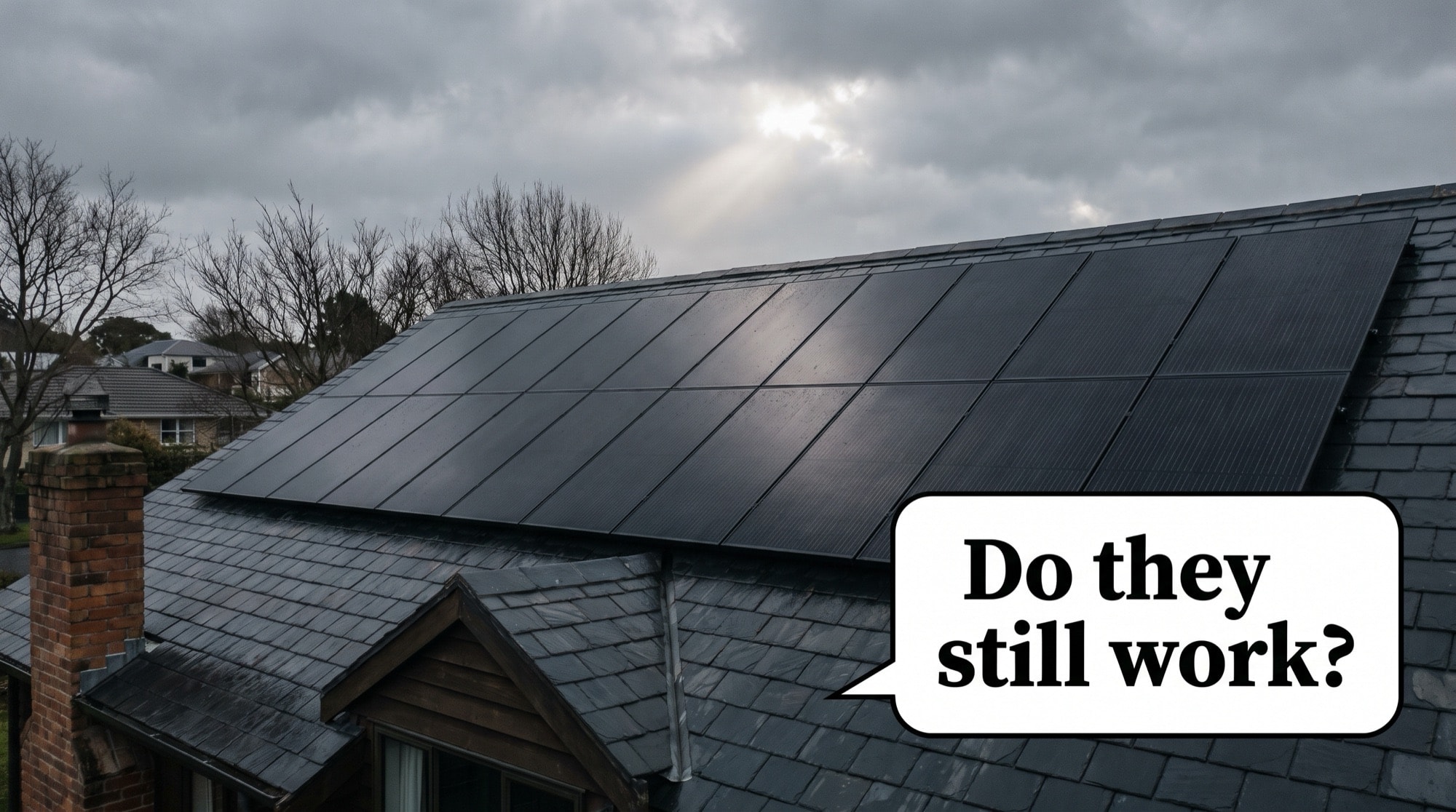
Do Solar Panels Work in Winter and on Cloudy Days in NZ?
Solar panels still generate power on cloudy days and through NZ winters. Here's exactly how much output changes and why it still works.
Read
Best Solar Installers NZ (2026)
How to find a quality solar installer in NZ. What to look for, red flags to avoid, and when SEANZ membership matters for your bank loan.
Read
Solar Battery Storage NZ: Powerwall 3 Price and Is It Worth It?
Solar battery prices in NZ: Tesla Powerwall, BYD, Enphase compared. When batteries make sense and when you're better off without one.
Read
How to Get Solar Quotes in NZ (and Compare Them Properly)
How to get solar quotes in NZ: EECA's 2-3 quote rule, where to get them, what to have ready, comparing $/W like-for-like, and the red flags in the quoting process.
Read
10kW Solar System NZ: Price, Output and Is It Too Big? (2026)
10kW solar systems in NZ: $15,000-18,000 installed, 13,000-14,300 kWh a year, 22-24 panels, the 40m² engineering rule, export limits, and when 6.6kW beats it.
Read
Solar Hot Water NZ: What It Costs and Whether It's Worth It
Solar hot water in NZ: thermal systems run $7,000-9,000 installed and cover 50-75% of your hot water. Why most homes now do it with PV and a diverter or a heat pump cylinder instead.
Read
Join the conversation
The best comments are honest ones: Real experience. Share yours, please stay civil and on topic. No self-promo links.
Your email is never shown or shared. To change or remove a comment later, .
No comments yet. What is your experience with this? Be the first to weigh in.