
Solar Hot Water NZ: What It
Costs and Whether It's Worth It
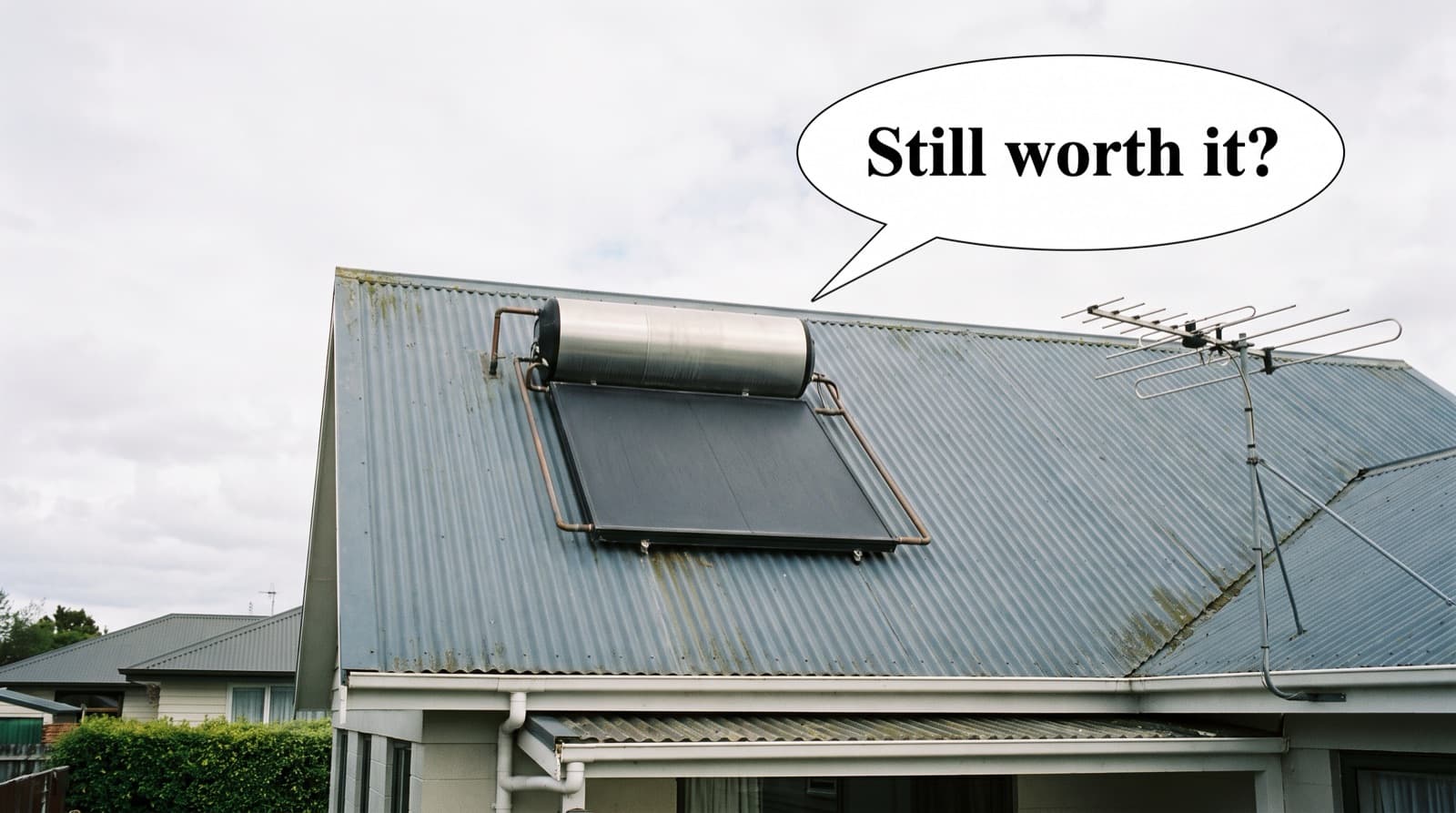

Water heating is about a third of a typical NZ household's energy bill, which makes it the single biggest thing the sun could be paying for. So “solar hot water” is a sensible thing to search. The surprise is what you find when you do: the technology that used to own that phrase is now the least common way Kiwi homes heat water with the sun.
We do not sell any of these systems. This guide covers what traditional solar water heating costs and does, why most of the market moved to solar PV with a diverter or a heat pump cylinder, and how to work out which of the three fits your house.
Key Takeaways
- Water heating is about a thirdof a typical NZ household's energy bill, which makes it the biggest single thing solar can pay for.
- A traditional solar water heating system costs $7,000 to $9,000installed in NZ and covers 50 to 75% of a household's hot water.
- Most NZ installers quoting solar today quote PV panels. A hot water diverter adds a few hundred dollars and sends surplus solar into the cylinder.
- A hot water heat pump cylinder costs about $7,000 installed and cuts water heating from about $480 to about $180 a year.
- There are no government grants for solar water heating in NZ. The old subsidy scheme ended years ago.
The Short Answer
Solar water heating works. A well-installed thermal system covers 50 to 75% of a household's hot water and lasts decades. The problem is not the technology, it is the competition: for similar money, solar PV panels now power your whole house, including the cylinder, and a hot water heat pump cuts the cylinder's running cost by around 60% before the sun gets involved at all.
That is why most NZ installers quoting “solar” today will quote you PV, and why the official EECA comparison of home water heating options no longer features dedicated solar water heating at all. Thermal still has its place, and we cover it honestly below, but if you came here pricing a way to stop paying the grid to heat water, you have three options to compare, not one.
What Solar Water Heating Is
A traditional solar water heater puts collectors on the roof that absorb heat directly and transfer it to your cylinder. No electricity is generated at any point: sunlight becomes hot water and nothing else.
- Flat plate collectors are glazed panels with water channels inside, the shape you see on older roofs. Simple and proven since the 1950s.
- Evacuated tubesare rows of glass vacuum tubes. They hold heat better on cold days. In NZ's temperate climate the two types perform similarly overall.
Sizing follows a rule of thumb of roughly one square metre of collector per person, feeding a cylinder that holds about 75 litres per square metre of collector. A family of four is typically looking at around 4m² of collectors and a 300 litre cylinder. Because the system involves plumbing and roof penetrations, installation typically needs a building consent, which is a cost and delay PV panels usually avoid. Check with your council.
Want to compare
quotes?
Get matched with vetted local installers and see real quotes for your home. It’s free, with no obligation.
Compare up to 3 quotesWhat It Costs in NZ
Current NZ suppliers list installed solar water heating systems between $7,000 and $9,000, depending on the site and whether the cylinder is replaced at the same time. There are no government grants for solar water heating; the old subsidy scheme ended years ago.
What you get for that money is 50 to 75% of your hot water, which is a real saving: hot water is around 30% of a typical power bill, so a thermal system that performs well trims something like 15 to 20% off the total bill. The catch is that it can never do more than that. The panels heat water, and when the cylinder is hot, the rest of the sunshine hitting them is wasted. A PV system at a similar price keeps working on the rest of the bill, which is the comparison the next section is about.
For what full PV systems cost in NZ, our solar panel costs guide has the current installed prices by system size.
Why the Market Moved On
Fifteen years ago, solar water heating was the sensible solar purchase, because PV panels were expensive enough that using the sun's heat directly beat converting it to electricity. Then PV prices collapsed and the logic inverted. The same roof area that heats your water can now power your fridge, your heat pump, your EV and your cylinder, and export the surplus for credit.
The question changed from “how do I heat water with the sun?” to “why would I dedicate my roof to only heating water?”
You can see the shift in the official guidance: EECA's comparison of home water heating options covers electric cylinders, gas and hot water heat pumps, and dedicated solar water heating is not on the page. Most solar installers have followed the same path: they quote PV, and treat hot water as one of the loads the PV feeds.
The Three Options Compared
All three of these put the sun to work on your hot water. They differ in cost, in how much of the rest of the house they help, and in what they need from your roof.
The pattern: thermal is a single-purpose machine, the other two are general-purpose. That is also why the second option has quietly become the default answer in NZ: the diverter is a small add-on to a PV system that was already worth quoting for the rest of the bill.
PV Plus a Diverter Explained
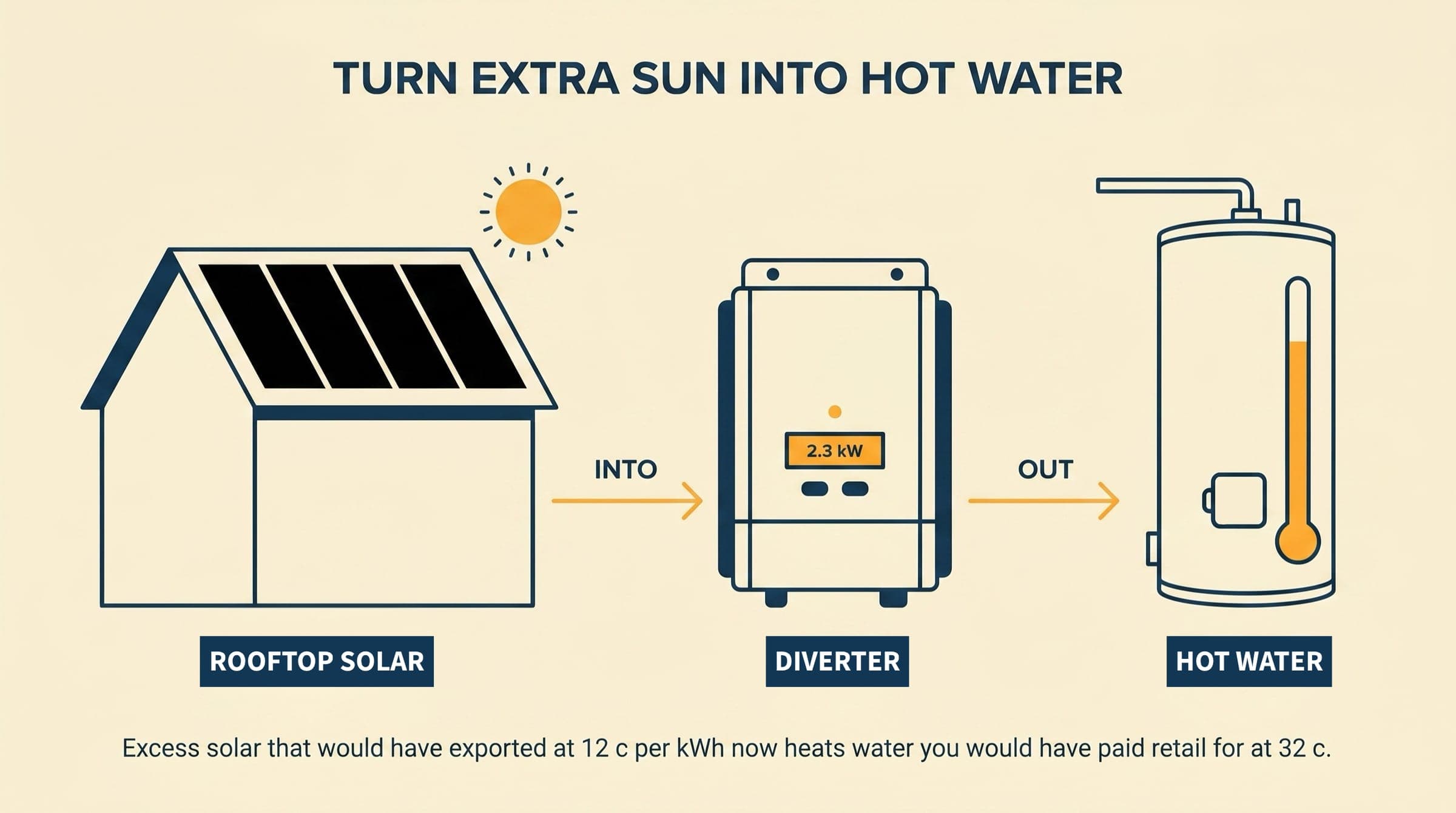
A hot water diverter sits between your solar PV system and your existing electric cylinder. When the panels are making more than the house is using, the diverter sends the surplus into the cylinder's element instead of exporting it. Your ordinary cylinder becomes a thermal battery, storing the afternoon's sunshine as the evening's showers.
The maths is what makes it compelling. Exported electricity earns a buy-back rate of typically 8 to 12c per kWh, while the grid power you avoid buying costs 30c or more. Every diverted kWh is worth the difference, which is why a diverter on a typical household pays for itself in roughly 18 months. Our buy-back rates guide covers the export side of that equation, and our guide to buying solar explains why the diverter belongs on the quote as a line item, not an afterthought.
The practical advantages over thermal: it uses the cylinder you already own, it needs no plumbing on the roof and no building consent for the panels in most cases, and on the days the cylinder is already hot, the surplus goes to the rest of the house or the grid instead of being wasted.
Want to compare
quotes?
Get matched with vetted local installers and see real quotes for your home. It’s free, with no obligation.
Compare up to 3 quotesHot Water Heat Pumps
The third option attacks the problem from the other end: instead of making the energy cheaper, it uses less of it. A hot water heat pump cylinder works like a heat pump for your rooms, pulling warmth out of the air to heat the water. EECA's figures put a traditional electric cylinder at about $480 a year to run and a hot water heat pump at about $180, from an installed cost of around $7,000.
For a household replacing a dying cylinder anyway, that is the comparison that matters, and it is worth knowing that cylinders do die on schedule: they last about 15 years, and EECA reports that nearly half of NZ homes with electric cylinders are running one more than 10 years old. If yours is in that half, the smart sequence is often heat pump cylinder first, PV second, because the heat pump shrinks the load the PV then has to cover.
Heat pump cylinders and PV also stack: run the heat pump on a daytime timer and it heats water from your own generation at the hours the panels are strongest.
Which One Fits Your House
- Choose PV plus a diverter if your cylinder is healthy and you want solar for the whole bill. This is the default answer for most owner-occupied NZ homes, and the diverter is a small line on the quote.
- Choose a hot water heat pump if your cylinder is near the end of its life, your roof is poor for solar (shaded, wrong aspect, no space), or you want the biggest cut in water heating cost per dollar spent. Add PV later if the roof allows.
- Choose thermal solar water heating if hot water genuinely dominates your energy use and PV is a poor fit, which in practice means situations like very high constant hot water demand with limited electrical capacity. For a typical household it is the narrowest of the three options.
Whichever way you lean, price it against a real PV quote for your actual roof and usage. A diverter or a heat pump cylinder can be priced as part of the same job, and seeing the numbers side by side beats any rule of thumb.
Common Questions
How much does solar hot water cost in NZ?
Current NZ suppliers list installed solar water heating systems between $7,000 and $9,000, depending on the site and whether the cylinder is replaced at the same time. Installation typically needs a building consent because it involves plumbing and roof penetrations. There are no government grants for solar water heating; the old subsidy scheme ended years ago.
Is solar hot water worth it in NZ?
The technology works: a good system covers 50 to 75% of your hot water, and hot water is around 30% of a typical power bill. The honest problem is the competition. For similar money, a solar PV system powers the whole house including the cylinder, and a hot water heat pump cuts water heating from about $480 to about $180 a year. For most households, one of those two is the better buy in 2026.
Can normal solar panels heat my hot water?
Yes, and this is now the most common way it is done in NZ. Solar PV panels generate electricity, and a hot water diverter sends the surplus into your existing electric cylinder's element instead of exporting it. Nothing about the cylinder needs to change. The diverter watches generation and household use in real time, so the cylinder only draws what the house is not using.
Do I need a special cylinder for solar?
For PV with a diverter, no: the diverter feeds your existing electric cylinder's element. For thermal solar water heating, usually yes: those systems pair the roof collectors with a compatible cylinder, commonly around 300 litres for a family, sized at roughly 75 litres per square metre of collector. That cylinder is part of the $7,000 to $9,000 installed price.
Solar hot water or a hot water heat pump: which is better?
For most NZ homes the heat pump wins on the numbers: about $7,000 installed and it cuts running costs from about $480 to about $180 a year, with no roof work, no consent, and no dependence on the weather. Thermal solar can cover more of the load on sunny days but does nothing for the rest of the house. If your cylinder is due for replacement anyway, the heat pump comparison is the one to run first.
What is a hot water diverter and what does it cost?
A small unit that sits between your solar PV system and your cylinder, watching how much surplus the panels are making and sending it to the cylinder's element instead of the grid. Diverted power is worth the gap between your buy-back rate, typically 8 to 12c per kWh, and the 30c+ retail price you avoid paying, which is why a diverter on a typical household pays for itself in roughly 18 months. Ask for it as a line item on any PV quote.
How much of my hot water can solar cover?
A well-sited thermal system covers 50 to 75% of a household's hot water needs across the year, higher in summer and lower in winter when demand rises and sun falls. A PV system with a diverter behaves differently: it covers whatever surplus the panels produce after the house takes what it needs, so the answer depends on system size and daytime usage rather than a fixed percentage.
Does solar water heating need building consent?
Typically yes. A thermal system involves roof penetrations, plumbing and often a heavy roof-mounted component, which is why installations generally go through a building consent. Rules and exemptions vary by council, so confirm locally before you commit. Standard PV panel installations usually avoid consent, which is one of the practical reasons the PV route has become the common one.
Evacuated tubes or flat plate: which type is better?
In NZ's temperate climate the two perform similarly overall. Evacuated tubes hold their heat better on cold clear days because each tube is a vacuum flask; flat plates are simpler, flatter on the roof, and have been proven since the 1950s. If you go thermal, the installer's track record and the cylinder pairing matter more than the collector type.
Can I add solar to my existing hot water cylinder?
Yes, two ways. The common way: install solar PV and a hot water diverter, which feeds your existing electric cylinder's element with surplus generation and changes nothing about the plumbing. The less common way: retrofit thermal collectors to a compatible cylinder, which is plumbing work and usually consent. If your cylinder is healthy, the diverter route is cheaper and simpler; if it is old, price a hot water heat pump cylinder at the same time.
Next steps for your solar journey
Related guides
View all
Solar for Homes NZ: How It Works, What It Costs, Is It Worth It
Solar for your home in NZ from start to finish: how a system works, what a 6.6 kW system costs, the payback, the bank loans, and the buying mistakes to avoid.
Read
Best Solar Buy-Back Rates NZ: 13 Retailers Compared (2026)
Compare solar buy-back rates across 13 NZ power companies. Octopus, Meridian, Mercury, Genesis, Contact, Power Edge and more.
Read
Solar Panel Costs NZ: What You'll Actually Pay in 2026
Real pricing data for NZ solar in 2026. System costs by size, what affects price, and how to tell if a quote is fair.
Read
Are Solar Panels Worth It in New Zealand?
An honest look at whether solar makes financial sense for NZ homeowners. Payback periods, savings data, and the scenarios where it doesn't stack up.
Read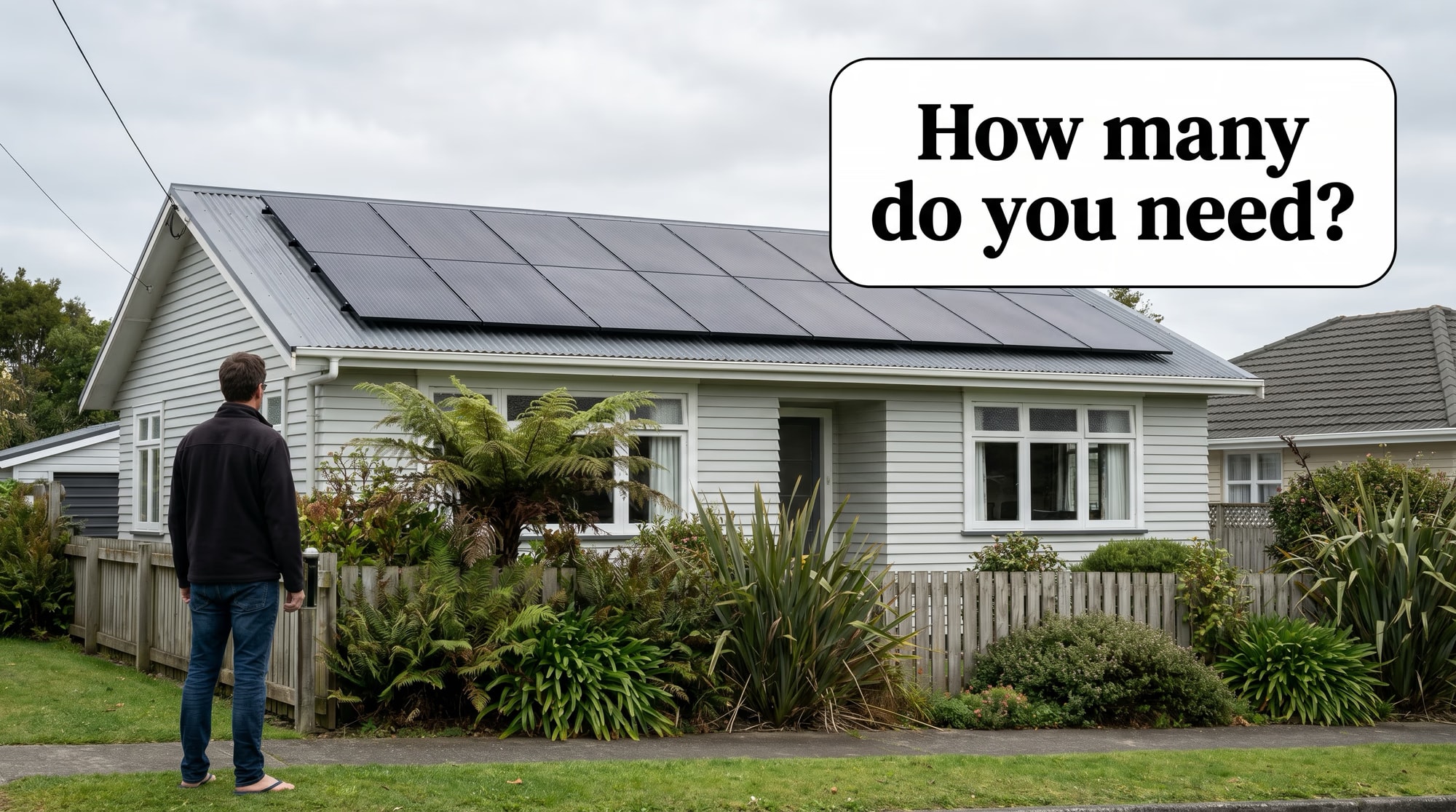
How Many Solar Panels Do I Need in NZ?
Work out how many solar panels your NZ home needs. Based on your power usage, roof space, and whether you're adding a battery or EV charger.
Read
Is My House Suitable for Solar Panels?
Check if your NZ home is right for solar. Roof direction, pitch, shade, and structural factors explained for Kiwi houses.
Read
Join the conversation
The best comments are honest ones: Real experience. Share yours, please stay civil and on topic. No self-promo links.
Your email is never shown or shared. To change or remove a comment later, .
No comments yet. What is your experience with this? Be the first to weigh in.