
How to Get Solar Quotes in NZ (and Compare Them Properly)
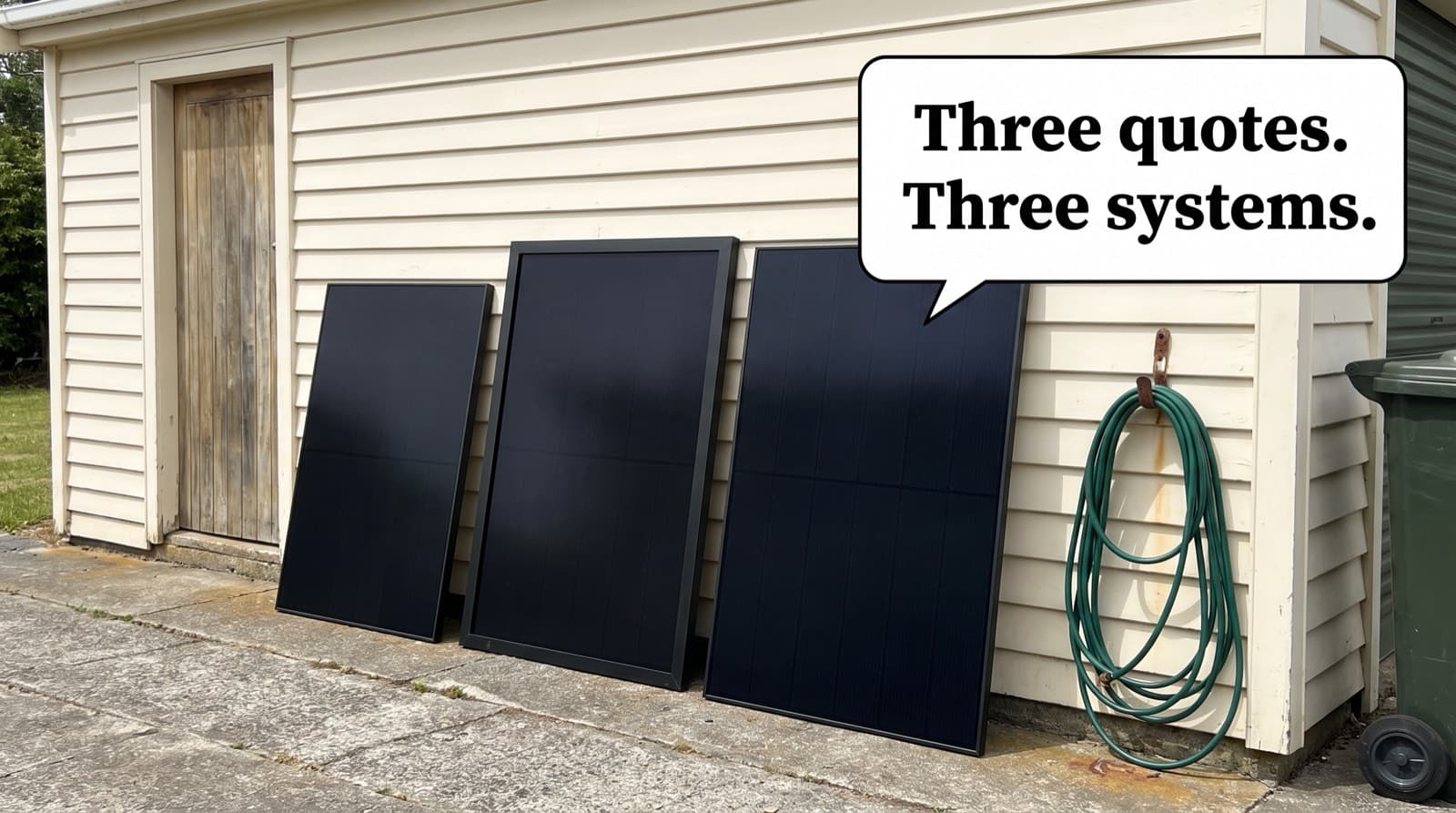

Getting solar quotes is easy. Getting quotes you can actually compare is the hard part, because every installer quotes a different size, bundles different things, and presents the numbers their own way.
This guide covers the getting: how many quotes you need, where to get them, what to have ready so they come back accurate, and how to line them up against each other properly. When you have quotes in hand and want to decode the line items, our guide to reading a solar quote takes over from there.
Key Takeaways
- Get two to three solar quotes. That is EECA's recommendation: one quote gives no reference point, and beyond three each new quote tells you less.
- Compare quotes on price per watt, not the total. $2.10 to $2.30 per watt is typical for a quality 6.6 kW install (bigger systems come in lower per watt), and under $1.40 usually means something is missing.
- A fair 2026 quote is $14,000 to $15,000 installed for a 6.6 kW system and $15,000 to $18,000 for 8 to 10 kW.
- Have a recent power bill and a switchboard photo ready. An old switchboard is the most common surprise cost, at $1,500 to $4,000 or more.
- Good installers hold a quote for 2 to 4 weeks and ask for a 10 to 20% deposit. A price that expires today is a sales tactic.
How Many Quotes to Get
Two to three.That is EECA's advice and ours. One quote gives you no reference point at all: you cannot tell a fair price from a padded one without something to compare it to.
More than three starts costing you instead of saving you. Each quote means a site assessment, a call or two, and a follow-up sequence, and by quote four you are mostly seeing the same hardware at similar prices with diminishing information in each new one. Three well-chosen quotes from genuinely different installers beats five from whoever answered fastest.
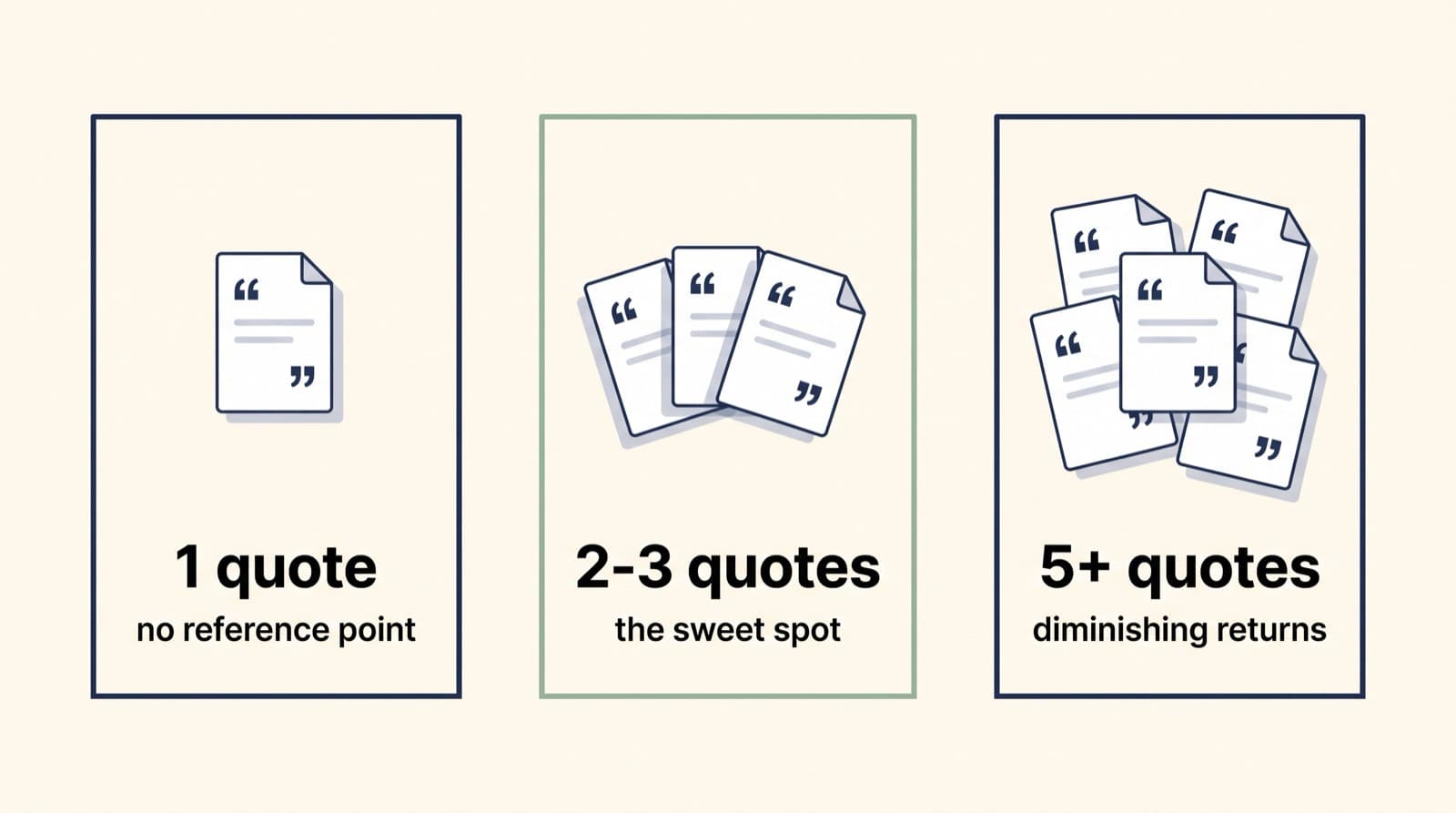
The point of multiple quotes is not to find the cheapest number. It is to see how different installers read your property, because where they disagree is where the real decisions live.
Where to Get Quotes in NZ
- Directly from installers. Pick two or three yourself and approach each one. Most work, but you do the finding, the vetting and the chasing. Our guide to choosing an installer covers what separates a good one, including SEANZ membership and the questions worth asking.
- Through a comparison service. You enter your details once and vetted installers quote against each other. That is what Solar Scout does: we match you with vetted local installers for up to 3 quotes, free. Being upfront about the bias: this is our own service, so weigh that as you would any recommendation a business makes about itself. The vetting standard we apply is published and we decline installers who do not meet it.
- The SEANZ member directory.The industry body's member list is a solid starting pool if you want to run the process yourself, and the ANZ and Kiwibank green loans require a SEANZ member installer anyway.
Whichever route you take, get at least one quote from an installer who was not the first name you found. The first-result installers are not always the best ones, they are the best advertisers.
Want to compare
quotes?
Get matched with vetted local installers and see real quotes for your home. It’s free, with no obligation.
Compare up to 3 quotesWhat to Have Ready
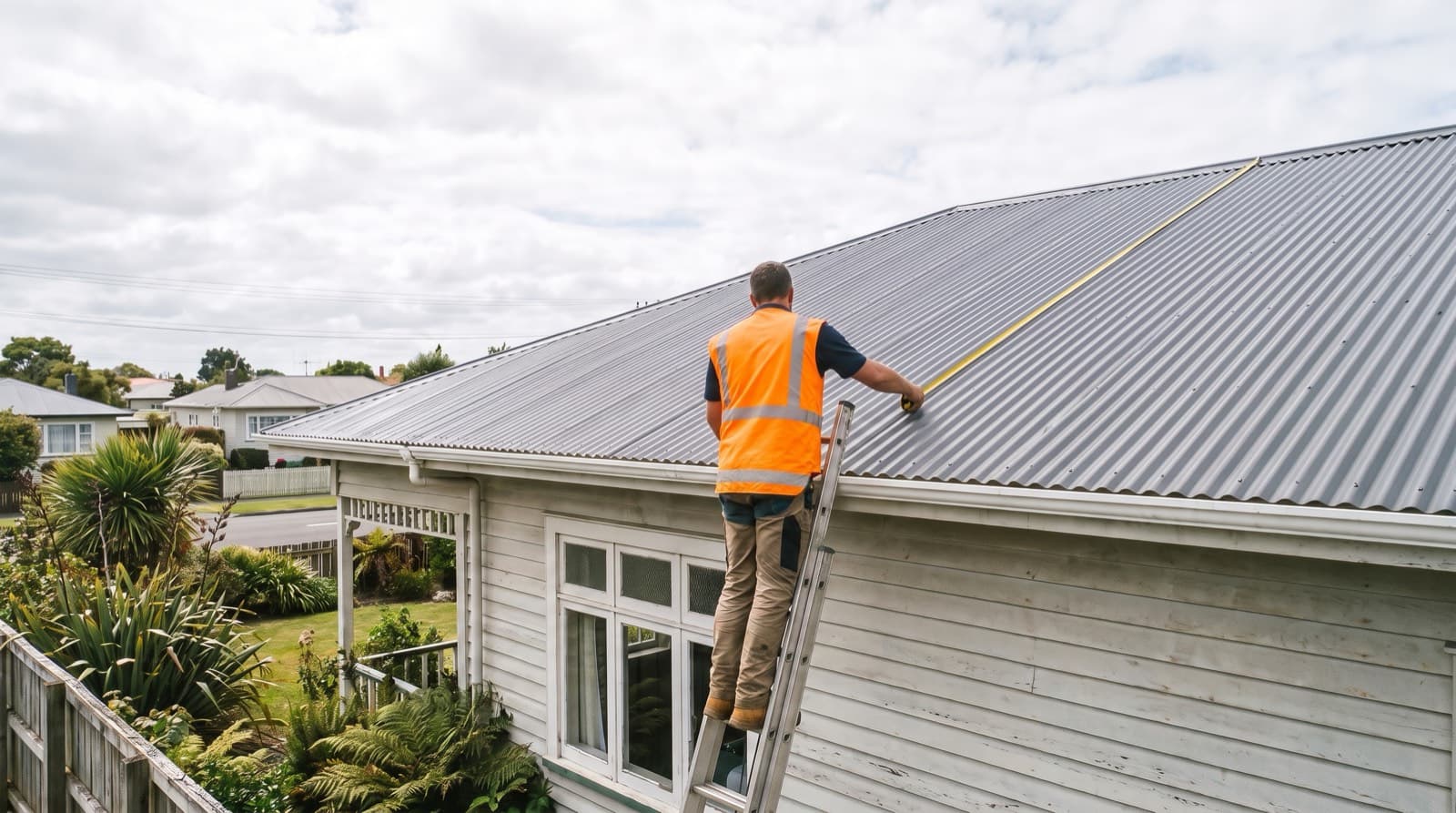
The accuracy of a quote is set by what the installer knows when they write it. Four things turn a guess into a real number:
- A recent power bill. It carries your ICP number and your actual usage, which is what a system should be sized to. Without it, installers size to averages.
- A photo of your switchboard. Old or full switchboards are the most common surprise cost, $1,500 to $4,000+. A photo up front gets it priced instead of discovered.
- Your roof's age. Panels last 25+ years. If the roof will not, replacing it after panels go on costs far more than before. Roofs over 20 years old should be checked first.
- Your daytime habits and plans. Home during the day? EV coming? Battery later? These change the right system size more than anything about your roof does.
A quote written without a site visit or these details is a placeholder, not a price. The gap between placeholder and final price is where install-day surprises come from.
Comparing Quotes Like-for-Like
Quotes arrive in different shapes on purpose. Here is the five-point check that makes them comparable:
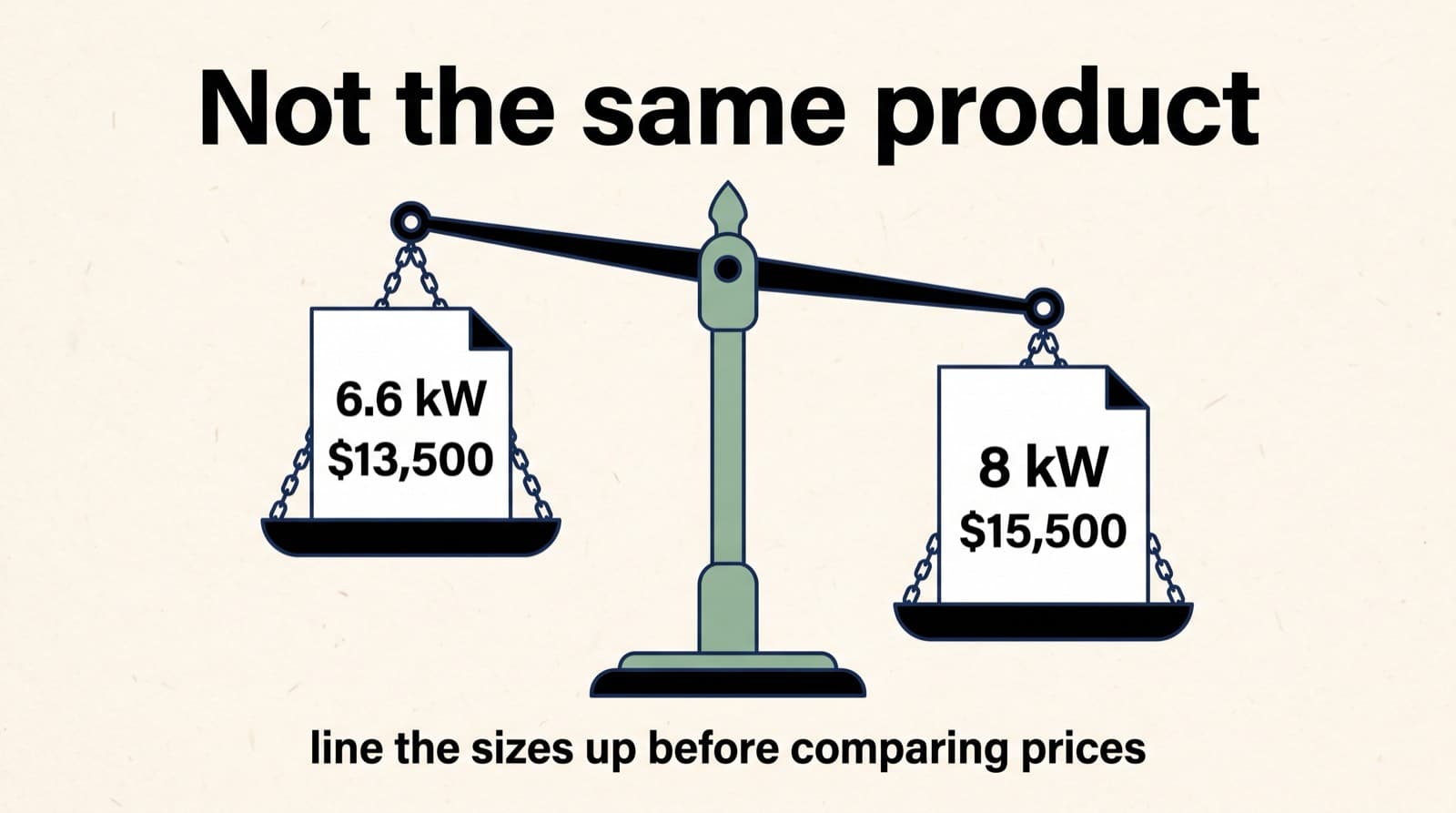
For what the totals should land at, a 6.6 kW system runs $14,000 to $15,000 installed and an 8 to 10 kW system $15,000 to $18,000; the full breakdown by size and line item is in our solar panel costs guide. And if two quotes disagree about what size you need, our sizing guide shows how to settle it from your own power bill instead of taking either installer's word.
Red Flags in the Quoting Process
- “This price is only available today.” Almost never true. Good installers hold quotes for 2 to 4 weeks, because a fair price today is a fair price on Thursday.
- No site visit and no questions. A quote written off a satellite photo without asking about your switchboard, usage or roof age is a guess wearing a letterhead.
- A single-line total.“6.6 kW solar system: $14,500” with no breakdown means you cannot see what is missing. Ask for the itemised version and watch what appears.
- Pressure to sign before the other quotes arrive. An installer confident in their price wants you to compare it.
- A price that beats everyone by thousands. Under about $1.40 per watt, the savings are usually coming out of the hardware, the workmanship, or the line items that show up later as extras.
The strongest position in the whole solar buying process is holding two or three comparable quotes at once. Every red flag above works only on people who have one.
Want to compare
quotes?
Get matched with vetted local installers and see real quotes for your home. It’s free, with no obligation.
Compare up to 3 quotesCommon Questions
How many solar quotes should I get in NZ?
Two to three, which is also EECA's recommendation. One quote gives you no reference point, and beyond three you are spending site-visit afternoons to learn less and less. The goal is comparable quotes from genuinely different installers, not a stack of near-identical ones.
Are solar quotes free?
Yes. Reputable NZ installers quote for free, including the site assessment, and comparison services like ours are free to homeowners too. If anyone wants payment to produce a quote, walk away. The only cost of quoting is your time, which is exactly why two to three is the right number.
How long is a solar quote valid for?
Typically 2 to 4 weeks. Hardware prices move, so open-ended quotes are rare and fine to decline anyway. What matters is that the window is long enough to collect your other quotes and compare them properly. A quote that expires today is a sales tactic, not a price.
Are solar quotes reliable?
A quote is as reliable as the information behind it. One written after a proper site assessment, with your power bill, switchboard photos and roof details, holds up well. One written off a satellite image with no questions asked is a starting estimate, and the difference tends to appear on install day as extras. The pressure test: ask what could change the final price. A good installer has a short, specific list. A bad one says nothing will.
Who is the best solar company in NZ?
There is no single best, and any list claiming one is selling something. The right test is fit: an installer with strong local references, SEANZ membership if you want the green loans, named hardware with full warranties, and a quote that itemises everything. Our installer guide covers how to run that test properly.
What should a solar quote include?
Named panels and inverter with wattages and warranties, the full installed price including scaffolding, cabling, electrical work, the inspection and the distributed generation application, the deposit terms, and an install timeline. Our quote reading guide goes through every line item and what it should say.
Can I negotiate a solar quote?
Yes, and holding comparable quotes is the only leverage that works. Asking an installer to match a rival's like-for-like price is fair game. Asking them to just knock money off usually takes it out of the hardware or the workmanship, which you will pay back later. Negotiate the inclusions and the hardware tier, not just the bottom line.
How much should a solar quote cost in total?
For a fair 2026 quote: a 6.6 kW system at $14,000 to $15,000 installed, 8 to 10 kW at $15,000 to $18,000, and $2.10 to $2.30per watt at 6.6 kW (about $1.50 to $1.80 at 10 kW) as the sanity check. Quotes far under those bands usually have something missing, and far over them should come with a premium reason you can point at.
Do I need to be home for the quote?
For the site assessment, ideally yes, or at least reachable. The installer needs your switchboard, roof access and a conversation about how you use power. Some initial assessments work from photos and satellite imagery, but a final quote should always involve someone checking the real switchboard and roof before install day.
What happens after I accept a quote?
You pay a deposit, typically 10 to 20%, and your installer takes over the paperwork: the distributed generation application to your lines company, the install booking, the inspection and the meter change request. From accepted quote to a live system is typically 4 to 8 weeks. Our installation guide walks through every step of that timeline.
Next steps for your solar journey
Related guides
View all
How to Read a Solar Quote: The Kiwi Buyer's Guide
Real Kiwi solar quotes have hidden gotchas. Line-by-line anatomy, the per-watt sanity check, what's missing, red flags, and a 26-row comparison rubric for 2026.
Read
Best Solar Installers NZ (2026)
How to find a quality solar installer in NZ. What to look for, red flags to avoid, and when SEANZ membership matters for your bank loan.
Read
Solar Panel Costs NZ: What You'll Actually Pay in 2026
Real pricing data for NZ solar in 2026. System costs by size, what affects price, and how to tell if a quote is fair.
Read
Home Solar Installation in NZ: What Happens, Step by Step
The complete NZ solar installation timeline: 4-8 weeks from quote to live system. DG approvals, install day, meter upgrades, and the delays nobody warns you about.
Read
How Many Solar Panels Do I Need in NZ?
Work out how many solar panels your NZ home needs. Based on your power usage, roof space, and whether you're adding a battery or EV charger.
Read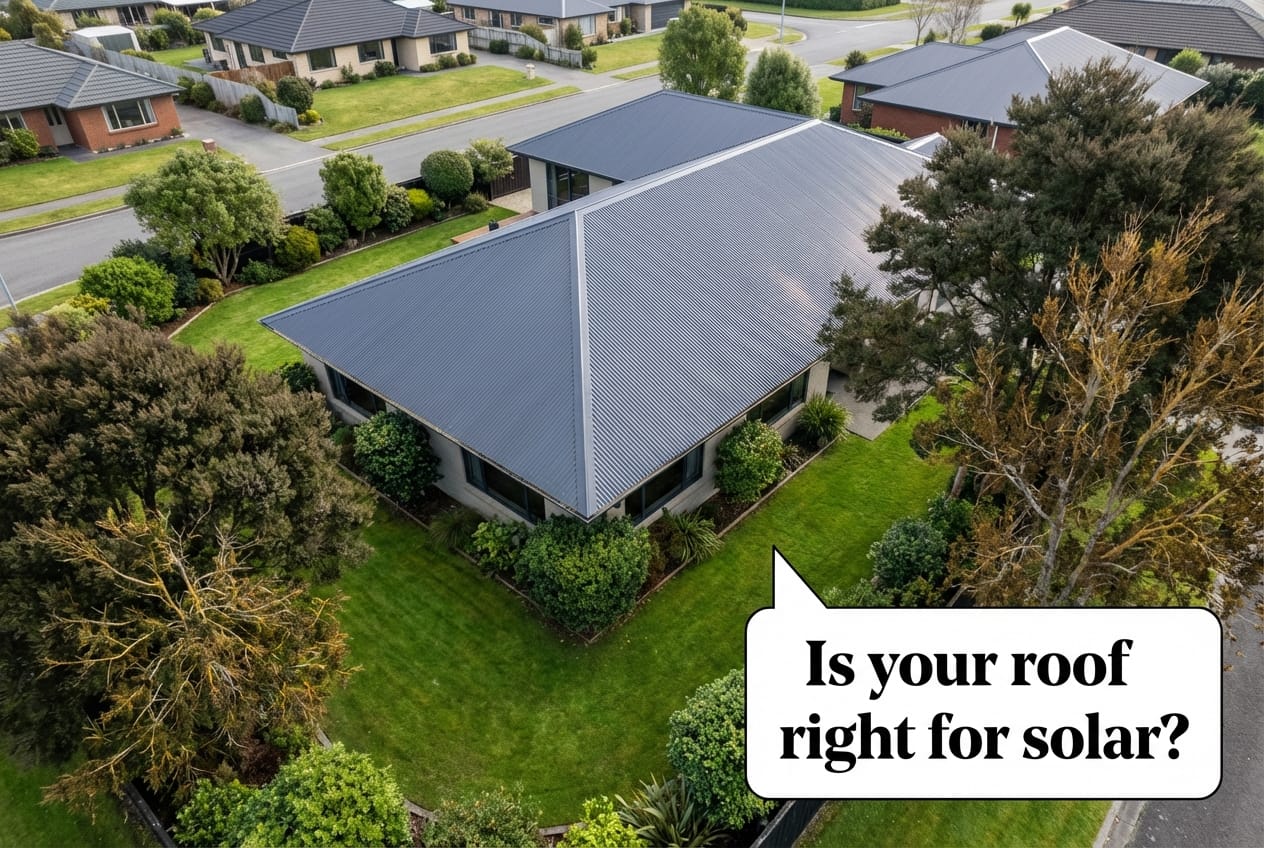
Is My House Suitable for Solar Panels?
Check if your NZ home is right for solar. Roof direction, pitch, shade, and structural factors explained for Kiwi houses.
Read
Join the conversation
The best comments are honest ones: Real experience. Share yours, please stay civil and on topic. No self-promo links.
Your email is never shown or shared. To change or remove a comment later, .
No comments yet. What is your experience with this? Be the first to weigh in.