
Sigenergy SigenStor NZ: The Honest Review
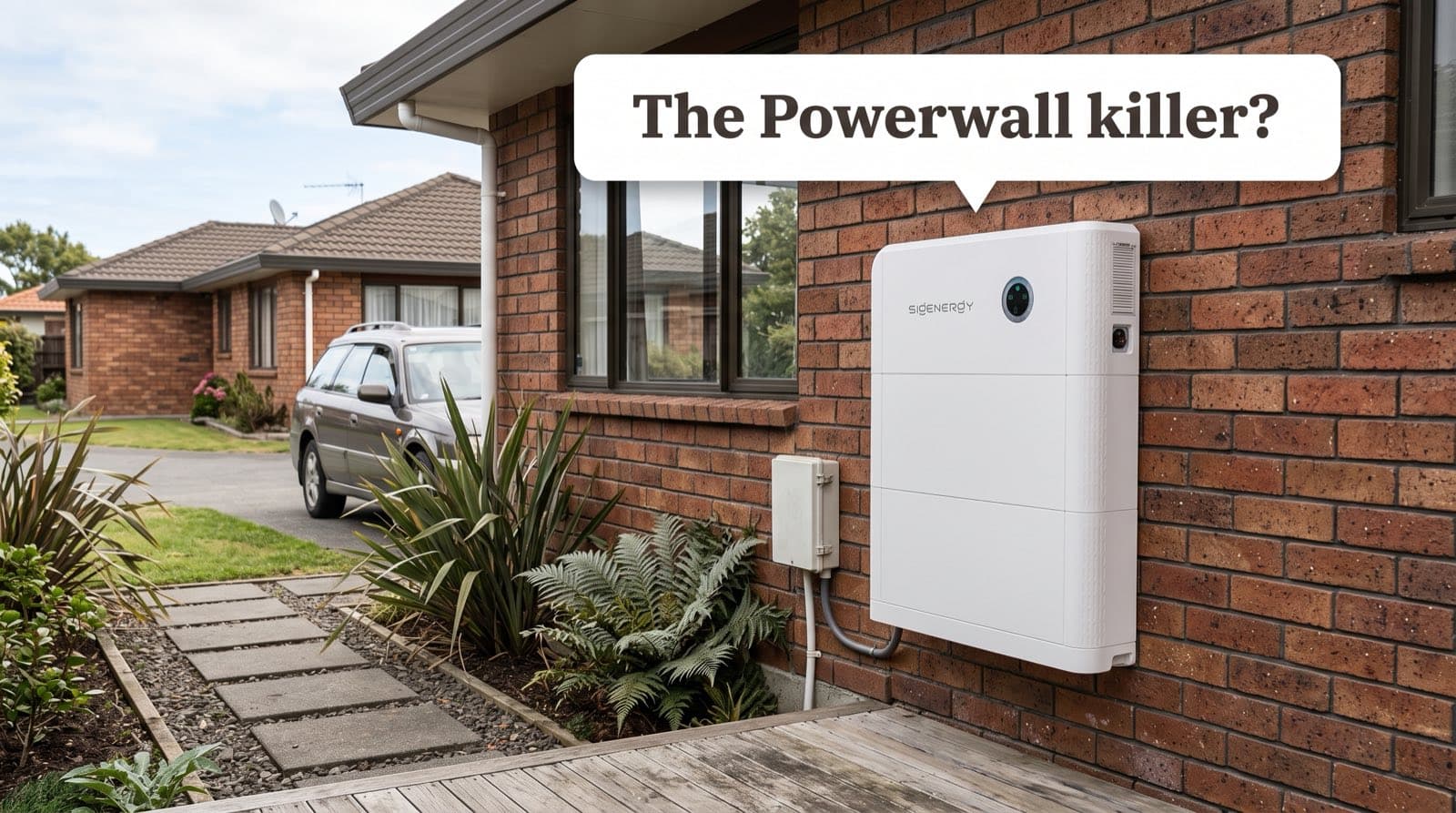

If you have had a solar quote in the last year, there is a good chance a SigenStor was on it. Sigenergy went from founding to roughly 28.6% of the global home battery market in under three years, it is now distributed here through national electrical wholesalers, and most of the information available about it is written by people selling it.
We do not sell batteries. This review covers who Sigenergy actually is, what the SigenStor does differently, what it costs here, how it stacks up against the Tesla Powerwall 3, and the problems reported with it that the brochures leave out.
Key Takeaways
- The SigenStor stacks 7.8 kWh battery modules up to 48 kWh on one unit, so a household can start with one module and add capacity later.
- An 8 kWh SigenStor module lists at about $9,124 supply only in NZ. The installed price depends on the stack and inverter, so it only exists as a quote.
- Each module delivers 4 kW of continuous power, against 11.5 kW from a Tesla Powerwall 3. The SigenStor wins on flexibility, the Powerwall on raw power.
- The SigenStor comes in single-phase and three-phase versions and can run off-grid. The Powerwall 3 sold in NZ is single-phase only and needs a grid connection.
- The warranty is 10 years on the battery and controller, with 70% capacity guaranteed at year ten, but shorter on the gateway and sensors.
Who Makes It
Sigenergy is a Chinese company, founded in Shanghai in 2022 by Xu Yingtong, who previously ran Huawei's solar inverter business and built it into the largest in the world. That pedigree matters: the SigenStor is not a startup's first attempt at power electronics, it is what a team that already dominated the inverter market built when it started again from scratch.
The growth has been extraordinary. By 2024 the company held roughly 28.6% of the global residential energy storage market, and in April 2026 it listed on the Hong Kong stock exchange, with shares doubling on debut. In New Zealand, the hardware is distributed through established national electrical wholesalers including Ideal Electrical and J. A. Russell, which is worth knowing because parts and warranty support flow through channels that were here long before Sigenergy was and will outlast any single installer.
The question with a young battery brand is never the specs. It is whether the company and its warranty will still be standing in year eight. Sigenergy's answer is scale.
The SigenStor System Explained
Most home batteries are one box that does one job, plus a separate solar inverter, plus (if you want it) a separate EV charger. The SigenStor's pitch is that it folds five of those devices into one stack: solar inverter, battery storage, battery management, backup gateway, and an optional DC fast charger for an EV.
The stack is modular. Each battery module holds 7.8 kWh of usable storage, and you clip more modules on as your needs grow, up to 48 kWh on a single stack. That is the practical difference from most rivals: you can start with one module and add capacity later without replacing anything, which suits households that want to start smaller and grow into an EV or a heat pump.
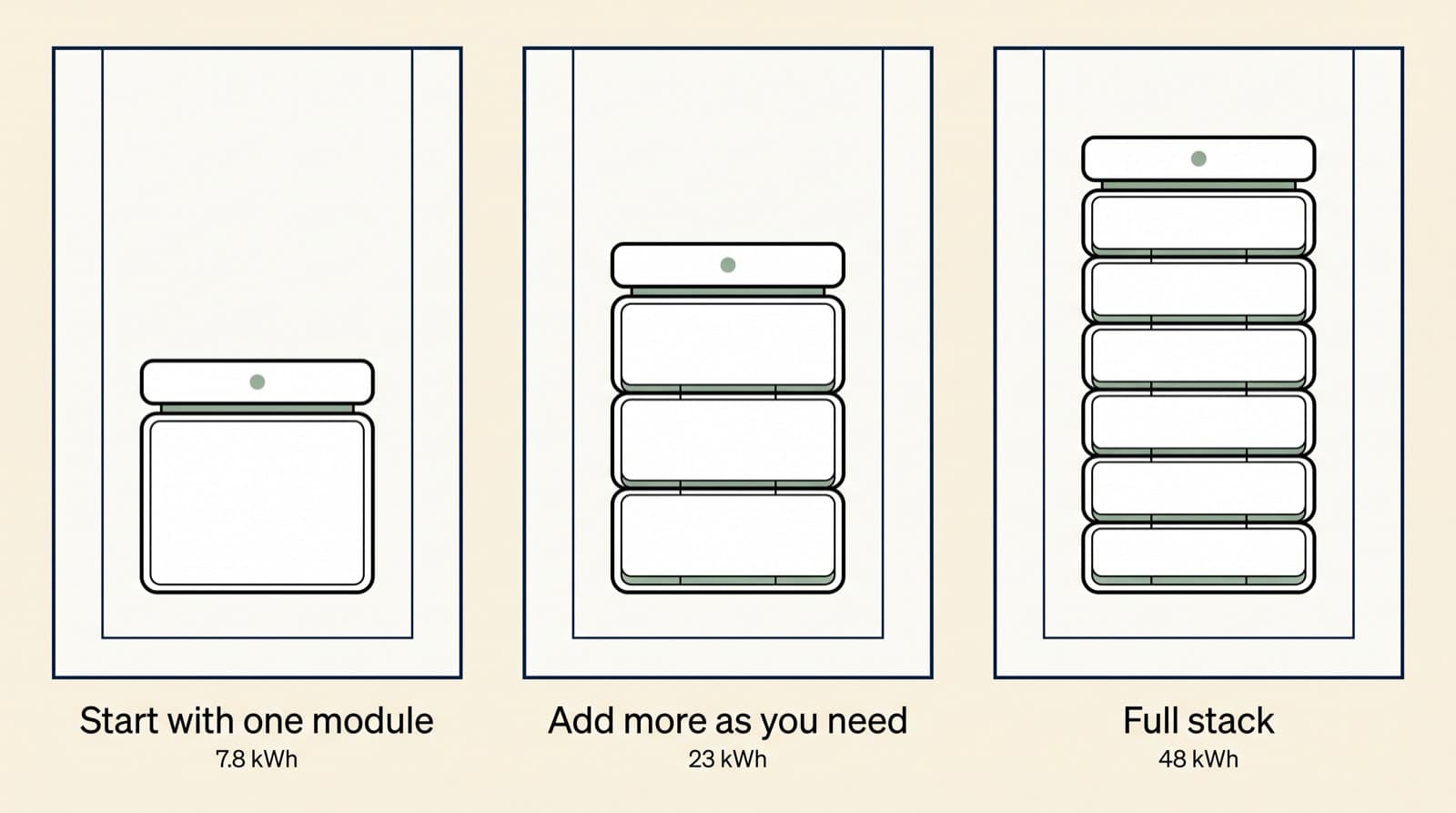
- Usable storage: 7.8 kWh per module, stackable to 48 kWh
- Round-trip efficiency: 98.3%, among the highest of any home battery sold in NZ
- Power: 4 kW continuous, 6 kW peak, per module
- Chemistry: LFP (lithium iron phosphate), the safer, longer-lived chemistry now standard in home storage
- Placement: IP66 rated, happy outdoors, rated from -25°C to 55°C, 70 kg per module
- Phases: single-phase and three-phase versions, and it can run off-grid
The monitoring is genuinely excellent. SolarQuotes Australia's independent review calls out cell-level voltage and temperature data in the app, which is a level of detail most brands keep to themselves, and installers voted the brand second in that site's 2025 Installers' Choice Awards.
Want to compare
quotes?
Get matched with vetted local installers and see real quotes for your home. It’s free, with no obligation.
Compare up to 3 quotesWhat It Costs in NZ
The number we can verify: an 8 kWh SigenStor battery module lists at roughly $9,124 supply only in NZ. That is the hardware price before the inverter module, installation, any switchboard work, and certification.
Be careful comparing that figure against installed prices for other batteries. A supply-only module price and a fully installed system price are different things, and quotes that mix the two are the fastest way to a wrong decision. The installed price of a SigenStor system depends on how many modules you stack, which inverter module you pair, and your switchboard, so it only exists as a quote for your house.
For context on what NZ battery installs cost per stored kilowatt hour, and why hardware getting cheaper has not made installs much cheaper, our solar battery storage guide covers the full pricing picture, and the battery comparison tool puts the SigenStor's specs side by side with 26 other batteries sold here.
SigenStor vs Powerwall 3
This is the comparison most buyers actually want, because the Powerwall 3 is the benchmark every quote gets measured against. The two take genuinely different approaches:
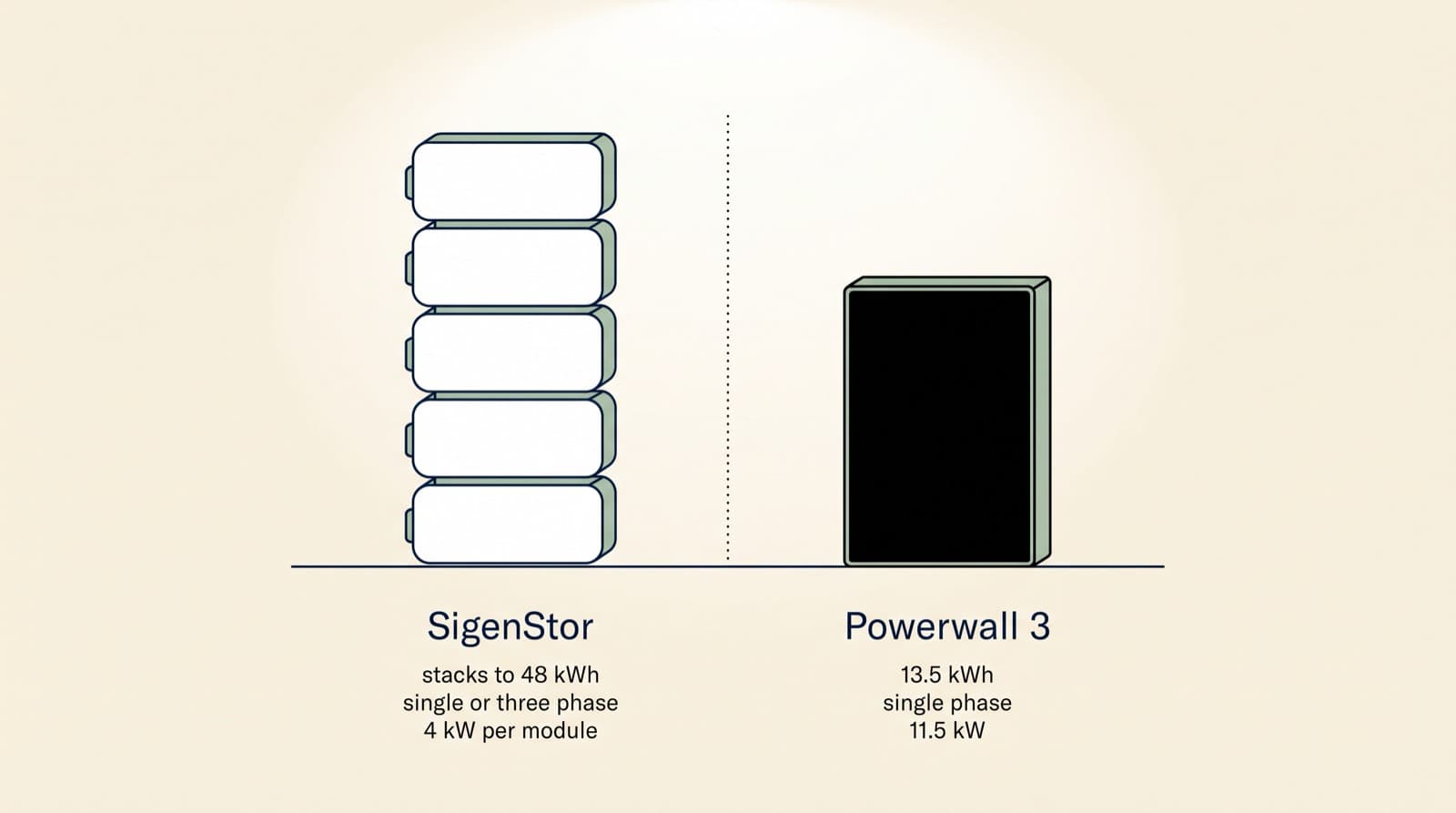
The pattern in that table: the SigenStor wins on flexibility, the Powerwall wins on brute power. Choose the SigenStor shape if you are on three-phase power, want to grow capacity over time, want off-grid capability, or want the EV charger folded in. Choose the Powerwall shape if you want maximum power delivery from a single box and the simplicity of the most-installed battery in the country. Our Tesla Powerwall 3 review covers the benchmark itself, and our Powerwall alternatives guide covers the rest of the field.
The Honest Watch-Outs
Every brochure covers the strengths. These are the four things we would want to know before signing, drawn from independent reporting and the spec sheet rather than the marketing.
- Continuous power is per module, and it is modest. Each module delivers 4 kW continuous. A single-module SigenStor cannot run an evening peak of oven, heat pump and hot water at once the way a Powerwall 3's 11.5 kW can. Stacking modules raises capacity; if high power delivery matters to you, ask your installer exactly what your configured stack delivers, in writing.
- The warranty is tiered, and the headline number is not the whole story. The battery modules and energy controller carry 10 years, but SolarQuotes Australia reports the gateway carries 5 years and the power sensor and communications modules only 2. The capacity guarantee is 70% at year 10. None of that is unusual for the category, but compare the full schedule, not just the headline.
- Reported overheating issues on some single-phase systems in Australia. SolarQuotes Australia has reported overheated terminals, melted plugs and burnt-out wiring on some single-phase SigenStor installs, and criticised the company's communication about it. Installation quality appears to be a factor. This is the strongest argument for using an experienced, accredited installer rather than the cheapest quote.
- It is a young company. Sigenergy was founded in 2022. The product is impressive and the company is now listed and very large, but a 10-year warranty from a 4-year-old company is a different proposition to one from a manufacturer with decades of history. The NZ distribution through established national wholesalers helps, because parts and support do not depend on a single small importer.
Want to compare
quotes?
Get matched with vetted local installers and see real quotes for your home. It’s free, with no obligation.
Compare up to 3 quotesBlackout Backup and EV Charging
Backup
The SigenStor supports whole-home backup with an automatic switchover that SolarQuotes measured at around 5 milliseconds, fast enough that computers and appliances ride through without noticing. It is also genuinely off-grid capable, which the Powerwall 3 is not. The usual caveat applies: backup only covers what your stack can actually power, and a single 4 kW module backs up the essentials, not everything at once.
The EV charger module
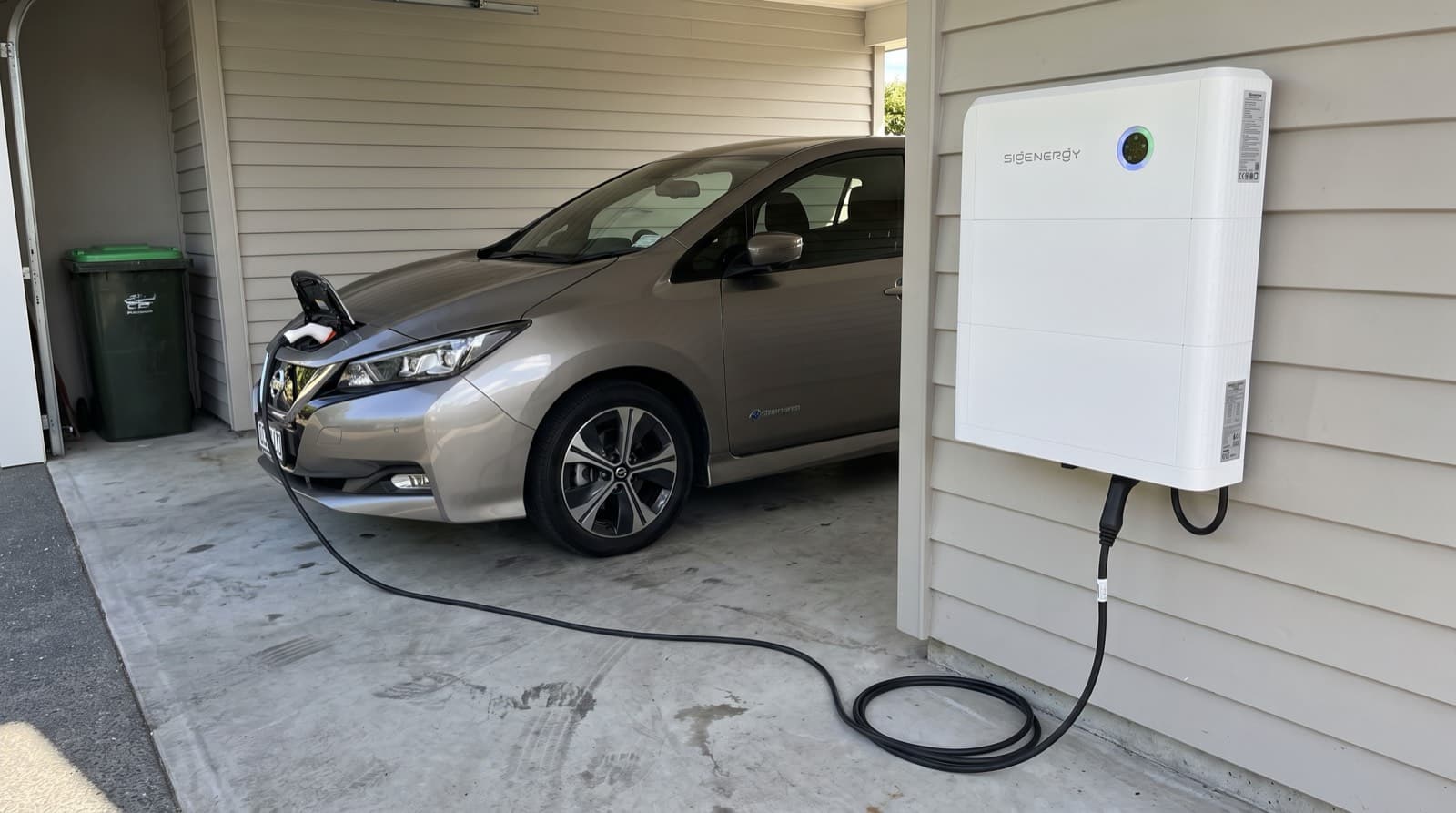
The optional charger module is the genuinely novel part: it charges an EV with DC at 12.5 kW or 25 kW, several times faster than the 7 kW AC wallbox most homes install, and it can charge the car straight from the battery stack or the sun. If an EV is in your plans, this is the spec that separates the SigenStor from everything else on the NZ market. If it is not, you are paying for cleverness you will not use. Our guide to solar and EV charging covers the maths of charging from your roof.
Buying One in NZ
You do not buy a SigenStor off a shelf. The hardware flows through national electrical wholesalers to accredited installers, who design the stack, pair the inverter module, and handle the distributed generation paperwork with your lines company.
Given the installation-quality findings above, the installer matters more with this product than with most. Ask specifically: how many SigenStor systems have you installed, what continuous power will my configured stack deliver, and what does the full warranty schedule look like component by component. A good installer answers all three without blinking.
The right way to buy any battery is to compare quotes for your actual house and usage, not to pick a brand first. A SigenStor quote next to a Powerwall quote and a BYD quote tells you more than any review can.
Common Questions
Is Sigenergy a good battery?
On the spec sheet, yes: 98.3% round-trip efficiency, cell-level monitoring, IP66 weather rating, stackable to 48 kWh, and installers voted it second in SolarQuotes Australia's 2025 Installers' Choice Awards. The real-world record is strong but not spotless: some single-phase systems in Australia have had overheating issues at the terminals, which makes installer quality the deciding factor. Good product, installed well, it is one of the best systems sold in NZ.
Is Sigenergy a Chinese company?
Yes. Sigenergy was founded in Shanghai in 2022 and listed on the Hong Kong stock exchange in April 2026. The founding team came out of Huawei's solar inverter division, which they had built into the world's largest. Like most home batteries sold in NZ, including BYD and much of what goes inside other brands' boxes, the hardware is Chinese designed and made; what matters for a NZ buyer is the local support channel, which here runs through established national wholesalers.
How much does a Sigenergy battery cost in NZ?
An 8 kWh SigenStor battery module lists at roughly $9,124 supply only. The installed price depends on how many modules you stack, the inverter module you pair with them, and your switchboard, so it only exists as a quote for your specific house. Treat any flat “SigenStor costs $X installed” figure you read online with suspicion, and never compare a supply-only module price against another battery's installed price.
Sigenergy or Tesla Powerwall 3: which should I buy?
Decide on your constraints, not the brands. Three-phase house, plans to grow capacity, EV fast-charging, or off-grid ambitions: the SigenStor shape fits. Single-phase house that wants maximum power from one box with the country's biggest install base: the Powerwall 3 fits. The Powerwall delivers 11.5 kW continuous against 4 kW per SigenStor module, while the SigenStor stacks higher, runs off-grid and supports three-phase. Get a quote for each against your own usage before deciding.
What warranty does a SigenStor have?
Ten years on the battery modules and energy controller, with a guarantee of 70% capacity remaining at year ten. SolarQuotes Australia reports the gateway carries 5 years and the power sensor and communications modules 2 years. Ask your installer for the full NZ warranty schedule in writing and check the workmanship warranty on the install itself, which is separate from the product warranty.
Will a SigenStor power my house in a blackout?
Yes, with the backup configuration installed. Switchover is automatic and takes around 5 milliseconds, fast enough that you will usually only notice the power cut because the streetlights are out. The limit is power, not speed: one module delivers 4 kW continuous, enough for lights, fridge, internet and a heat pump, but not every appliance at once. Larger stacks deliver more.
Does the SigenStor work on three-phase power?
Yes. It comes in single-phase and three-phase versions, which is a genuine point of difference: the Tesla Powerwall 3 sold in NZ is single-phase only. If your home has three-phase power, common on larger rural properties and newer builds with big heat pumps or workshop loads, the SigenStor is one of the few premium options that fits without compromise.
How long will an 8 kWh SigenStor module last in the evening?
Most NZ homes use 6 to 10 kWh between 5pm and 7am in summer and 12 to 18 kWh in winter. One module's 7.8 kWh of usable storage therefore covers most of a summer night but only part of a winter evening, which is exactly why the stackable design exists. Check your own evening usage in your power company's app before deciding how many modules to start with.
What is the SigenStor EV charger module?
An optional module that clips into the stack and charges an EV with DC at 12.5 kW or 25 kW, well beyond the 7 kW of a typical home AC wallbox. It can draw from the solar, the battery, or both. It is the most distinctive feature of the system, and also an easy way to pay for capability you will not use if an EV is not actually in your plans.
Who installs Sigenergy batteries in NZ?
Accredited solar installers across the country, supplied through national electrical wholesalers including Ideal Electrical and J. A. Russell. Because the reported problems with SigenStor systems overseas trace back to installation quality, prioritise an installer who has done SigenStor installs before and will state your stack's continuous power output and full warranty schedule in the quote.
Next steps for your solar journey
Related guides
View all
Solar Battery Storage NZ: Costs, Brands, and Is It Worth It?
Solar battery prices in NZ: Tesla Powerwall, BYD, Enphase compared. When batteries make sense and when you're better off without one.
Read
Best Tesla Powerwall Alternatives NZ: BYD and Enphase Compared (2026)
The best Tesla Powerwall 3 alternatives in NZ. BYD, Sungrow, and Enphase compared on price, $/kWh, inverter compatibility, and warranty. The honest decision matrix.
Read
Tesla Powerwall 3 NZ: The Honest Review
Independent Tesla Powerwall 3 review for NZ: ~$15,600 supply-only and $19,000-24,000 installed, 13.5kWh storage, 11.5kW output, the single-phase catch, and when an alternative fits better.
Read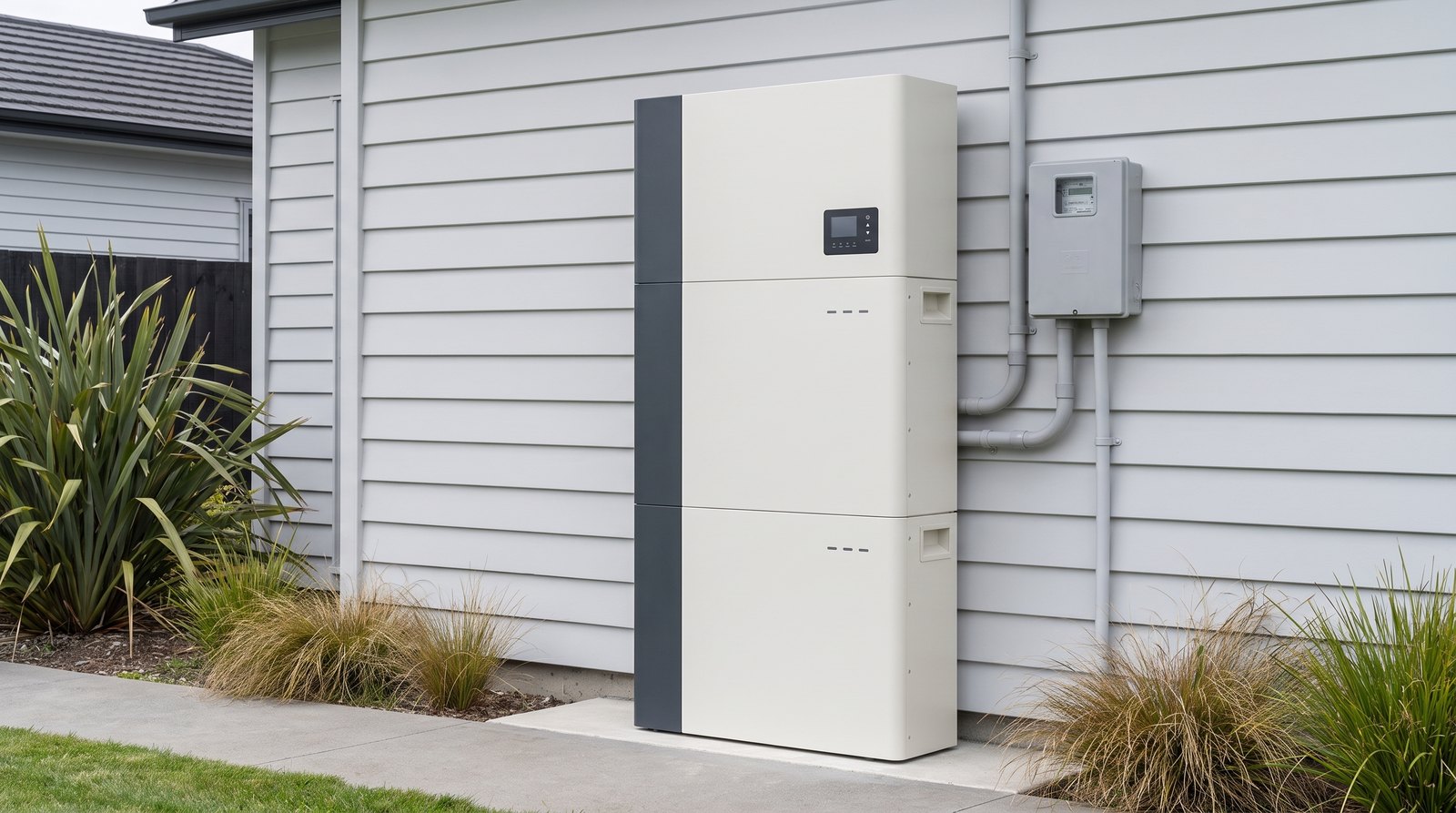
AlphaESS NZ: What the S8 and T20 Actually Give You
AlphaESS review for NZ: the 8 kW S8 and 20 kW T20 hybrid systems, 9.3 kWh usable modules, backup that actually works, and what to check before you sign.
Read
Best Solar Buy-Back Rates NZ: 13 Retailers Compared (2026)
Compare solar buy-back rates across 13 NZ power companies. Octopus, Meridian, Mercury, Genesis, Contact, Power Edge and more.
Read
Solar Panels and EV Charging in NZ: The Complete Setup
How to charge your EV with solar in NZ. Smart charger options, how much solar you need, and the real cost per kilometre.
Read
Join the conversation
The best comments are honest ones: Real experience. Share yours, please stay civil and on topic. No self-promo links.
Your email is never shown or shared. To change or remove a comment later, .
No comments yet. What is your experience with this? Be the first to weigh in.