

SolarZero was New Zealand's biggest home solar company. It did not sell you a solar system. It sold a subscription: SolarZero owned the panels, the inverter and the battery on your roof, and you paid a fixed monthly fee plus a price per unit for the grid power you still used, on a contract that ran 20 to 25 years. At its peak it had about 15,000 households signed up, roughly 40% of the home solar market.
If you signed with SolarZero, the company you signed with no longer exists. The contract you signed does. It was moved out of the company before the liquidators arrived, it is run today by a servicing business you never chose, and on most plans the price you pay for grid power can be reviewed every year. That is the bit that has caught people out. The panels on the roof are the same. The deal underneath them is not what most customers thought they bought.
Key Points
- SolarZero went into liquidation on 26 November 2024. Its former directors are now being sued over the $476 million owed to creditors.
- Your contract survived. It sits in a Public Trust trust and is serviced by SZ Servicing. You cannot cancel because the provider changed.
- Customers report grid rates moving from 8c to 26c a unit. SZ Servicing says the contract allows it. Your plan type decides if that is true.
- Buying your way out has been quoted at $16,000 to $30,000. The one Utilities Disputes ruling cut a $16,000 quote to $4,794.
- Utilities Disputes is free. The Commerce Commission is assessing 162 complaints. Anyone in a live dispute is not sent to debt collection.
What happened, in order
SolarZero sold solar as a subscription. The company owned the panels, the battery and the inverter, and the household paid a monthly fee plus a price per unit for grid power, on contracts that ran 20 to 25 years. By August 2024 it had about 15,000 customers and roughly 40% of the residential market.
On 26 November 2024 its owner, BlackRock, put the company into liquidation. Grant Thornton were appointed liquidators. The company is now registered as Lunar Infinity Limited. Early recoveries were small, about $2.8 million by December 2025, most of it research and development tax credits.
On 1 October 2026 the liquidators announced High Court proceedings against four former directors. The claim relies on three sections of the Companies Act: reckless trading, taking on obligations the company could not meet, and the duty of care a director owes. Creditors are owed an estimated $476 million. Nothing has been proven, the directors have not responded publicly, and any money recovered goes to creditors. It does not come back to customers.
Who you are paying now
Before the liquidation, most customer contracts and the equipment were moved into special-purpose trusts. Public Trust is the trustee. The day-to-day servicing, the bills and the customer line, is run by SZ Servicing, which belongs to Verofi. That is why customers were not treated as creditors, and it is why the contracts kept running when the company stopped.
Consumer NZ's reading of the terms is the one to keep in mind: the contract allowed SolarZero to assign its rights and obligations to someone else, so the transfer is valid. The new provider needs your agreement to change the terms. And you cannot end the contract simply because the provider changed.
What has changed on the bills
Customers have reported three things. Grid import rates moving a long way, one customer from 8c a unit to 26c while the export rate stayed at 15c. Moves onto time-of-use pricing, one customer in December 2024 without what she considered clear consent, with overnight peak rates up 225%. And a fixed monthly charge, in one reported case over $160 plus GST, before any power is used.
SZ Servicing's position is that the changes follow the contract terms and wider grid prices. The detail that matters is which contract you signed. Some plans carry a price-protection cap of 8c on grid power. Others allow an annual review of the grid rate. If you are on the second kind, a rate rise can be within the contract even when it feels like a bait and switch.
Utilities Disputes said SolarZero accounted for 20.8% of its accepted deadlocked complaints in the year to March 2026, from a company with about 0.5% of the market.
What getting out costs
The only practical exit is to buy the system. Reported quotes run from around $16,000 to $30,000, depending on how far into the term you are and what is on the roof. Relocating a system to a new house has been quoted at similar numbers, and in at least one case the answer was that moving it "will not be a practical option".
One case has been through Utilities Disputes. A customer quoted $16,000 to leave was told by the commissioner that $4,794 was a fair exit cost, about 30% of the quote. That is a recommendation, which either side can accept or reject, not a binding ruling. It is also the only published benchmark anyone has.
If you are selling the house, Verofi says 90% of customers transfer the agreement to the buyer. Whether a buyer will take it on at today's rates is a question for your agent, not for us.
Your options, in the order I would take them
- Find out which contract you have. Ask SZ Servicing in writing whether your grid rate is capped or reviewed annually, and for the clause that says so. Everything else depends on this answer.
- Take a pricing change to Utilities Disputes. It is free, it covers SZ Servicing, and the one published outcome cut an exit quote by 70%. Deadlock first: write to SZ Servicing, give them a deadline, then lodge.
- Tell the Commerce Commission. It is assessing 162 complaints about SolarZero and SZ Servicing under the Fair Trading Act. One more on the file is not nothing.
- Do the buyout maths against owning. A new 6.6 kW system you own outright costs $14,000 to $15,000 installed in 2026 and pays for itself in 6 to 8 years. If your buyout quote is above that, you are paying more to keep someone else's panels than a new set would cost. Below it, buying out and owning can be the cleaner answer.
- Keep paying while you dispute. SZ Servicing's stated policy is that customers in a live dispute are not sent to debt collection and power is not cut off. Stopping payment outside a dispute hands them the easy argument.
- Selling? Price the transfer before you list. Get the transfer terms in writing from SZ Servicing so the buyer's lawyer sees them early.
If you are looking at solar now
Own it. The green loans from Westpac, ANZ, ASB and BNZ run at 0 to 1% for the first three to five years, which is cheaper money than any subscription, and the panels are yours from day one. The payback on a system you own is 6 to 8 years. A 25-year subscription with a reviewable grid rate is not solar, it is a power company that happens to own your roof.
Right of reply, and our corrections policy
Every figure above is drawn from the liquidators' own reports, Consumer NZ, RNZ, NZ Herald and Newsroom, and the sources are listed below. SZ Servicing, Verofi and Public Trust are welcome to a right of reply and we will print it here. If any number is wrong, email support@solarscout.co.nz and we will correct the page and say so in this section.
Keep reading
Sources
All fetched 11 October 2026.
Liquidators and regulators (primary)
- SolarZero Limited in liquidation, Grant Thornton, November 2024
- Liquidators' initial report on the state of affairs, Grant Thornton, December 2024
- SolarZero liquidation: what to do if you're a customer, Consumer NZ
Reporting
- Liquidators start court proceedings against SolarZero directors, RNZ, October 2026
- SolarZero liquidators sue four former directors over company's $476m collapse, NZ Herald, October 2026
- Disputes body steps in as SolarZero customer fights $16,000 contract exit fee, Newsroom, August 2026
- Angry customers complain about SolarZero contracts, RNZ, 2026
- SolarZero customers say they are trapped in expensive contracts as complaints jump, NewsWire, July 2026
- Commerce Commission investigating whether SolarZero has breached the Fair Trading Act, Newsroom, October 2025
- SolarZero customers trapped with high fees: "Everyone wants out", Newsroom, June 2025
- What next for SolarZero customers?, RNZ, November 2024
Key Points
- SolarZero went into liquidation on 26 November 2024. Its former directors are now being sued over the $476 million owed to creditors.
- Your contract survived. It sits in a Public Trust trust and is serviced by SZ Servicing. You cannot cancel because the provider changed.
- Customers report grid rates moving from 8c to 26c a unit. SZ Servicing says the contract allows it. Your plan type decides if that is true.
- Buying your way out has been quoted at $16,000 to $30,000. The one Utilities Disputes ruling cut a $16,000 quote to $4,794.
- Utilities Disputes is free. The Commerce Commission is assessing 162 complaints. Anyone in a live dispute is not sent to debt collection.

compare.
Related guides
View all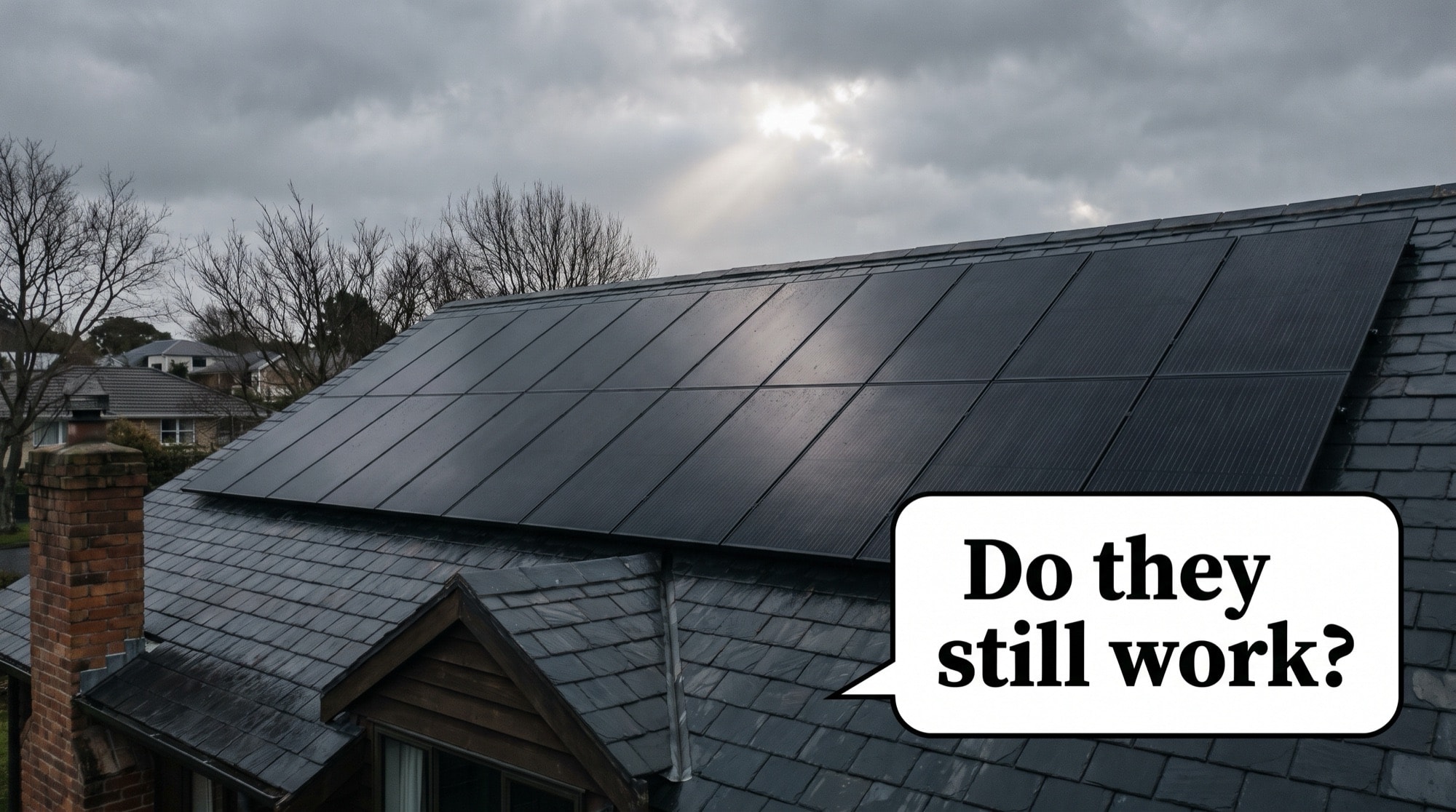
Do Solar Panels Work in Winter and on Cloudy Days in NZ?
Solar panels still generate power on cloudy days and through NZ winters. Here's exactly how much output changes and why it still works.
Read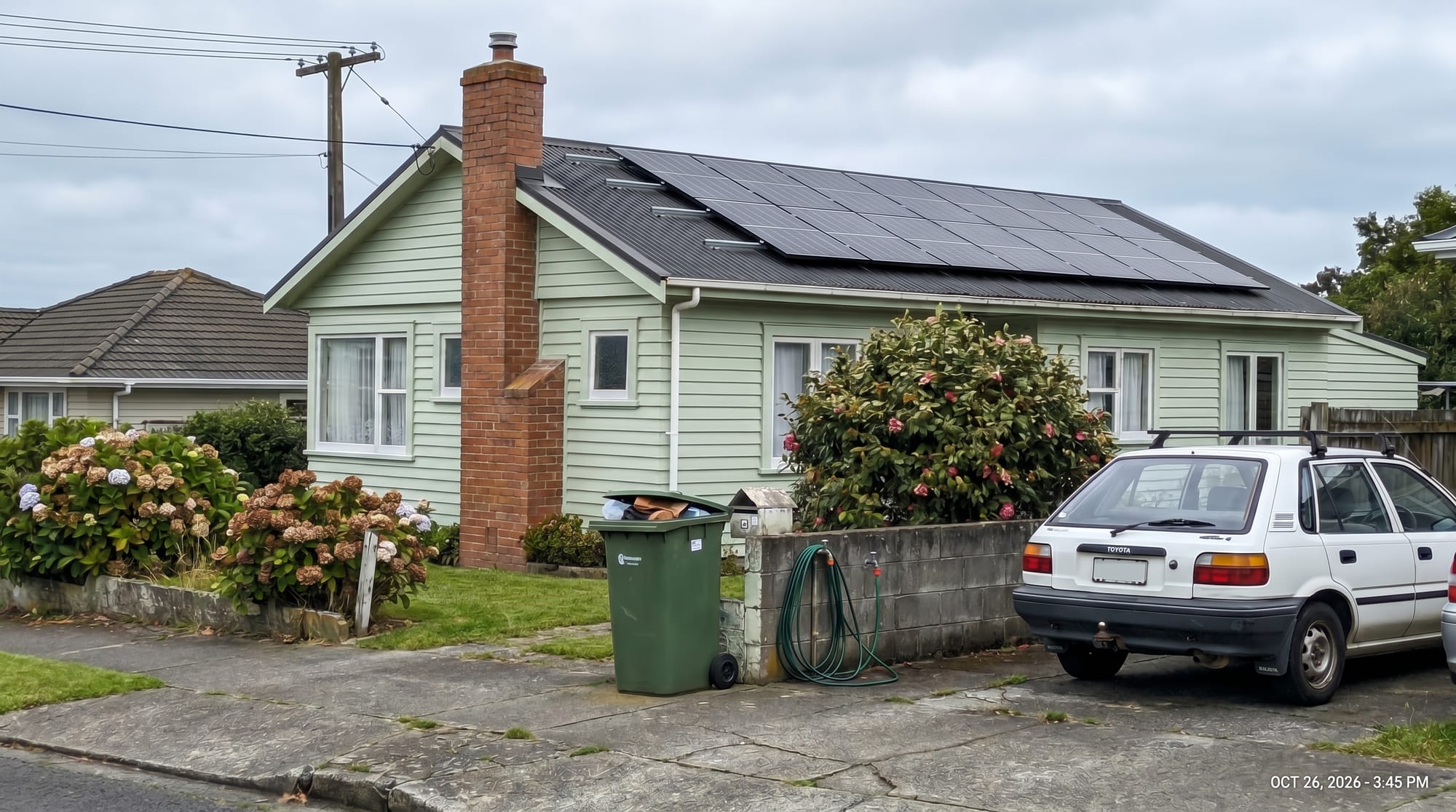
Solar Panel Costs NZ: What You'll Actually Pay in 2026
Real pricing data for NZ solar in 2026. System costs by size, what affects price, and how to tell if a quote is fair.
Read
Best Solar Buy-Back Rates NZ: 13 Retailers Compared (2026)
Compare solar buy-back rates across 13 NZ power companies. Octopus, Meridian, Mercury, Genesis, Contact, Power Edge and more.
Read
Best Solar Installers NZ (2026)
How to find a quality solar installer in NZ. What to look for, red flags to avoid, and when SEANZ membership matters for your bank loan.
Read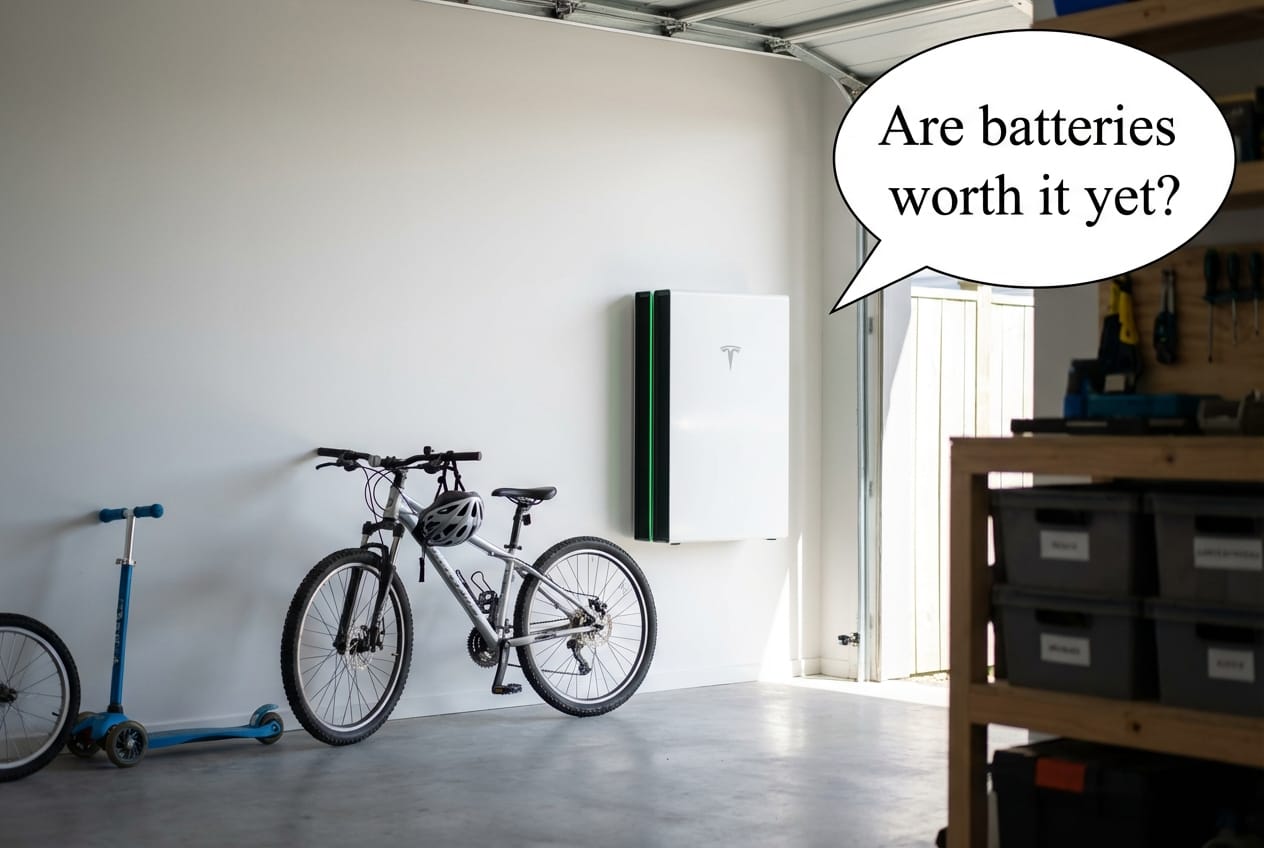
Solar Battery Storage NZ: Costs, Brands, and Is It Worth It?
Solar battery prices in NZ: Tesla Powerwall, BYD, Enphase compared. When batteries make sense and when you're better off without one.
Read
How to Get Solar Quotes in NZ (and Compare Them Properly)
How to get solar quotes in NZ: EECA's 2-3 quote rule, where to get them, what to have ready, comparing $/W like-for-like, and the red flags in the quoting process.
Read
Join the conversation
The best comments are honest ones: Real experience. Share yours, please stay civil and on topic. No self-promo links.
Your email is never shown or shared. To change or remove a comment later, .
No comments yet. What is your experience with this? Be the first to weigh in.