

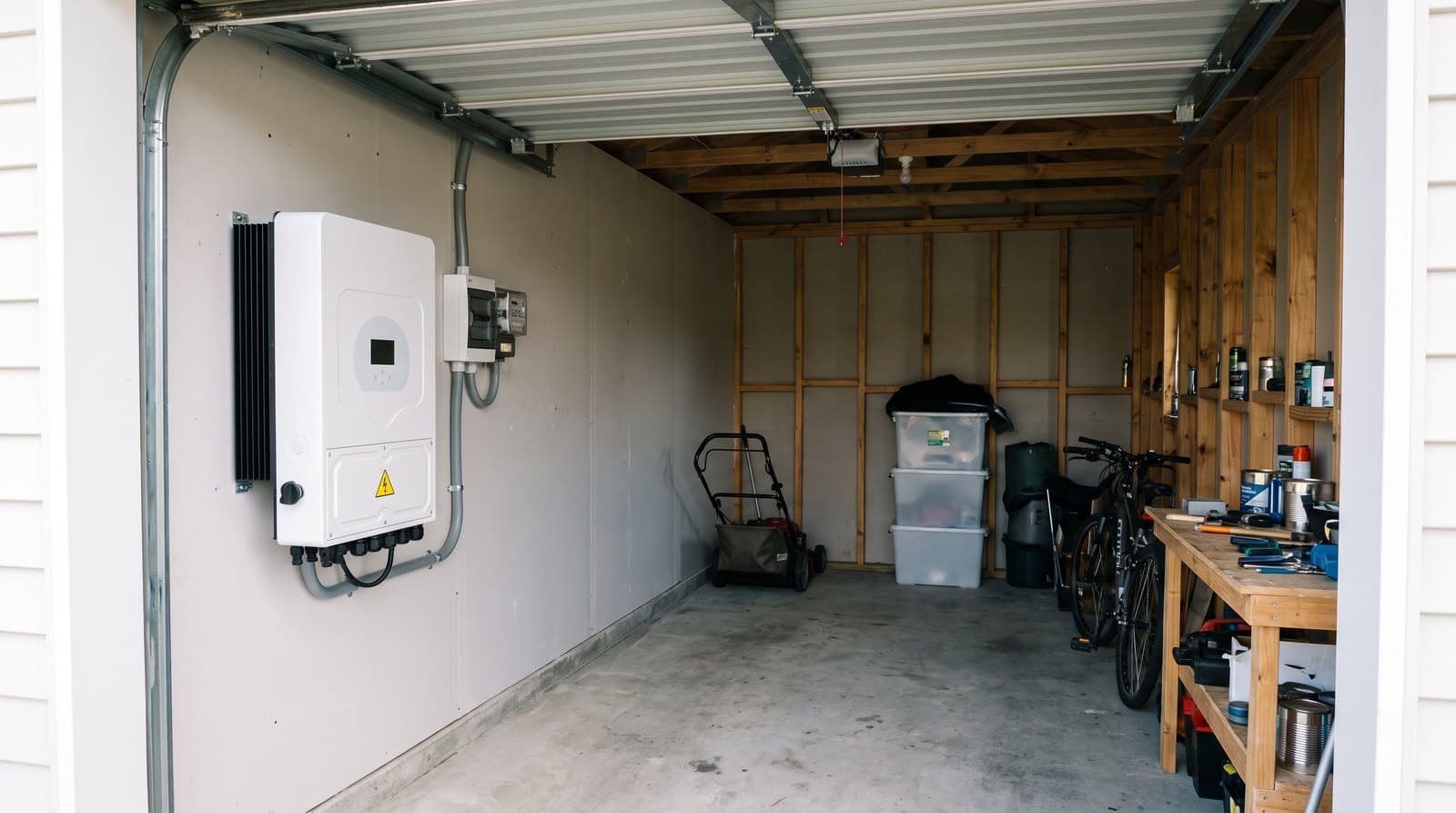
There is a date on a spreadsheet that almost nobody outside the trade has looked at, and it lands this week. On 30 September, Orion stops accepting solar connection applications that use an inverter certified to the old AS/NZS 4777.2:2015 standard. Ten brands have models on that list, and they are not obscure ones: Fronius, SolarEdge, Sungrow, GoodWe and Growatt are all there. If you are a Cantabrian holding a solar quote you have been mulling over since winter, the inverter on it is worth ten seconds of your attention before Wednesday.
What actually changes
Every grid-connected inverter in New Zealand has to meet AS/NZS 4777.2, the joint Australian and New Zealand standard that governs how an inverter behaves on the network: how it handles voltage, when it disconnects, how it rides through a disturbance. The 2020 version replaced the 2015 one, and the transition has been slow, because thousands of perfectly good inverters were certified under the older rules.
Orion's approved inverter list, updated in March, spells out the end of that runway in three lines. Inverters complying with the 2015 standard are being phased out. A transition period runs six months from 1 April 2026. And in Orion's own words, "applications with inverters certified to AS/NZS 4777.2:2015 will only be accepted up to 30 September 2026".
That is the whole change. After Wednesday, if you lodge a connection application in Canterbury with a 2015-certified inverter on it, the network can decline it.
The ten brands affected
This is the part that surprised us. The phase-out section is not a clearance rack of no-name gear. It contains ten brands, and several of them are the names you see most often on New Zealand quotes.
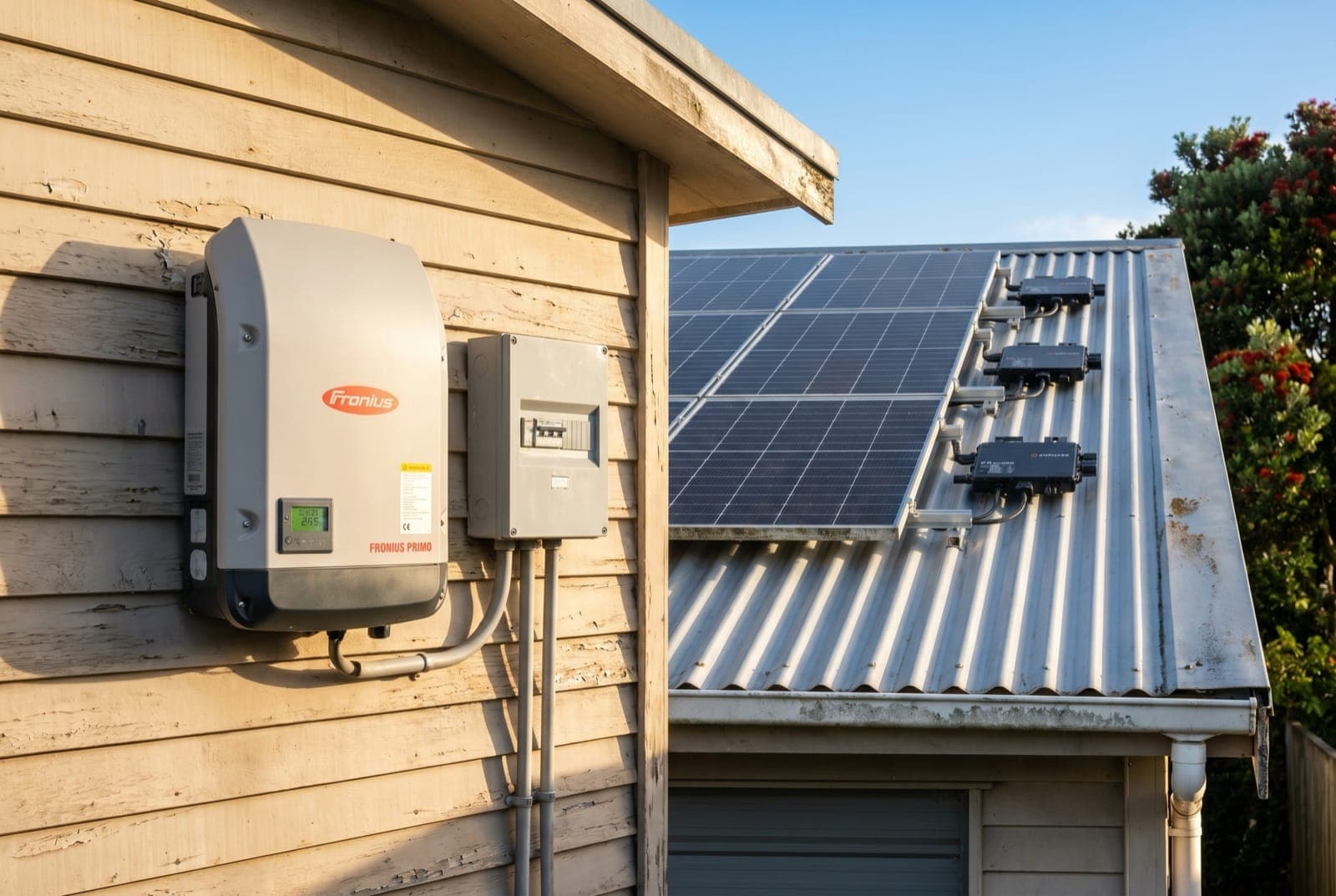
APS, Bluesun, Deye, FIMER, Fronius, GoodWe, Growatt, SolarEdge, Sungrow and Victron all have models listed under the 2015 standard. In most cases these are older model lines that the manufacturer has already superseded, sitting alongside that same brand's current models in the compliant section higher up the document. Fronius, SolarEdge, Sungrow and GoodWe all appear in both places.
So the brand on your quote tells you nothing. The model number tells you everything.
This is not a recall
Worth being plain, because a deadline attached to a safety standard reads alarming and this one is not.
Orion's wording is about applications. It is a rule for connecting new systems, not a judgement on systems already installed and running. If you had a 2015-certified inverter commissioned two years ago, nothing about Wednesday changes it, and nothing in that document asks you to do anything.
The standard changed because the grid has changed. There is far more solar on the network than there was in 2015, and the newer rules govern how inverters behave collectively when voltage wanders or the frequency dips. It is housekeeping, on a long timetable, arriving at its last day.
Canterbury, not nationwide
Here is the caveat that matters, and it is a real one: we checked two networks, and they do not say the same thing.
Orion, which covers Christchurch and much of Canterbury, publishes the 30 September cutoff explicitly. Vector, which covers Auckland, publishes an approved inverter list that makes no mention of the 2015 standard or any phase-out date at all. Its list simply carries the models it will connect.
New Zealand has 29 distribution networks and each one sets its own connection rules. Some will have published a date, some will have quietly stopped listing older models, some will not have moved yet. If you are outside Canterbury, the honest answer is that you need to look at your own lines company's list rather than assume this date applies to you.
If your quote is unsigned
If you are in Canterbury and you have a solar quote you have not signed:
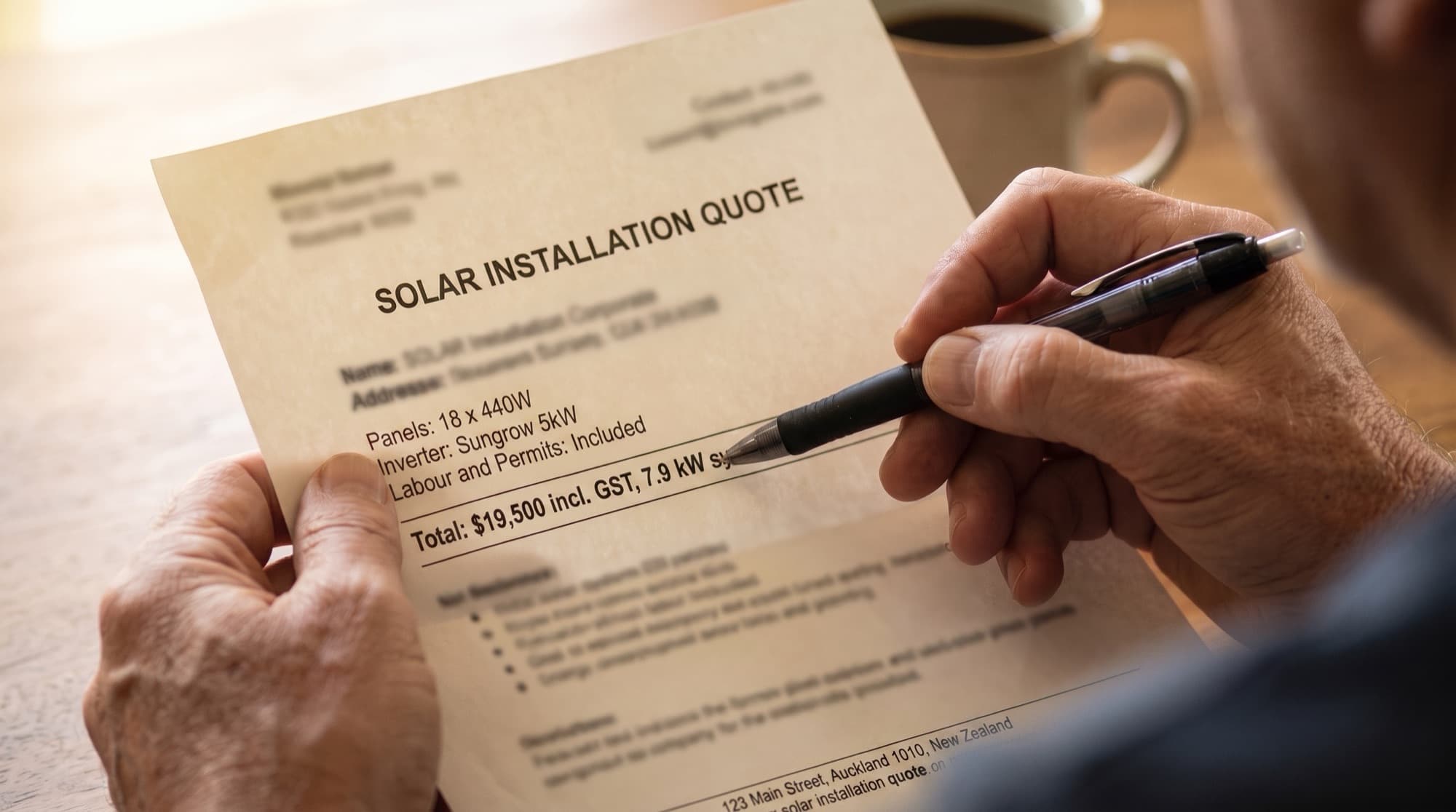
- Find the inverter model number on the quote. Not the brand, the full model string, including any suffix.
- Search for that exact string on Orion's compliant inverter list.
- If it appears in the 2015 section, ask your installer two questions: can the application be lodged before 30 September, and what is the current-standard equivalent.
- If it appears in the main list with a 2020 or 2020+A1 note, there is nothing to do.
A good installer will already know, because this deadline has been sitting in their inbox since April. If your installer does not know, that in itself is worth noting.
Keep reading
Sources
Lines company inverter lists
- Orion: AS 4777 Compliant Inverters, March 2026 (read 27 September 2026). The transition wording and the ten-brand phase-out section are both in this document.
- Vector: approved inverter list (read 27 September 2026). No reference to the 2015 standard or a phase-out date.
Standard
- AS/NZS 4777.2:2020, Standards New Zealand (read 27 September 2026)
Register Orion now aligns with
- Clean Energy Council: approved inverters (read 27 September 2026)
Key Points
- Orion stops accepting 2015-standard inverters on 30 September 2026.
- Ten brands are affected, including Fronius, SolarEdge, Sungrow and GoodWe.
- Most of those brands have current models listed too, so check the model, not the brand.
- It is a cutoff for new applications, not a recall. Systems already installed are untouched.
- Orion means Canterbury. Vector publishes no such date, so check your own network.

lights on
Related guides
View all
Do Solar Panels Work in Winter and on Cloudy Days in NZ?
Solar panels still generate power on cloudy days and through NZ winters. Here's exactly how much output changes and why it still works.
Read
Solar Panel Costs NZ: What You'll Actually Pay in 2026
Real pricing data for NZ solar in 2026. System costs by size, what affects price, and how to tell if a quote is fair.
Read
Solar Buy-Back Rates NZ: 13 Retailers Compared (2026)
Compare solar buy-back rates across 13 NZ power companies. Octopus, Meridian, Mercury, Genesis, Contact, Power Edge and more.
Read
Best Solar Panel Installers NZ (2026)
How to find a quality solar installer in NZ. What to look for, red flags to avoid, and when SEANZ membership matters for your bank loan.
Read
Solar Battery Storage NZ: Costs, Brands, and Is It Worth It?
Solar battery prices in NZ: Tesla Powerwall, BYD, Enphase compared. When batteries make sense and when you're better off without one.
Read
How to Get Solar Quotes in NZ (and Compare Them Properly)
How to get solar quotes in NZ: EECA's 2-3 quote rule, where to get them, what to have ready, comparing $/W like-for-like, and the red flags in the quoting process.
Read
Join the conversation
The best comments are honest ones: Real experience. Share yours, please stay civil and on topic. No self-promo links.
Your email is never shown or shared. To change or remove a comment later, .
No comments yet. What is your experience with this? Be the first to weigh in.