
The 3D solar calculator for NZ homes
A solar power calculator for savings estimates and system costs




See your savings from your Sofa
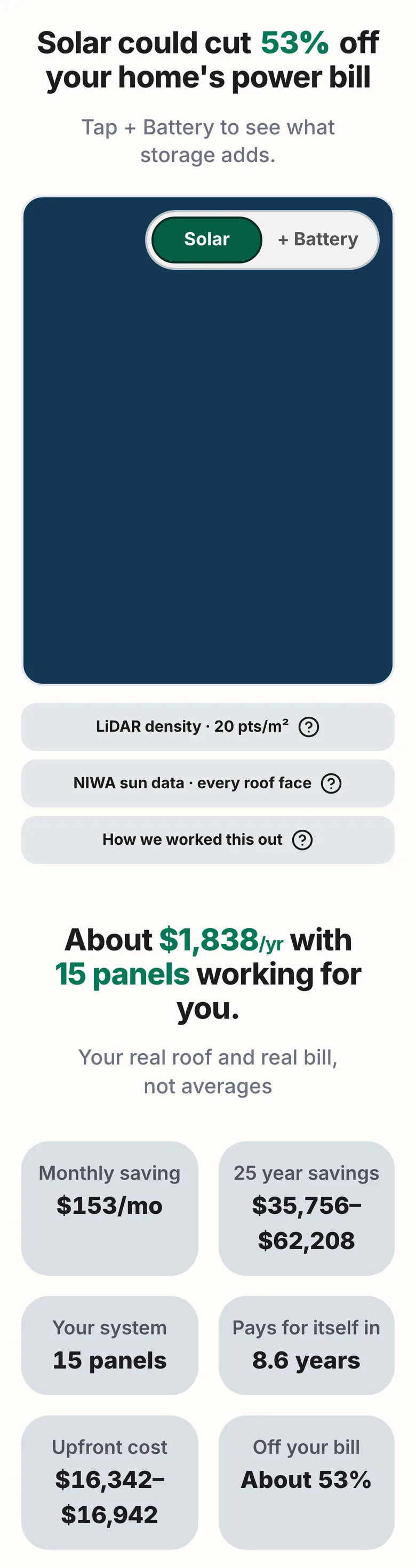

Power bill cut by
53%
Pays for itself in
8.6 years
25 year savingsSavings for the next 25 years
$35,756–$62,208
Where do solar panels go on your home?
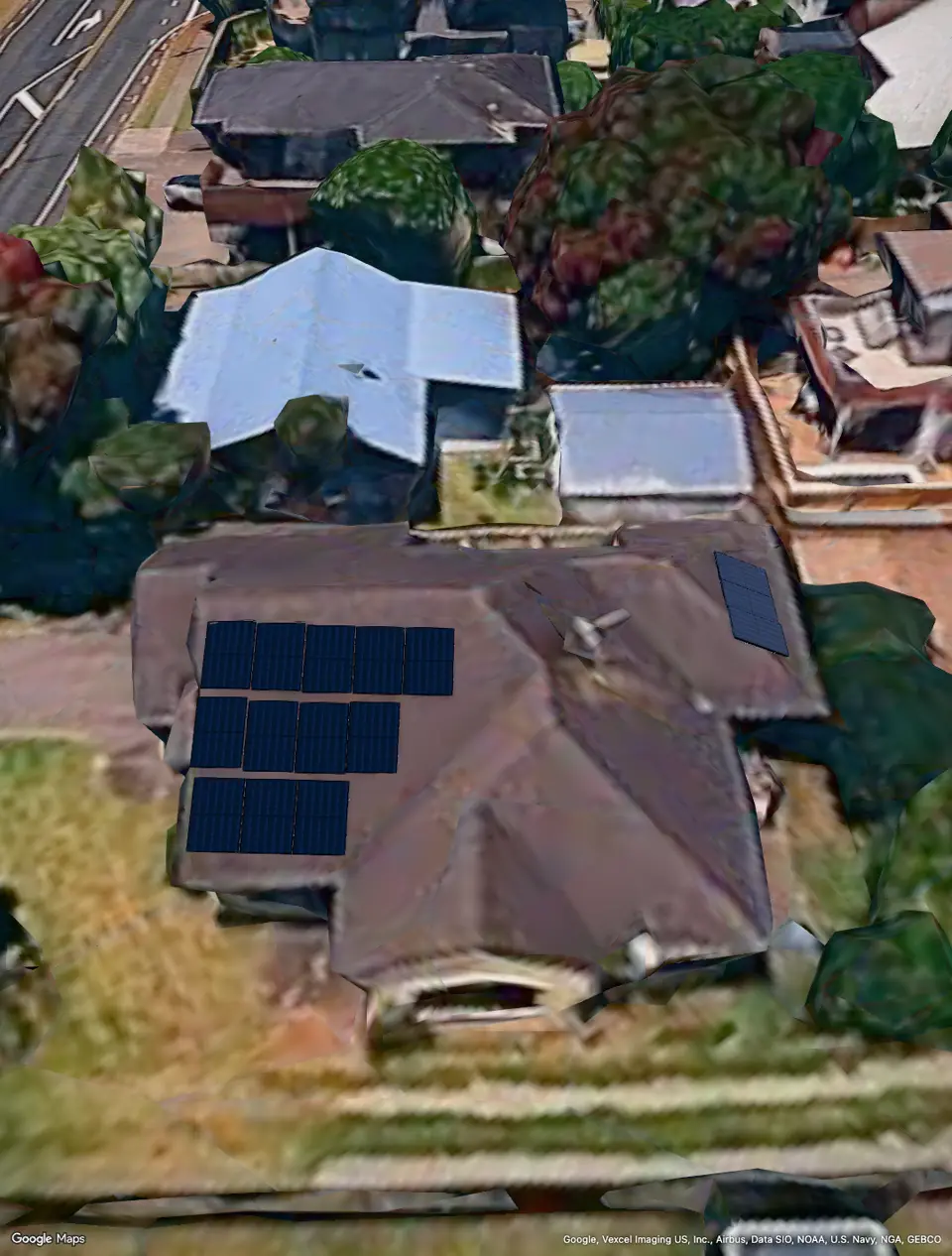
This is a solar calculator for New Zealand homes that measures your roof instead of guessing at it. So you can begin to think about where solar panels would go on your home, with price ranges of how much it may cost, when it pays itself off, and what your banked future savings could be. Most solar calculators ask for a postcode and a power bill, then work from a regional average and an assumed roof. This one is a solar calculator by address, it reads your actual roof measurements from government LiDAR survey data, its shape, its pitch, which way each face points, and what shades it. To see it on your own roof, enter your address above: you get the panels placed on a 3D model of your home, the installed cost of that system, its payback year and the range of savings over 25 years. Free, and it takes about three minutes.
How this solar calculator measures your roof
The 3D Solar Calculator is a free tool from Solar Scout for New Zealand homes. Enter your address and it measures your own roof from government LiDAR survey data, then works out the panel layout, the system sizes that fit and what solar would save you, in about three minutes.
While you answer some questions about your home and energy usage, our roof survey software begins recreating your roof, building a digital twin (3D model) of your own roof. We then simulate based on your home's position the sun yield each roof face collects across a full year of data, after considering shading, to calculate the panel layout that pays you back the most.

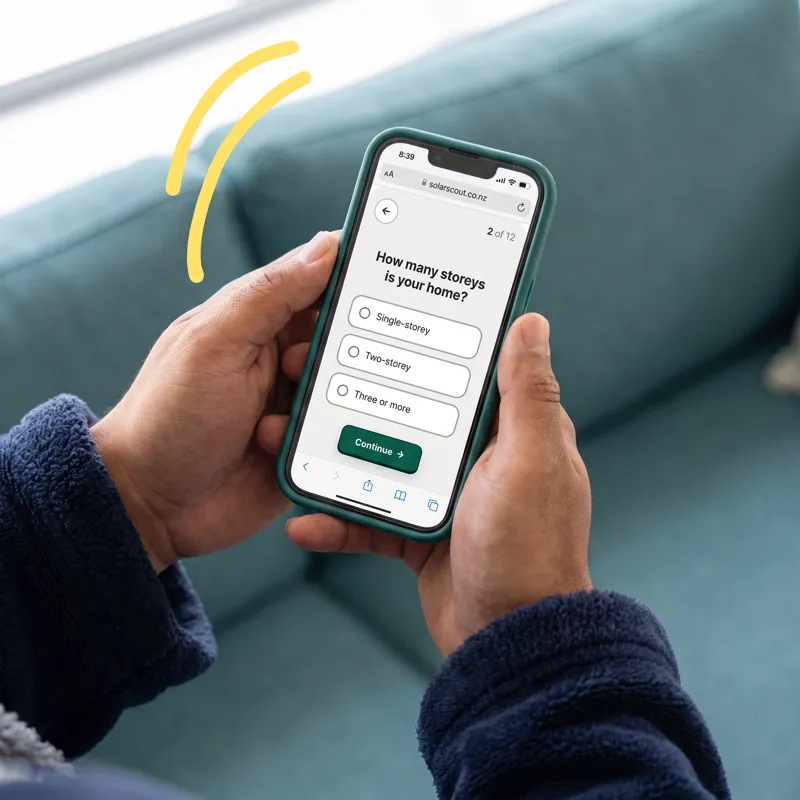
Answer some questions

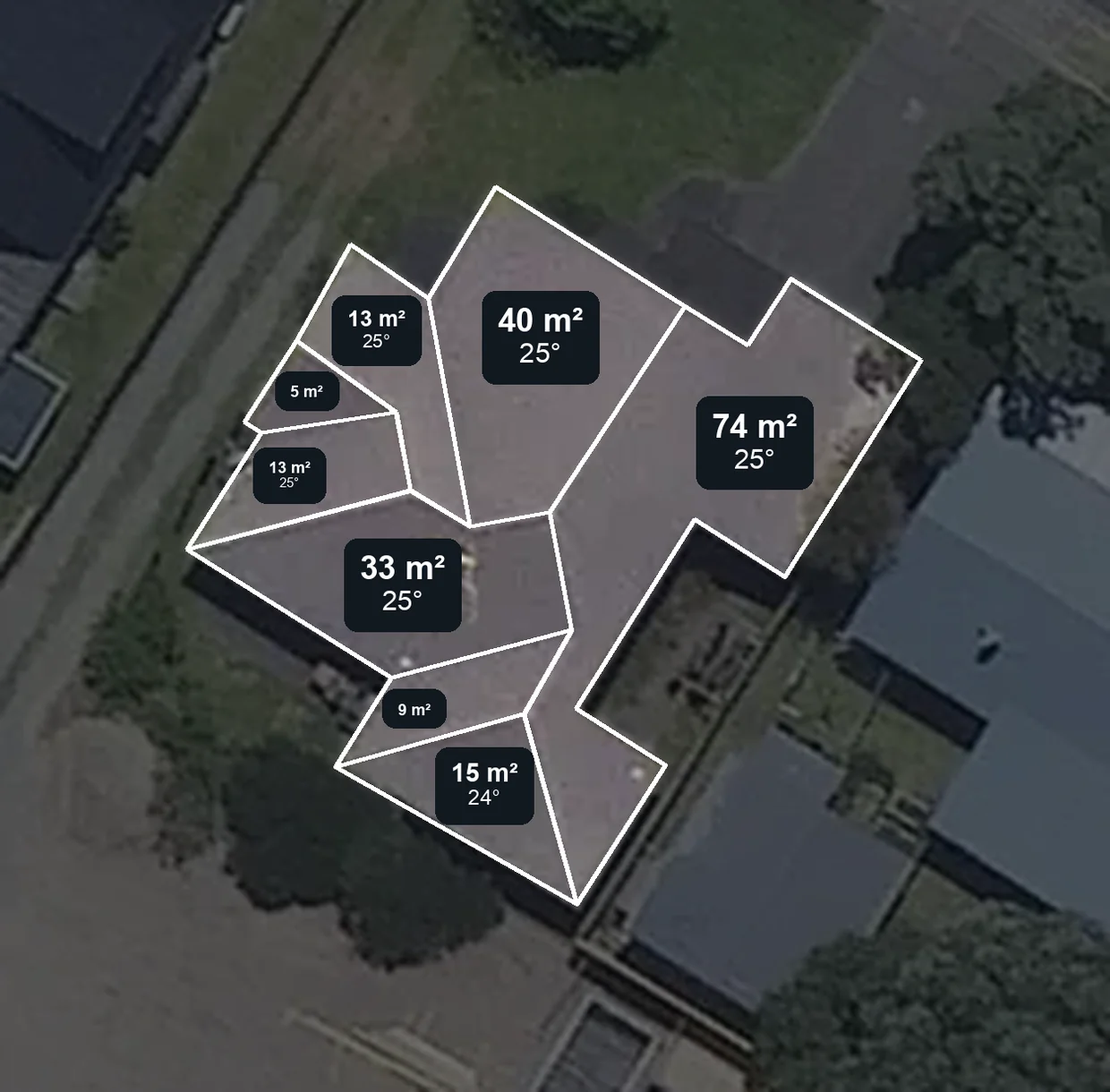
We survey your home



See your solar savings

Most solar calculators assume a roof.This one measures yours in 3D, to the square metre.
What your solar report shows
Solar Scout's 3D solar panel calculator measures your own roof from the government LiDAR survey: its area in square metres, which faces can take panels, and the direction, pitch and shade on every face. Your power bill, when you use power, and the appliances that draw the most, like your hot water and any EV, tell us how much you use, so we recommend the number of panels that finds the sweet spot between payback and savings.
- A 3D model of your roof, with the panel layout on it: panels sit only on the faces that can take them.
- The system size that fits your power bill: the number of panels sized to how much power you use and when, so it pays for itself rather than over-generating.
- How much of your power bill solar could cut: a percentage worked out from your bill, your use and the layout on your roof, the first figure on the report.
- The installed cost of that system, a payback year and a 25-year savings range, all built from your own power bill: the assumptions behind them are stated in the fine print.
Some things no aerial survey can measure, so we do not pretend to.
- The state of the roof itself: the survey measures shape, not condition.
- What has changed since the flight: the survey is a snapshot from the day it was flown, so anything built since then is not in the model.
- What is inside the house: switchboard capacity and wiring are invisible from the air.
- Rules about your property: a heritage listing, a body corporate or a subdivision covenant can limit what goes on a roof the survey has already measured.
- Your half-hourly power use: the payback here works from your bill, not from your smart meter's half-hourly record, and when you use power matters as much as how much.
- Your long term buy-back rate: what you are paid for exported power is set by your retailer and changes over time, so check what your own plan pays against our buy-back rates guide.
The payback and savings you see are for the system sized to your bill, at a current New Zealand price per panel. Solar is never a fixed price, because an installer has to price the job on the gear they fit, the wiring your house needs, and how difficult your roof is to work on. It is not a quote. For the full picture on 2026 pricing, see our guide to solar panel costs in New Zealand.
LiDAR coverage is not everywhere in New Zealand yet. If we cannot measure your roof, we tell you that instead of estimating around it.
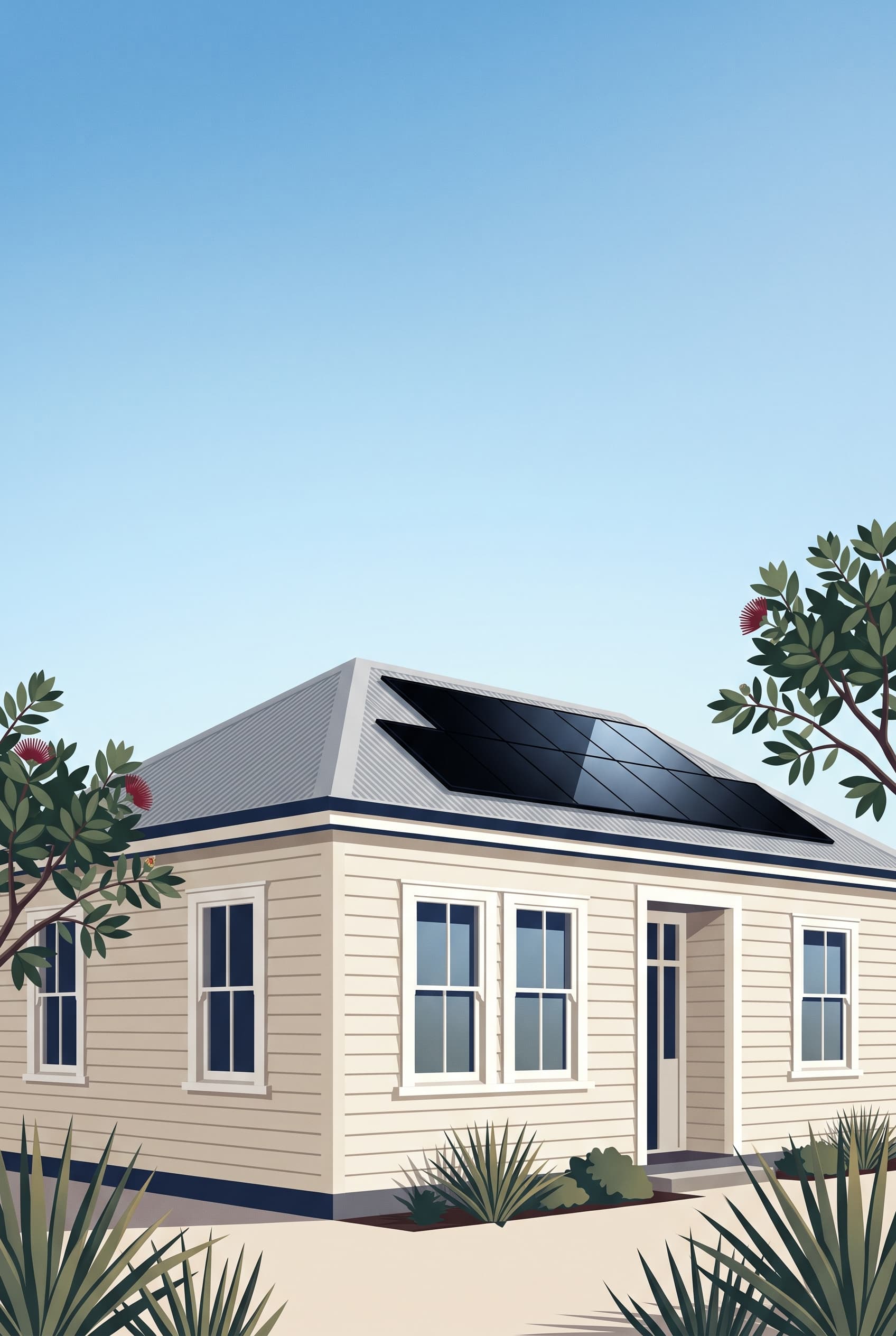
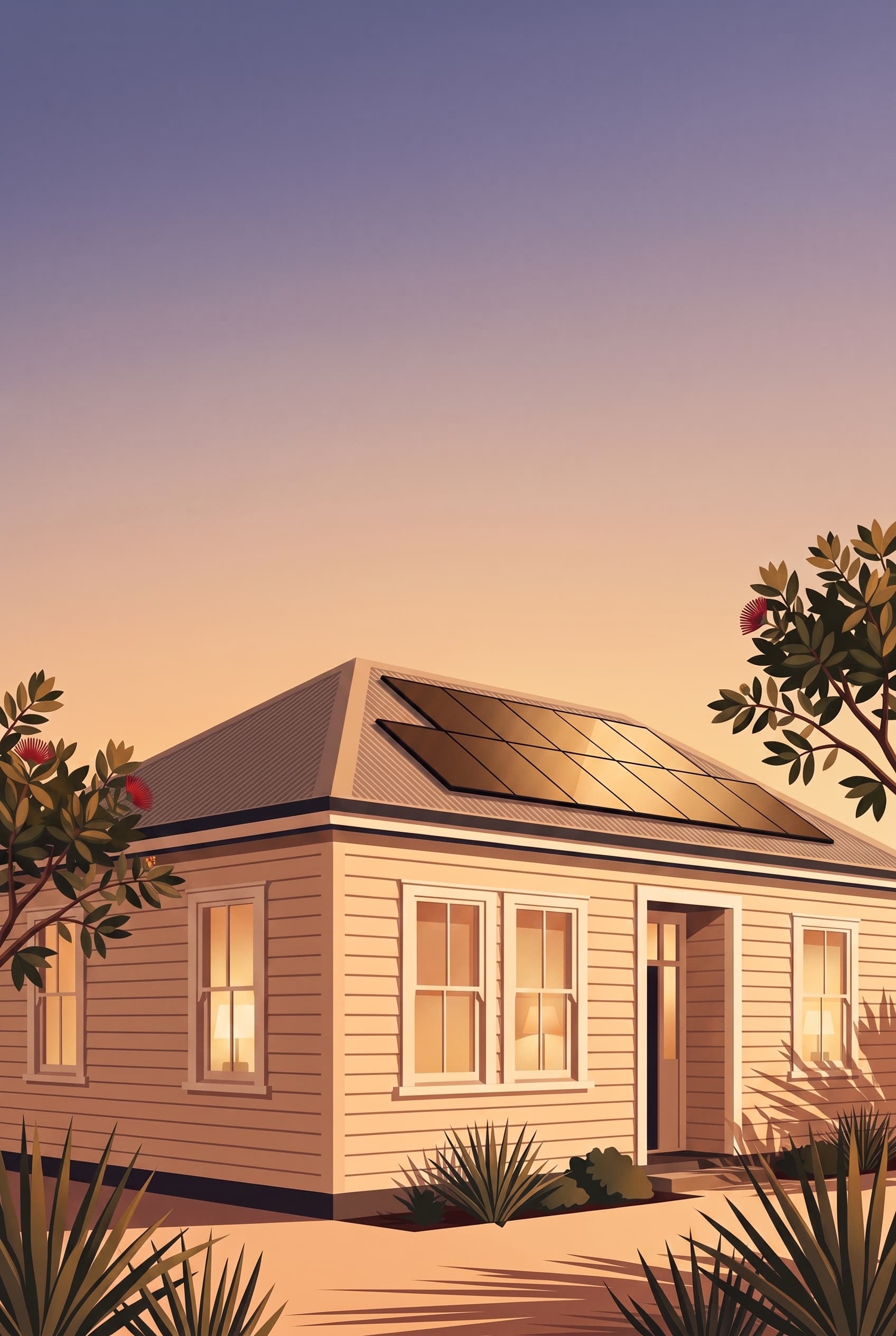
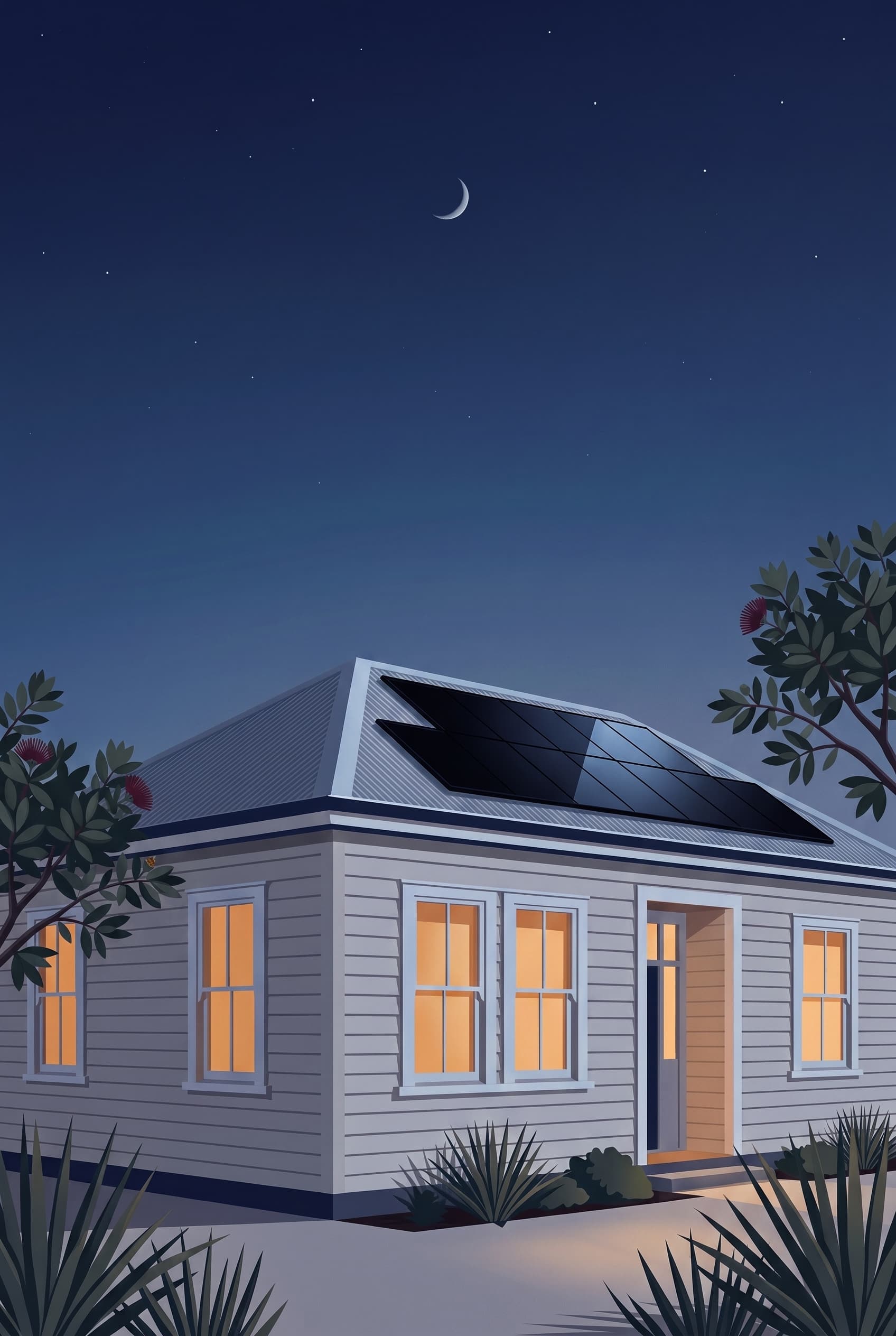
It pays to compare.
Why Kiwis deserve a 3D solar power calculator
A solar calculator that has not looked at your roof in three dimensions is not describing your house. It is describing an average one. It takes a regional sunshine figure, an assumed pitch, an assumed orientation and an assumed amount of usable space, then multiplies them together. Every one of those is a guess about your house, and the guesses compound.
At some point the number of guesses makes the online quote you have been given, even as an estimate, optimistic at best and confusing at worst. It can tell you solar is worth a look, but you already know that. It certainly can't tell you what your roof will do.
We built this calculator because an honest answer about your own roof was hard for a New Zealander to get. It runs on leading industry and government data, the national survey for the roof, NIWA for the sun, real market pricing for the money. The answer comes off your roof, not off a sales sheet, and you see it before any installer does.
This calculator measures your roof from the national survey, works out the sun on each face, draws the panels that fit, and works the payback out from your own power bill.
- It should work out which of your roof faces get the most sun. Most roofs have several faces and they do not all get the same sun. In its 2009 best-practice guidance the Australian PV Association put an east or west facing array about 15 percent behind north at Sydney's latitude, and a south-facing one 35 percent behind. Which face the panels land on decides the answer, so measuring means ranking the faces before anything gets placed on them.This one works out the sun on every face of your roof and puts the panels on the face that pays.
- It should know the angle of each face, not assume one. Pitch changes how much sun a face collects across a year, and it is rarely the same across one house: the main roof, the garage and the lean-to on the back all sit at their own angle. Measuring means reading each one off the building itself.This one reads the pitch of each face off the national survey.
- It should see the shading. A neighbour's tree, a chimney, the hill behind you. Shading is the thing no regional average can see, and it decides whether a face pays or not. SunSPoT, from the Australian PV Institute and UNSW, works out the shading on every quarter square metre of roof across the year from a three dimensional laser model, and falls back to asking the user where that model does not exist. That is the standard.This one models the shade from trees, neighbours and the land around you, across the day and the year.
- It should work out how much of your roof is actually usable. Roof area is not panel area. Vents, ridges, dormers, edges and the faces that never get the sun all come out of it first. When American researchers measured 128 cities with laser survey data instead of assuming a percentage, 68 percent of the rooftop area turned out to be unsuitable for panels, and 74 percent of it on houses.This one draws the panels on your roof and counts what fits, instead of assuming a percentage.
- A picture of your house is not a measurement. Several solar calculators show you an image of your house once you have entered your address, and it looks like the tool has been to your roof. The map is not an input and an aerial image of your house with no 3D measurement behind it is still guesswork.This one shows you the measurement itself: a 3D model of your roof with the panels on it.
How it compares with EECA, NIWA and the other solar calculators in NZ
The list above is the standard. Below it, the calculators New Zealanders actually use, in order of popularity on Google, and what each of them works from.
| What the calculator uses | EECA | | My Solar Quotes | NIWA SolarView | Harrisons |
|---|---|---|---|---|---|
| Uses your actual home addressCalculated from your address, not a regional average | Yes | Yes | No | YesType an address into its map; the roof is still yours to type in | No |
| Assesses roof suitabilityIt reads your roof instead of asking you to describe it | NoYou pick a slope and a direction off a picture | Yes | NoYou type the system size and the installed price | NoPanel tilt and bearing are yours to type in | NoYou pick a system size and it shows a stored figure |
| Sees your shadingTrees, neighbours, the hill behind you | No1 | Yes | No | No1 | No |
| Uses your own power billYour price and your usage, not a national average | Yes | Yes | Yes | No | No |
| Shows a panel layoutWhere the panels would actually go | No | Yes | No | No | No |
- 1EECA and NIWA SolarView both put the local landscape behind your location, so the hill on your horizon is in their figures. Your trees and your neighbours are not. EECA says so itself: its tool "will automatically consider any shading from your landscape (e.g. surrounding hills) but not from adjoining structures, like neighbouring houses".
You would think measuring the roof was the first thing a solar calculator did. This is the only solar calculator New Zealanders use that measures your own roof in three dimensions, then takes it all the way to a panel layout and a payback built from your own power bill.
Every other tool in the table works from what you tell it about your roof. This one takes each face off the national survey with its own pitch and orientation, works out the sun it collects across a year with the shading from trees, neighbours and the land around you, puts the panels on the face that pays, and prices the system sizes that fit against your own power bill. The University of Auckland's research map is the honest exception: it reads the same kind of LiDAR survey and sees the same shading, but it covers Auckland only, you find your own building on the map, and it stops at a sunshine map rather than a panel layout. You do not tell either of them which side of your house faces north. Ours has already looked. So has theirs, if you live in Auckland.
It is your roof. You may as well be the first to see what it can do.
Frequently asked questions
Several. Most ask for a postcode and a power bill, then apply a regional sunshine average and an assumed roof. A couple map sunshine by location instead, which is better but still not your roof. Either way you get a ballpark, and a ballpark tells you nothing specific about your house. Solar Scout's is a solar calculator by address: it starts from government survey measurements of your actual roof, so the orientation, the pitch, the usable area and the shading are yours rather than a regional average. It is free, it takes about three minutes, and it does not ask for a phone number.
Start with the parts of the roof that face the sun, not the whole roof. Measure each usable face, leave a margin around the edges, skylights, vents and chimneys, and leave out anything that sits in shade for much of the day. Then divide what is left by the size of the panel you plan to use. Doing that from the ground is mostly guesswork. This calculator starts from government survey measurements of your actual roof, so it does the measuring for you and shows where panels would go on a 3D model of your home.
Multiply the number of panels that fit by the wattage of each panel, and you have the system size the roof can carry. Two things sit on top of that. Your lines company may limit how much you can export, and the size that pays back best depends on how much of the output you use in the house, which is often less than the roof could hold. Measure what fits first, then size against your own usage.
Project Sunroof, Google's rooftop solar estimate, does not cover New Zealand. Here the closest tools read either your roof or your location. The University of Auckland's solar map covers Auckland roofs, NIWA's SolarView estimates sunshine for an address, and EECA's calculator estimates payback. This calculator starts from government survey measurements of your actual roof and shows where panels would go on a 3D model of your home. Survey coverage is not everywhere yet, so check your address.
The 20% rule is an overseas rule of thumb that says size your array to generate about 20% more than you use, as a buffer for inverter losses, dirty panels and dull winters. It is a starting heuristic, not a New Zealand standard, and it quietly assumes the extra generation is worth something to you. Here that depends on whether you use the surplus in the house or export it, and export is paid at rates that vary a lot by retailer and plan. Our buy-back rates guide covers that. The buffer is also academic if the roof has no room for it, which is the part measuring answers.
No size is wrong on its own. Three things decide it: how much of the output you use in the house rather than export, what your network allows you to export, and whether the roof physically has the space and the orientation to carry the array. The third one is the cheapest to check and the one people skip. A large array on a roof that cannot orient it well earns less per panel than a smaller array placed properly. Measure the roof, see what fits, then size against your own usage.
Mostly because the system never matched the house. The stories that come up are a roof that faced the wrong way for the panels it was given, shading that nobody measured before the install, a system sized to a sales target rather than to the household's own use, and a buy-back rate that fell after the sale. The panels themselves rarely fail. The expectation set by a rough estimate is what fails. Measure the roof first, see the layout and the payback range before anyone quotes, and that surprise is far less likely.
It depends on when you use power. Without a battery, what the panels make during the day is used in the house or exported to your retailer at the buy-back rate, and what you use at night is bought at your normal rate. A battery moves your own daytime power into the evening, so the more the house is empty during the day, the more it has to work with. Whether that covers the battery's price depends on the gap between those two rates and on how much you would otherwise export, which your half-hourly meter record shows. A battery only stores what the roof makes, so measure the roof first. Our guide to solar batteries in New Zealand works through the rest.