
AlphaESS NZ: What the S8 and T20 Actually Give You
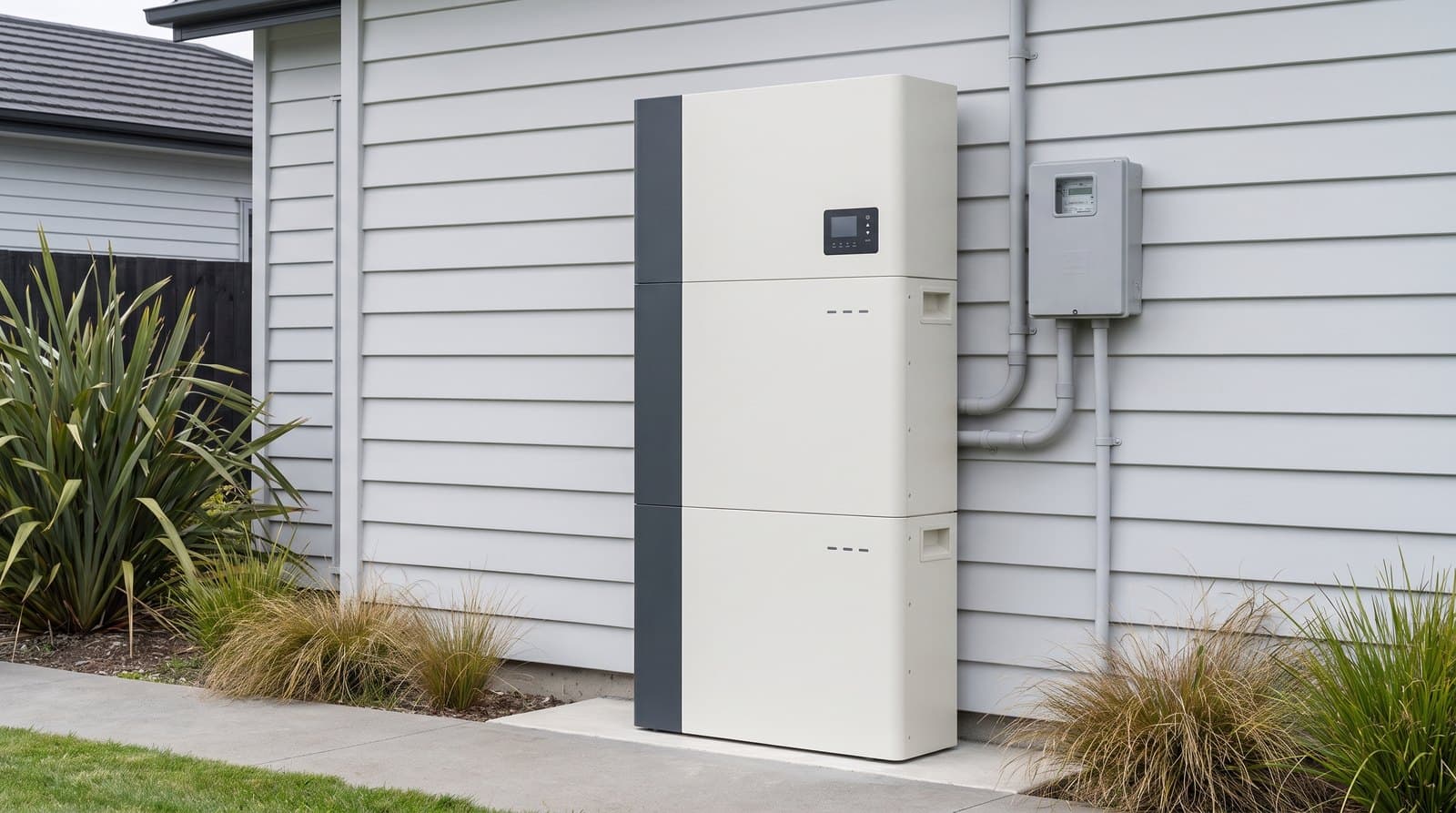

AlphaESS has been building home batteries since 2012, and two of its hybrid systems cover most New Zealand houses: the 8 kW S8 for single-phase homes, and the 20 kW T20 for three-phase. If either is on your quote, this is what you are getting.
We do not sell batteries. What follows is read off the manufacturer's own datasheets: what the two systems actually give you, how the backup works, and the handful of things worth checking before you sign.
Who Makes It
AlphaESS was established in 2012 and is based in Nantong, China. On its own profile it reports more than 300,000 systems installed across 130 or more countries. Those are the company's figures rather than an audited count, but they describe a manufacturer shipping at scale for over a decade rather than a recent arrival. In Australia, the market closest to ours, SolarQuotes reports it as the number one battery installed by volume in 2022 and 2023, and EUPD Research measured a 92.3% recommendation rate in 2024 in the German market.
The warranty is where this needs care, because the paperwork does not all say the same thing. You will see Munich Re, one of the world's largest reinsurers, on AlphaESS datasheet covers and in its European marketing, which implies warranty insurance sitting behind the promise. We went looking for it in the warranty documents themselves and could not find it. Neither the current Australian warranty conditions nor the UK G3 warranty names any insurer at all. It may exist as a commercial arrangement. It is not a term you could hold anyone to.
What the current Australian document does say is solid. Alpha ESS Australia Pty. Ltd. gives ten years, and guarantees the battery holds at least 70% of its usable capacity for 120 months. The part worth reading twice is the second limb: cover runs to 70% capacity or to 3.12 MWh of throughput per kWh of usable capacity, whichever comes first. Cycle a battery fully once a day and the throughput limit arrives at about eight and a half years, not ten. That is normal for the category and it is not a trick, but it does mean the headline number is a ceiling rather than a promise.
Two details in that document matter to a New Zealander. It is written under Australian Consumer Law and the words “New Zealand” do not appear in it anywhere, and it requires installation by an SAA-accredited installer holding a valid Alpha Installer ID, which is an Australian accreditation. Its covered-model list does not yet include the BAT-9.6S or BAT-9.3S modules either. None of that is unusual for a global brand selling into a market our size, and none of it is a reason to avoid the product. It is a reason to ask for the warranty document that names your model and this country, and to file it somewhere you will find it in year eight.
A warranty is a promise made in a particular country. Ask for the document that names your model and New Zealand, and read the number on that one, not the number on the brochure.
The Two Systems
Two hybrid systems cover most New Zealand homes. Hybrid means the solar inverter and the battery are one piece of equipment rather than two. The S8 is the single-phase system, which is what most Kiwi houses have. The T20 is three-phase, for larger homes, lifestyle blocks and newer builds with heavy loads.
Both use LFP cells, the chemistry that has become standard in home storage because it runs cooler and lasts longer. AlphaESS's are cobalt-free and self-heating, the latter more relevant here than the brochures realise: a battery that warms itself holds performance through a Central Otago winter morning better than one that derates when it gets cold. You can put these specs next to every other battery sold here in our battery comparison tool.
Want to compare
quotes?
Get matched with vetted local installers and see real quotes for your home. It’s free, with no obligation.
Compare up to 3 quotesWhat Backup Covers
Both systems can run your house through a power cut, but only if they are designed and wired for it, and only for the circuits connected to the backup side of the switchboard. The S8 switches over in 20 milliseconds or less, fast enough that a computer rides through without rebooting. The T20 provides UPS backup on a port rated to its full 20 kW.
Those figures describe what the inverter can push, not how long the battery lasts. A 9.3 kWh module running a 3 kW load empties in about three hours; the same module running lights, a fridge, the internet and a few power points can last a night. So the circuits chosen for backup matter more than the headline power rating. Decide in advance what genuinely has to stay on, and keep ovens, hot water and full-power heat pumps off the backup side. None of them are things you need at 2am.
What to Check Before You Sign
- Usable kilowatt hours, not depth of discharge. Compare any two batteries on usable kWh and ignore the percentage. AlphaESS illustrates why: its three-phase module is rated at 100% depth of discharge and its single-phase module at 95%, and both deliver exactly 9.3 kWh usable. The percentage describes how a manufacturer reached its headline capacity, not what comes out of the wall. Every brand presents capacity its own way, so this is a habit worth taking to every quote you read, not a mark against any one of them.
- The array size against the inverter's input limit. Both published versions of the S8 datasheet give a max PV input power of 10,000 W. Fitting somewhat more panel capacity than an inverter's rating is normal, and manufacturers do approve higher DC input in writing for particular designs. On any quote that goes well past 10 kW, ask whether there is AlphaESS approval for it and keep a copy.
- The string plan, not just the panel count. Two MPPTs with one string each means the S8 splits your array two ways. If your roof has three usable faces pointing in genuinely different directions, the three-input T20 or a different inverter may suit it better.
- The warranty document that names your model and this country. The current Australian conditions give ten years, with 70% usable capacity held for 120 months or 3.12 MWh of throughput per kWh usable, whichever comes first. At one full cycle a day the throughput limit lands around eight and a half years. That document is written under Australian Consumer Law, never mentions New Zealand, requires an SAA-accredited installer with an Alpha Installer ID, and its covered-model list does not yet include the BAT-9.6S or BAT-9.3S. Ask your installer which document covers your system here, and keep a copy.
- Which circuits are backed up, listed individually. Not “essential circuits”, but which ones. It costs the installer nothing to write down and it is the difference between a blackout you barely notice and finding out the freezer was never on the list.
- Who handles a warranty claim here, and how long the last one took. A brand selling at volume since 2012 has a longer public record than one launched last year, and that cuts both ways. SolarQuotes Australia ranks AlphaESS number one by volume in 2022 and 2023 and notes it as one of the few manufacturers with technicians based in this part of the world. The same coverage has documented warranty claims that dragged, mostly on earlier models. Neither volume nor an award is a service record, so ask the direct question.
We are not going to tell you AlphaESS is the best battery, or rank the companies that install it. Neither claim would survive contact with your actual house. The decision rule is simpler: a battery is the right one when its usable kilowatt hours match your evening use, its backup covers the circuits you care about, and its warranty is documented for New Zealand.
Compare quotes for your own roof and your own evening usage, not brands in the abstract. An AlphaESS quote sitting next to two others tells you more than any review, including this one.
Common Questions
Is AlphaESS a good battery?
On the datasheets it is a solid, conventional, well-specified LFP system: 9.3 kWh usable modules, IP65 rating, fast backup switching, self-heating cells and a ten year figure on the datasheets. The company has been trading since 2012 and was the highest-volume battery brand in Australia in 2022 and 2023. The qualification is service history: the same independent coverage that ranks it first by volume has documented warranty claims that dragged, mostly on earlier models. Solid hardware with an unusually well-secured warranty, and the thing to press your installer on is who handles a claim here.
What is the difference between the AlphaESS S8 and T20?
Phases and scale. The S8 is an 8 kW single-phase system taking up to 10 kW of panels and up to 37.2 kWh of storage. The T20 is a 20 kW three-phase system taking up to 40 kW of panels and up to 111.6 kWh, with three solar inputs instead of two for roofs facing different ways. If your house is single phase, which most are, the T20 is not a consideration.
Does 100% depth of discharge mean I get more power?
No. Depth of discharge describes how much of a battery's rated capacity you are allowed to use, so it only means something alongside the rated figure. A 9.3 kWh module at 100% and a 9.6 kWh module at 95% both give you 9.3 kWh usable. When comparing any two batteries, look at usable kilowatt hours and ignore the percentage.
What warranty does an AlphaESS battery have in NZ?
The current warranty conditions published by Alpha ESS Australia Pty. Ltd. give ten years, and guarantee the battery retains at least 70% of its usable capacity for 120 months. Read the second limb too: cover runs to that 70% or to 3.12 MWh of throughput per kWh of usable capacity, whichever comes first, so a battery cycled fully once a day reaches the throughput limit at roughly eight and a half years. The document is written under Australian Consumer Law, does not mention New Zealand anywhere, requires an SAA-accredited installer holding a valid Alpha Installer ID, and its covered-model list does not yet include the BAT-9.6S or BAT-9.3S modules. Munich Re appears on datasheet covers and in European marketing, but no insurer is named in either the Australian or the UK warranty document. Ask your installer for the warranty that names your model and New Zealand before you sign.
How many solar panels can I fit with an AlphaESS S8?
The datasheet limit is 10,000 W of panels, across two solar inputs with one string each. How many panels that is depends on their wattage: at 470 W each it is about 21. Larger arrays are sometimes proposed with manufacturer approval, which can be legitimate but sits outside the published specification. Ask for that approval in writing and keep it with your system documents.
Will an AlphaESS system power my house in a blackout?
It can, if it is designed and wired for backup, and it powers the circuits connected to the backup side of your switchboard rather than the whole house by default. The S8 switches over in 20 milliseconds or less and delivers 8 kW off-grid; the T20 provides UPS backup rated to 20 kW. Runtime depends on what you have asked it to run. Keep ovens, hot water and full-power heat pumps off the backup circuits and a single module can hold lighting, refrigeration and internet through the night.
Next steps for your solar journey
Related guides
View all
Solar Battery Storage NZ: Costs, Brands, and Is It Worth It?
Solar battery prices in NZ: Tesla Powerwall, BYD, Enphase compared. When batteries make sense and when you're better off without one.
Read
Sigenergy SigenStor NZ: The Honest Review
Independent Sigenergy SigenStor review for NZ: 7.8kWh stackable modules, 98.3% efficiency, ~$9,124 supply-only pricing, the Powerwall 3 comparison, and the reported issues the brochures leave out.
Read
Tesla Powerwall 3 NZ: The Honest Review
Independent Tesla Powerwall 3 review for NZ: ~$15,600 supply-only and $19,000-24,000 installed, 13.5kWh storage, 11.5kW output, the single-phase catch, and when an alternative fits better.
Read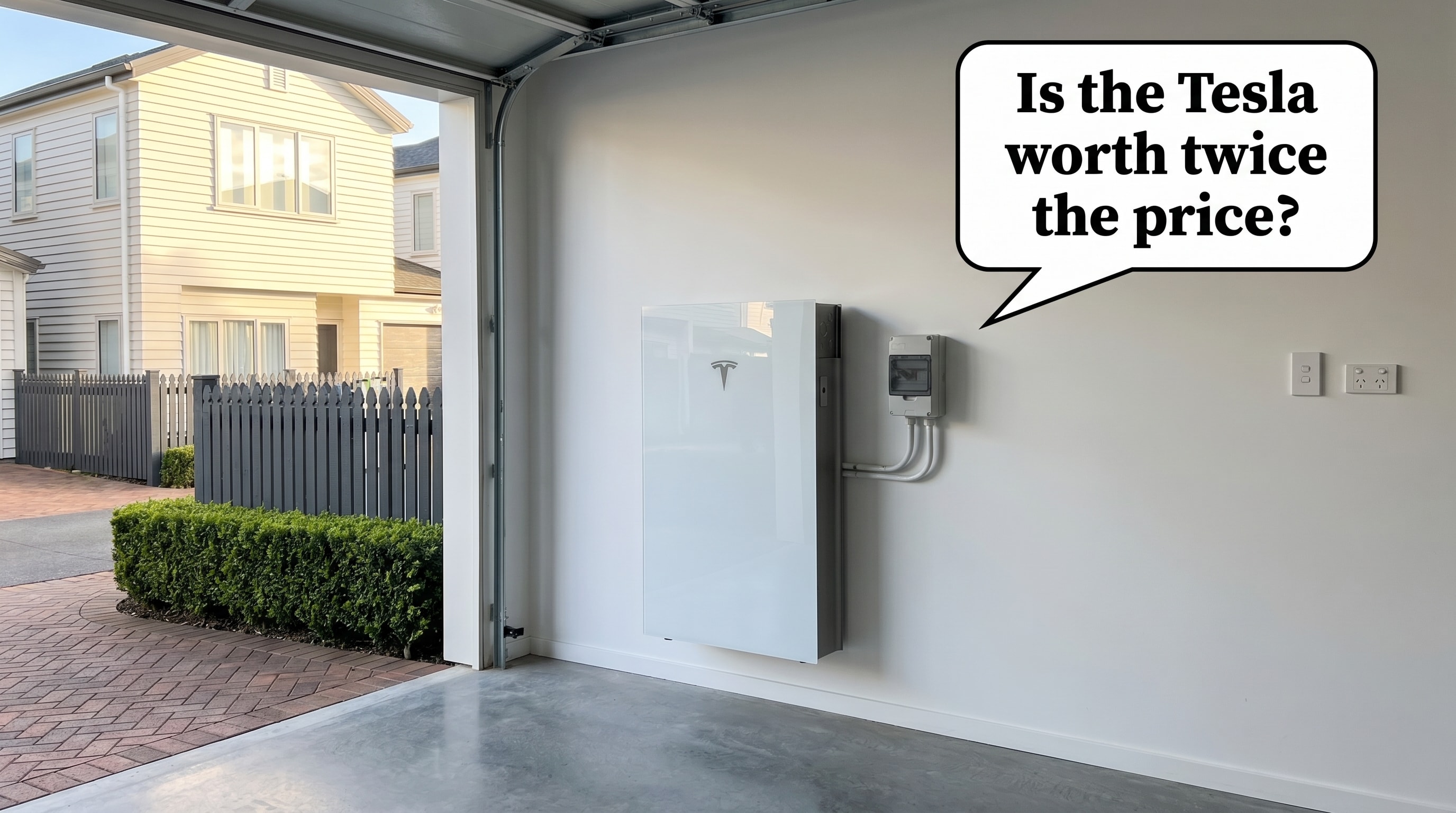
Best Tesla Powerwall Alternatives NZ: BYD and Enphase Compared (2026)
The best Tesla Powerwall 3 alternatives in NZ. BYD, Sungrow, and Enphase compared on price, $/kWh, inverter compatibility, and warranty. The honest decision matrix.
Read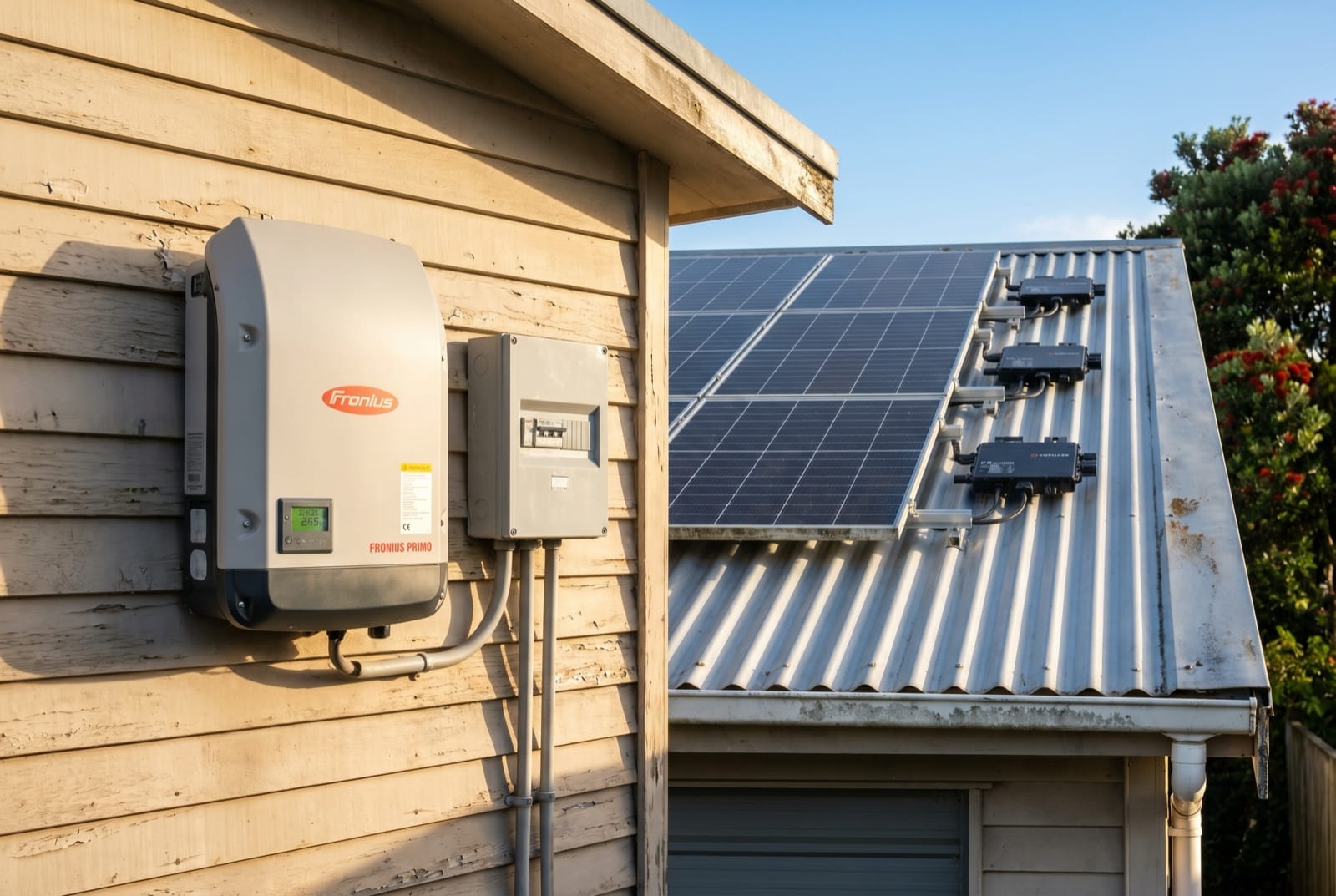
String Inverter vs Microinverter NZ: Which Is Right for Your Roof?
String inverter or microinverters for your NZ solar system? Real 2026 NZ costs, shade performance, warranty terms (Fronius vs Enphase), and the honest decision rule.
Read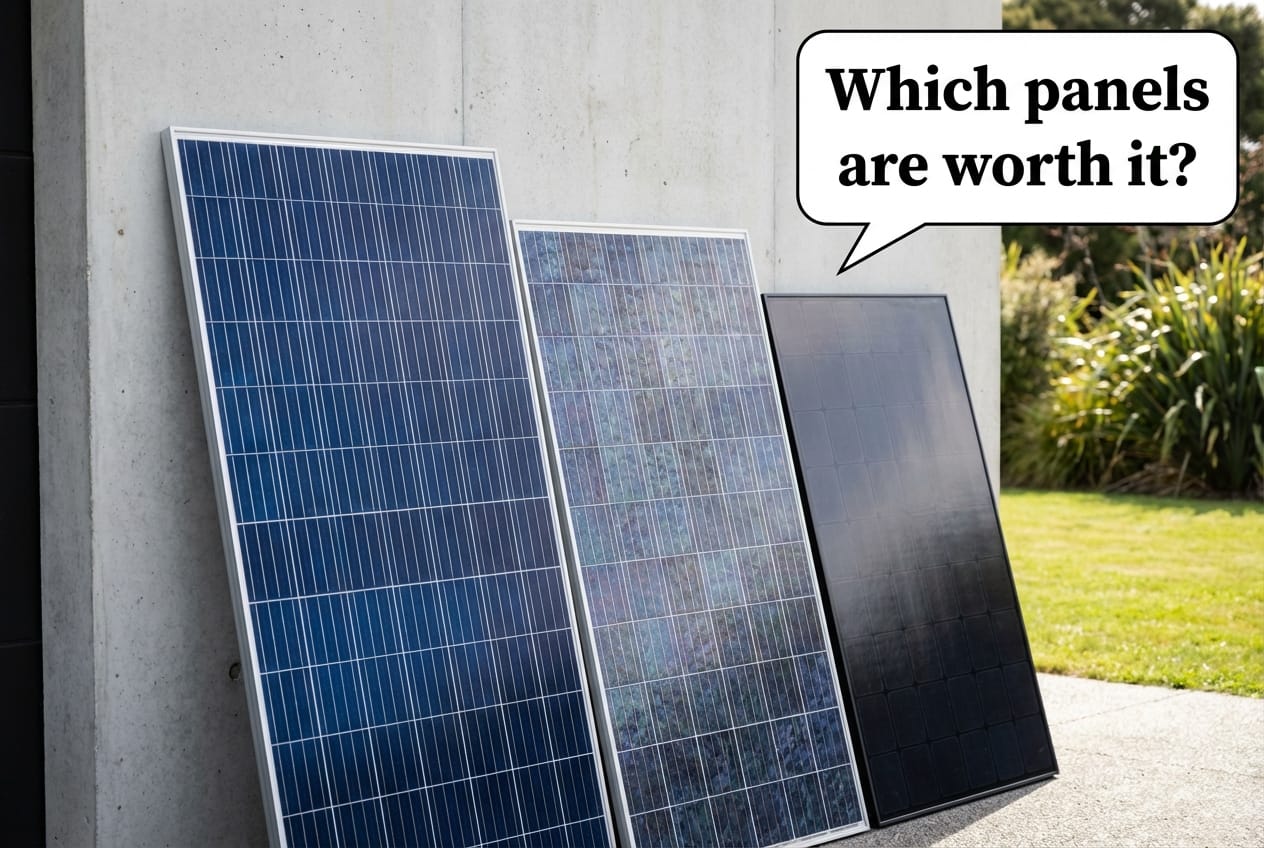
Best Solar Panels NZ: Brands, Tiers and What to Look For (2026)
Compare the best solar panels available in NZ. Tier 1 brands, specs, warranties, NZ pricing, and what installers actually use. TOPCon vs PERC vs HJT explained.
Read
Join the conversation
The best comments are honest ones: Real experience. Share yours, please stay civil and on topic. No self-promo links.
Your email is never shown or shared. To change or remove a comment later, .
No comments yet. What is your experience with this? Be the first to weigh in.