
Deye in NZ: Two Families, and the One Your House Takes
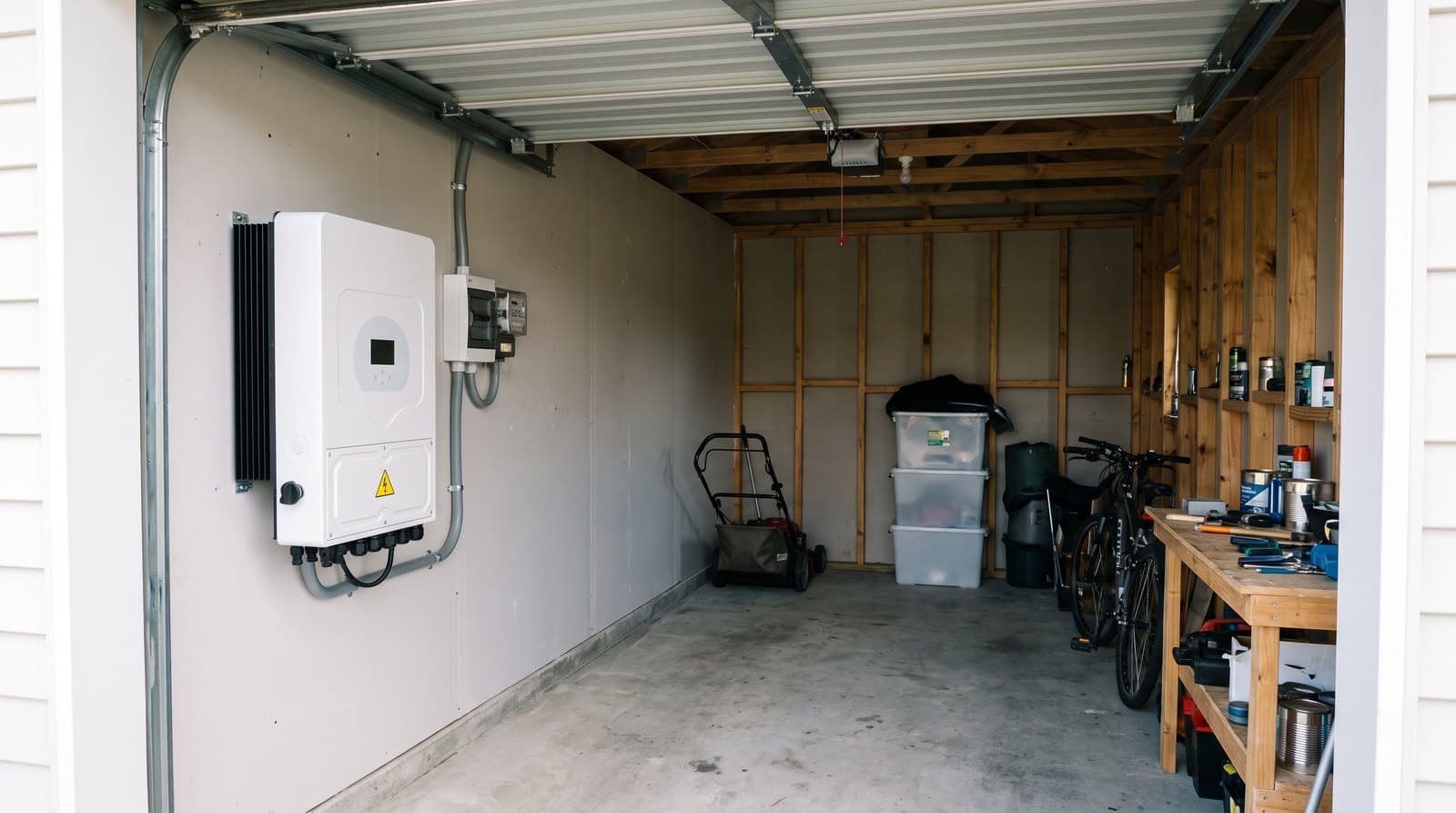

Deye makes two quite different hybrid inverters for New Zealand homes, and which one suits you is decided by your switchboard rather than your budget. One runs on a 48 volt battery, the other on a high-voltage stack, and they take completely different batteries.
We do not sell inverters. What follows is read off Deye's Australian datasheets, the ones written for our networks: what each family gives you, what they cost here, and the model detail worth checking against your lines company's approved list.
Who Makes It
Deye is a Chinese manufacturer based in Ningbo and listed on the Shanghai exchange. It is one of the largest hybrid inverter makers in the world, and it arrived in New Zealand the way a lot of good value hardware does: quietly, through installers, without much advertising.
The hardware reaches homes here through several distributors rather than one, which is worth knowing because it tends to keep pricing competitive and means you are not locked to a single supplier to get parts.
The Two Families
Most New Zealand houses are single phase, which points at the SG05LP1 family. Larger homes, lifestyle blocks and newer builds with heavy loads are often three phase, which points at the SG01HP3. Here is a representative model from each, straight off the AU datasheets.
The quiet advantage of the single-phase unit is that it is naturally cooled. No fan means nothing to fail and nothing to hear, and under 30 dB is quieter than a fridge. The three-phase machine uses a fan and is rated up to 55 dB, which is worth thinking about if it is going on a wall shared with a bedroom.
You can put both next to every other inverter sold here in our inverter comparison tool.
Want to compare
quotes?
Get matched with vetted local installers and see real quotes for your home. It’s free, with no obligation.
Compare up to 3 quotesWhat Is Approved Here
Every grid-connected inverter in New Zealand has to meet AS/NZS 4777.2, and each lines company publishes a list of the models it will connect. Deye is well represented on those lists, but not every Deye model is, and this is where a quote can quietly go wrong.
Deye's current ranges are comfortably covered. The single-phase SG05LP1 models are approved on Orion's list to June 2027 and appear on Vector's. The three-phase SG01HP3-AU-AM2 range, from 5 kW up to 25 kW, is approved on both, out to May 2028.
The older three-phase range is the one to watch. Orion's March 2026 list places the SUN-5K through SUN-12K-SG04LP3-AU models in a separate section for the 2015 version of the standard, headed for phase-out on 30 September 2026. Vector does not list them at all. Some New Zealand retailers were still advertising the 12 kW version of that range in late September 2026.
Lines companies do not all publish the same list. The only list that matters is the one belonging to the network your house is connected to.
None of this makes Deye a risky choice. It means the model string on your quote is worth ten seconds of checking, because two inverters with nearly identical names can sit on opposite sides of a standards deadline.
The Matching Batteries
Deye makes its own low-voltage batteries for the 48 volt inverters, and two of them are stocked in New Zealand.
- AI-W5.1-B. A stackable module holding 4.6 kWh usable out of 5.12 kWh nominal, at 90% depth of discharge. Stack up to six for 27.6 kWh usable. Around $4,568 including GST.
- RW-M6.1-B. A slim wall pack rated 6.14 kWh, which can be paralleled up to 32 units. Around $5,260 including GST.
Both are LFP, cobalt-free, IP65 and carry ten years on the datasheet. Both are also low voltage, so neither will pair with the three-phase SG01HP3, which needs a high-voltage stack. Our battery comparison tool puts them beside the other batteries sold here.
What to Check Before You Sign
- That the model on your quote is on YOUR lines company's list. This is the one that actually bites with Deye, because the approved lists are not identical. Orion's March 2026 list carries Deye's three-phase SUN-5K to 12K-SG04LP3-AU under the older 2015 standard, in a section headed for phase-out on 30 September 2026. Vector does not list those models at all. Meanwhile the newer SG01HP3-AU-AM2 three-phase range is approved by both, out to 2028. Ask which list your network publishes and find the exact model string on it.
- The suffix, not just the kilowatts. Deye sells an -EU and an -AU version of nearly everything, and they are not the same machine. The AU three-phase takes 18 kW of panels where the EU sheet publishes 15.6 kW. If a quote or a spec sheet shows a model ending -EU, ask why, because the AU variant is the one built for these networks.
- Which battery family the inverter belongs to. The SG05LP1 is a 48 V machine and takes low-voltage packs like Deye's own AI-W5.1-B or RW-M6.1-B. The SG01HP3 wants a high-voltage stack at 160 to 700 V. They are not interchangeable, and a battery quoted against the wrong family simply will not run.
- Usable kilowatt hours, not the headline capacity. Deye's AU brochure for the RW-M6.1-B states 6.14 kWh usable on a 100% depth-of-discharge basis, while the New Zealand retailer selling the same pack states 5.53 kWh. Same cells, different basis. Ask for usable kilowatt hours and the depth of discharge they were measured at, then compare that number across brands.
Compare quotes for your own roof and your own switchboard, not brands in the abstract. A Deye quote next to two others tells you more than any review, including this one.
Common Questions
Is Deye a good inverter brand?
On the datasheets the current models are strong for the money: 97.6% peak efficiency, IP65, ten years on the datasheet, and the single-phase unit is naturally cooled so it has no fan to fail. Deye is one of the largest hybrid inverter makers in the world and its current ranges sit on New Zealand lines company approved lists out to 2027 and 2028. The care needed is with model strings rather than with the brand: Deye sells a lot of similar names, and not all of them are current here.
Are Deye inverters approved in New Zealand?
The current ones are. The single-phase SUN-7.6K and SUN-8K SG05LP1-AU models appear on Orion's list to June 2027 and on Vector's, and the three-phase SG01HP3-AU-AM2 range from 5 kW to 25 kW is on both out to May 2028. The older three-phase SG04LP3-AU range sits under the 2015 version of the standard on Orion's list, in a section headed for phase-out on 30 September 2026, and does not appear on Vector's list at all. Check the exact model against your own network's list.
What is the difference between the Deye SG05LP1 and SG01HP3?
Phase and battery voltage. The SG05LP1 is single phase and runs a 48 volt battery, which suits most Kiwi houses and pairs with Deye's own wall packs. The SG01HP3 is three phase and wants a high-voltage stack between 160 and 700 volts, which suits larger properties. The 8 kW single-phase takes 12 kW of panels; the 12 kW three-phase takes 18 kW. They are not interchangeable and neither are their batteries.
How much does a Deye inverter cost in NZ?
The 8 kW single-phase SUN-8K-SG05LP1-AU lists at roughly $3,750 supply only from New Zealand retailers, which is competitive for a hybrid of that size. We could not find a public New Zealand price for the three-phase SG01HP3 models, so treat any figure you are quoted for those as needing a second comparison. Never compare a supply-only inverter price against another system's installed price.
Which battery works with a Deye inverter?
It depends which family you have. The 48 volt SG05LP1 inverters take low-voltage packs, including Deye's own AI-W5.1-B stack modules at 4.6 kWh usable each and the RW-M6.1-B wall pack at 6.14 kWh. The three-phase SG01HP3 needs a high-voltage stack instead, between 160 and 700 volts, so Deye's low-voltage wall packs will not work with it. Confirm the pairing in writing before you sign.
Does a Deye inverter work in a power cut?
Yes, when it is wired for backup. The 8 kW single-phase unit delivers 8 kVA of backup output with 50 amps of continuous passthrough and can peak at twice rated power for ten seconds; the 12 kW three-phase delivers 12 kVA. Deye does not publish a transfer time for the three-phase model, so ask. As with any battery system, backup only covers the circuits your electrician connects to the backup side of the switchboard, so get those listed individually in the proposal.
Next steps for your solar journey
Related guides
View all
AlphaESS NZ: What the S8 and T20 Actually Give You
Independent AlphaESS review for NZ: the 8 kW S8 and 20 kW T20 hybrid systems, 9.3 kWh usable modules, backup that actually works, and what to check before you sign.
Read
String Inverter vs Microinverter NZ: Which Is Right for Your Roof?
String inverter or microinverters for your NZ solar system? Real 2026 NZ costs, shade performance, warranty terms (Fronius vs Enphase), and the honest decision rule.
Read
Solar Battery Storage NZ: Costs, Brands, and Is It Worth It?
Solar battery prices in NZ: Tesla Powerwall, BYD, Enphase compared. When batteries make sense and when you're better off without one.
Read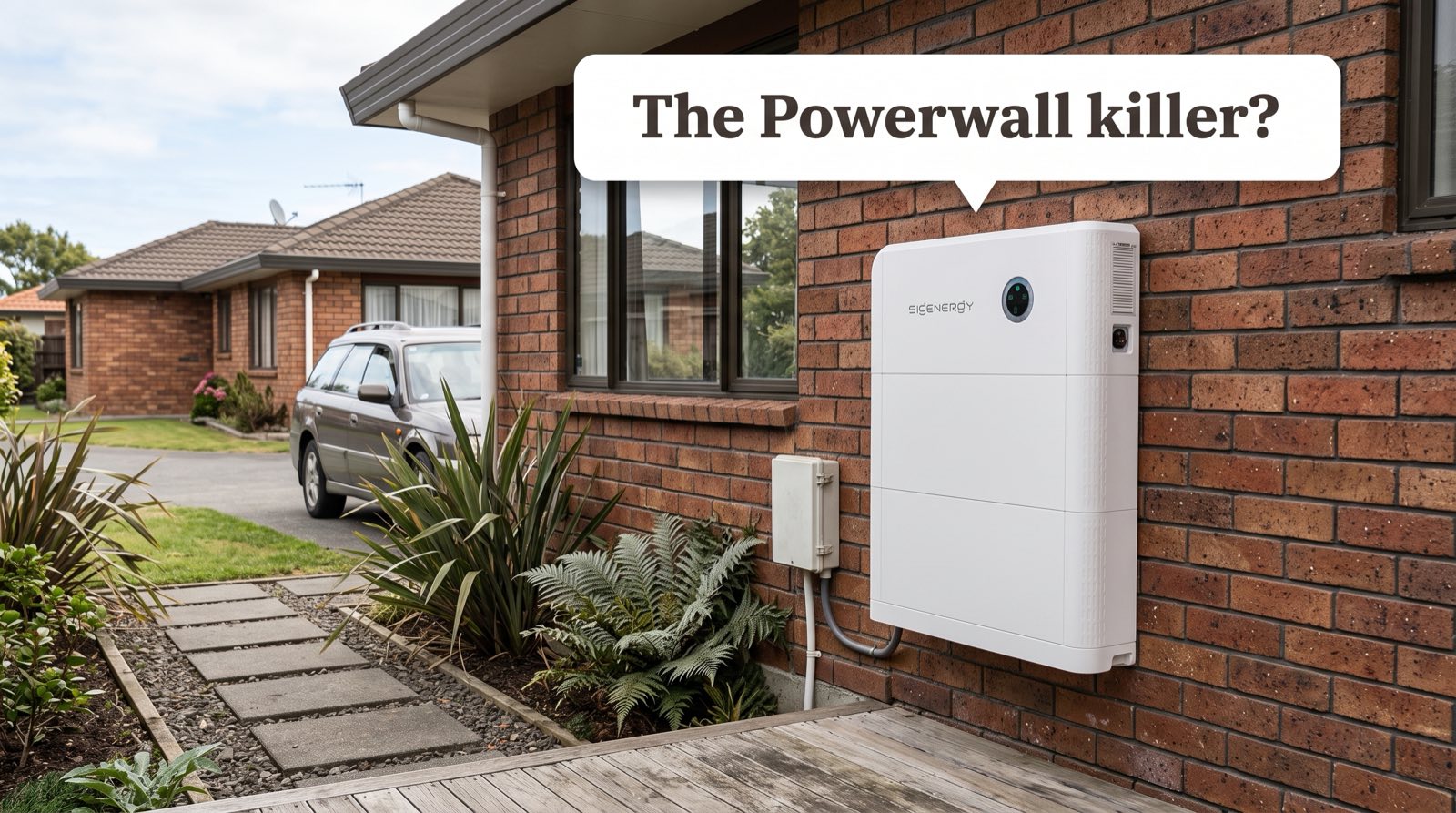
Sigenergy SigenStor NZ: The Honest Review
Independent Sigenergy SigenStor review for NZ: 7.8kWh stackable modules, 98.3% efficiency, ~$9,124 supply-only pricing, the Powerwall 3 comparison, and the reported issues the brochures leave out.
Read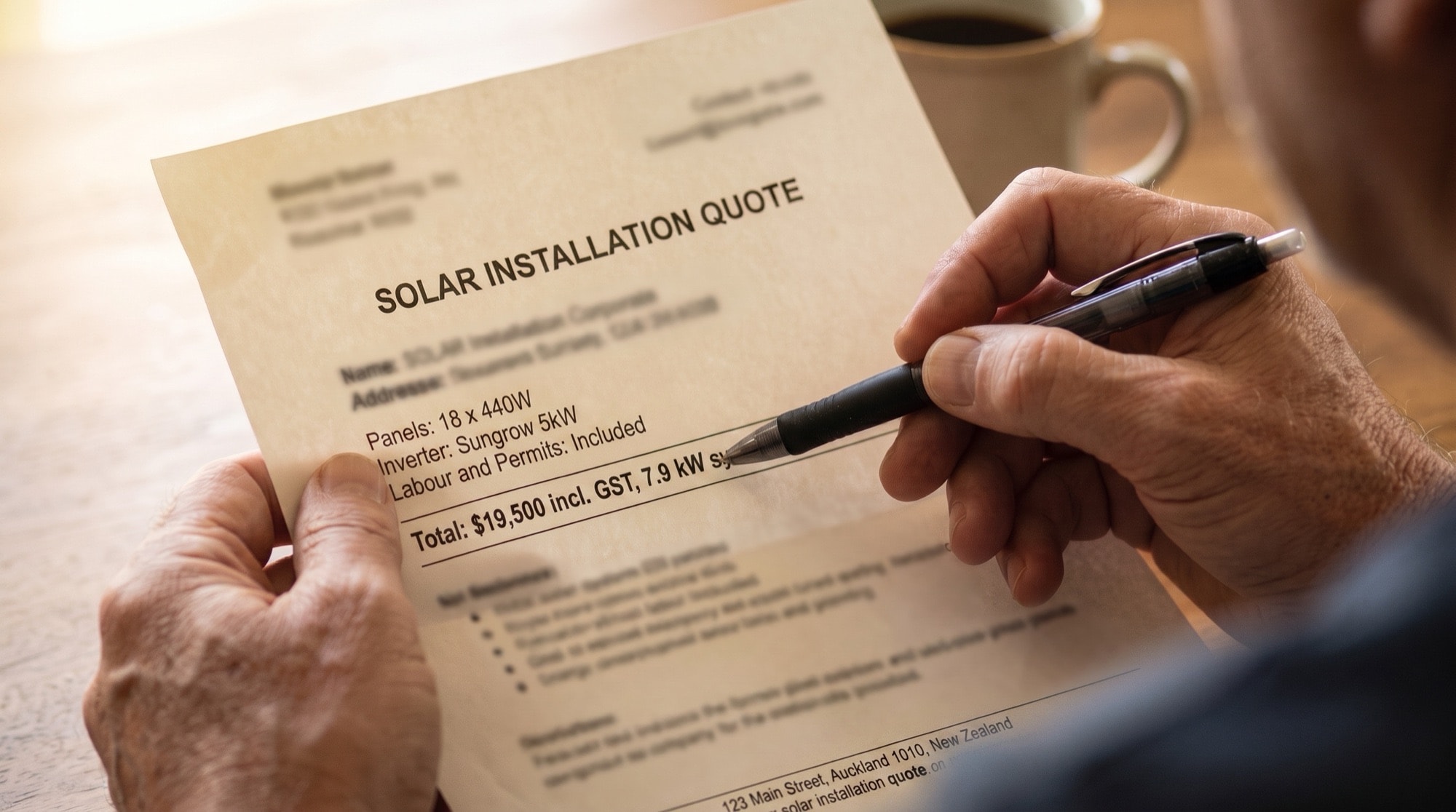
How to Read a Solar Quote: The Kiwi Buyer's Guide
Real Kiwi solar quotes have hidden gotchas. Line-by-line anatomy, the per-watt sanity check, what's missing, red flags, and a 26-row comparison rubric for 2026.
Read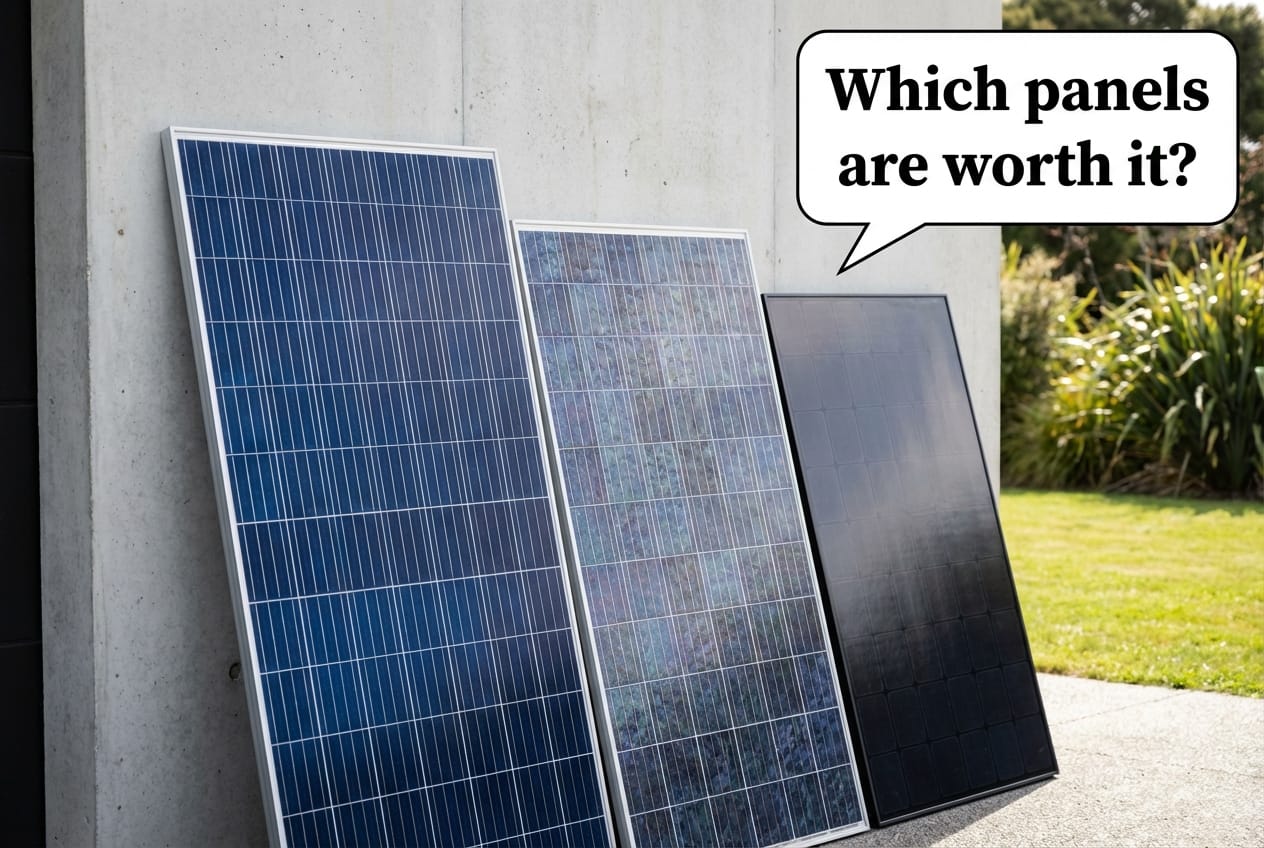
Best Solar Panels NZ: Brands, Tiers and What to Look For (2026)
Compare the best solar panels available in NZ. Tier 1 brands, specs, warranties, NZ pricing, and what installers actually use. TOPCon vs PERC vs HJT explained.
Read
Join the conversation
The best comments are honest ones: Real experience. Share yours, please stay civil and on topic. No self-promo links.
Your email is never shown or shared. To change or remove a comment later, .
No comments yet. What is your experience with this? Be the first to weigh in.